|
Do you expect Donald Trump to seek—and get—a third term? One man certainly does. Steve Bannon, a close adviser to Mr Trump over the years, says bluntly that he is sure to be returned to occupy the White House again in 2028. Mr Bannon sets out, in a remarkable
video interview
with The Economist, that the constitution’s prohibition on third terms would have to make way for the wishes of Mr Trump. Supposedly a plan has already been dreamt up to make that possible.
The justification? Mr Bannon says that ordinary Americans are growing so angry with the state of the world that there is a strong risk of violent political upheaval. He talks frequently of “war”. Only Mr Trump—annointed by God—can deliver what the ordinary American needs. The views of Mr Bannon are disturbing and undemocratic. He presumably conveys what many within the MAGA movement believe. Mr Bannon is both humorous and extreme: at one point in our interview he likens himself to Robespierre, one of the more bloodthirsty figures of the French revolution.
What Mr Bannon fails to admit is that Americans at large are deeply unhappy with their current president. Mr Trump loves to smash things up—whether the
East Wing of the White House
or institutions—and seems not to care about the long closure of the federal government. (Meanwhile I find it troubling that a private donor, reportedly, will now pay the salaries of American soldiers.)
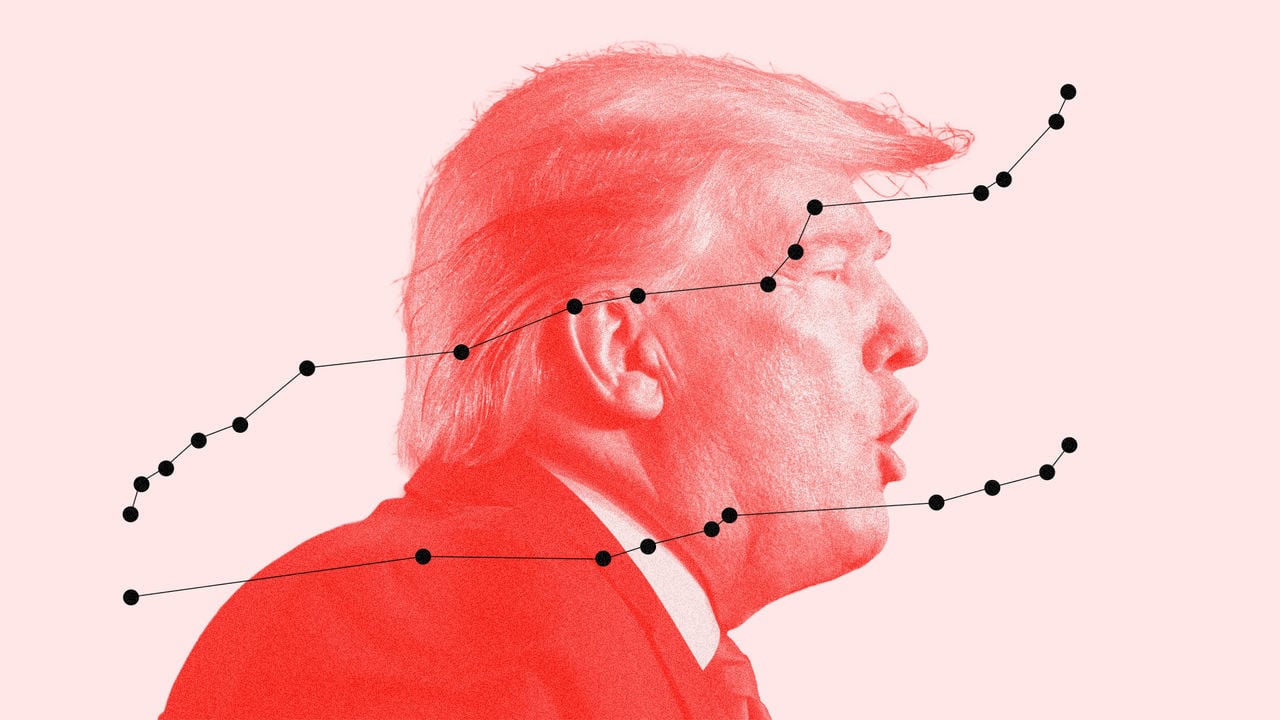
Ordinary Americans reckon that Mr Trump’s handling of the economy is going badly. He is ultra-sensitive at being reminded of Ronald Reagan’s dismissal of the use of tariffs as a mistaken, short-sighted policy. That reminder came in the form of an advertisement aired in America and sponsored by the Canadian province of Ontario, which quotes Reagan’s opinion. In response, Mr Trump said would raise tariffs on Canada by 10%. Our tracker shows that he is
polling steadily worse
as his presidency progresses: his net approval, at minus 17 points, is the lowest of his presidency. And yet Mr Bannon claims, like all the authoritarians I’ve ever spoken to or reported on in Africa and Asia, that the public is clamouring for the leader to be handed yet more power.
So here is a slightly more hopeful comment. It may be that one factor that lies behind the rise of populists in recent years is beginning to wane. We have published an intriguing charticle
based on polling in more than 140 countries, conducted every year for nearly two decades, asking respondents what emotions they felt the day before. Until recently, especially in the pandemic years, dwindling numbers had reported they felt “enjoyment”, whereas growing numbers had felt stress or other sorts of misery. Yet this year and last, in a welcome reversal, a rising share of respondents again report they felt enjoyment. And in rich countries, at least, the share of respondents who felt “anger” has been steadily falling, too. Is this a glimmer of hope that grumpiness is declining?
Last week I asked for your views on whether AI firms are overvalued, and on the risk of a market crash. Charles Igwe, from Onitsha, Nigeria, is hopeful that AI will “deliver real gains in productivity” so that “today’s high valuations could prove reasonable over time.” But the vast majority of you made some version of the opposite case, believing that many—perhaps all—such firms will be exposed as overpriced. Edward Boone
, in Nebraska, agrees that too many people are now exposed to markets that rely on the growth of AI firms. His personal hope is that, aged 37, he is “still young enough” so his retirement portfolio will have a couple of decades to recover from a market crash. That’s cold comfort for people in their 50s and 60s, Edward. Meanwhile David T. Tapper argues that “the fact that everyone is talking about a bubble probably means that this shift in discourse will deflate the bubble rather than collapse it. The next great collapse will come from something we aren’t monitoring.” Again, I can’t feel hugely reassured from your comment, David.
For next week I’d like your views on what is under way in Latin America. The deployment of an American aircraft-carrier group to the region, plus the attacks on alleged drug smugglers at sea, point towards growing confrontation with Venezuela and Colombia. Is this new American stance justified as a crackdown on drug smugglers, or does it risk triggering a new conflict? Write to me at
[email protected].
|