Welcome to my newsletter. THE place for smart talk on hormones, biohacking, and women’s health - without the guesswork or overwhelm. Just the science you need to make the best choices for your body and life.
If you’re feeling a little depleted as we start the year, you’re not alone. January can hit hard hormonally!
I definitely felt it this year. I spent weeks baking cookies, making holiday meals, managing schedules, and making sure my kids had everything they needed. By the time things slowed down, my body was telling me it needed support.
That’s why I wanted to start the year by talking about PMS. Not as something to laugh off or push through, but as one of the clearest signals your hormones give you when something is off - and one of the most fixable issues when you understand what’s really going on.
Today I’m breaking down why PMS happens, why it matters more than most women realize, and how I personally biohack it away.
with love to your ovaries,
What the Wellness:
In a world full of research, still so little is focused on women. My desire is to share the most important studies here with you, which frankly, you can’t continue living without! It’s the science you need to make the right health choices.
2 Essential PMS Studies to Know About
Today I’m sharing 2 PMS studies that every woman must know about. These studies are not new, but they are foundational for WHY you need to be proactive about your hormonal self care.
First is the Nurse’s Health Study - published in 2017. This study was seminal in linking PMS in your reproductive years to starting menopause earlier, which then increases your risk of developing inflammatory diseases postmenopausally.
WHY should you care? Because you should not consider PMS a joking matter or funny meme situation. You should take it super seriously and get into action asap so that you can use every minute of your reproductive years to slow down hormonal aging.
Next - This study talks about how having PMS creates greater inflammation in your body during your reproductive years.
Why should you care? It puts you at greater risk for mood issues, infertility, and then speeding up your time to menopause.
What’s REALLY going on with your hormones—and what to do about it.
Why 80% of Women have PMS
If your hormones affect everything, they certainly affect your moods, cravings, skin, and more. In fact, one of the most common and pervasive issues for 80% of women, yet the most easily fixed, is PMS.
I’ve been there: brutal cramps, acne, mood swings, cravings, you name it. But once I understood the root cause, everything changed.
So many of us think PMS is normal. It’s not - it’s a hormonal imbalance.
I want you to understand what is happening so you can address it, whether you are in your 20s, 30s or 40s.
What’s healthy: During your luteal phase (the 10–12 days before your period), progesterone should be in greater concentration than estrogen. You should feel calm and focused, have a balanced mood, and sleep well.
PMS occurs when there is insufficient progesterone to keep estrogen in check, creating a temporary state of estrogen dominance. This is when you get all the symptoms we call PMS - mood swings, insomnia, bloating, acne, fatigue and to boot, you can have an overdevelopment of the lining of the uterus (unchecked by insufficient progesterone) leading to heavier bleed and clots during the menstrual phase along with delayed start to your actual bleed.
This PMS in your 20s and 30s is really premature ovarian aging and is correlated to entering perimenopause sooner than you should as well as experiencing more severity of perimenopause symptoms.
In my opinion, PMS is the first sign that your ovaries are underperforming and should be taken very seriously.
How does this happen inside your body - what causes this?
Dietary causes of progesterone dysregulation include skipping meals, overeating carbs/sugar, eating inflammatory processed foods, excessive alcohol/caffeine consumption, undereating in general, fasting, insufficient protein, micronutrient depletion
Lifestyle factors to progesterone dysregulation include stress, poor sleep, over exercising
Overexposure to xenoestrogens/endocrine disruptors such as toxins in beauty products, cleaning supplies, fragrances, and plastics
The good news: This is totally reversible.
🧬 Don't keep it all to yourself...
Forward this to a woman in your life who needs it!
Personal insights and recommendations from me and my most trusted brands.
(Some may contain affiliate links, but I only share what I truly use and love!)
How I Biohack PMS Away
I do 2 things:
1 - I use herbs to support each phase of my cycle
2 - I practice Cycle Syncing to protect my hormones
Let me dive deeper on each.
Just like you can’t spot treat areas of fat on the body, you can’t spot treat just your luteal phase… you need to take care of your cycle as a whole. That’s what Cycle Syncing® is all about. Each phase builds on the last. If you’re dysregulated in your follicular phase, your ovulatory phase will feel it, and so on.
Using herbs and supplements to support each phase:
Each phase has different vulnerabilities, which is why I picked specific supplements and herbs for each phase:
Follicular
Vulnerability: can be lower energy as you finish menstruating, micronutrient depletion, estrogen not fully back online.
Special support: We need to boost mitochondrial health with CoQ10, which sets the ovulatory phase up to support egg quality.
Ovulatory
Vulnerability: excess estrogen can create chin breakouts, tender breasts, cramping.
Special support: We want to use strategic supplements like DIM, magnesium, and dandelion to help the liver process the excess estrogen.
Luteal
Vulnerability: Due to increased caloric needs, your blood sugar can be more unstable, leading to cravings and mood swings.
Special support: cinnamon and chromium help with blood sugar stability and insulin sensitivity, while schisandra helps with mood and stress, along with magnesium.
Menstrual
Vulnerability: If the phases leading up to menstruation were not supported, you are more likely to have cramps, pain, and fatigue.
Special support: quercetin is anti inflammatory, nettle can reduce heavy bleeding, beet root to replenish iron, ginger to ease cramps and heavy flow.
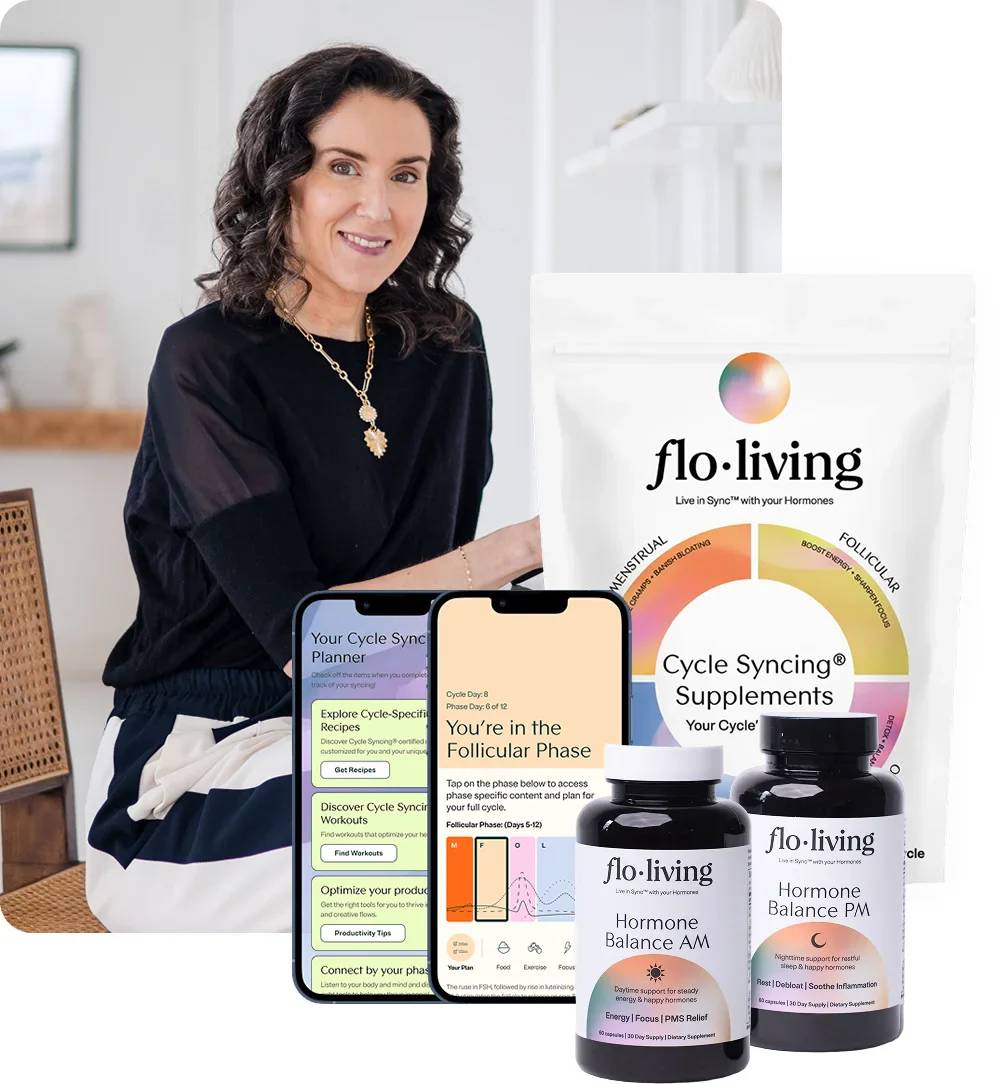
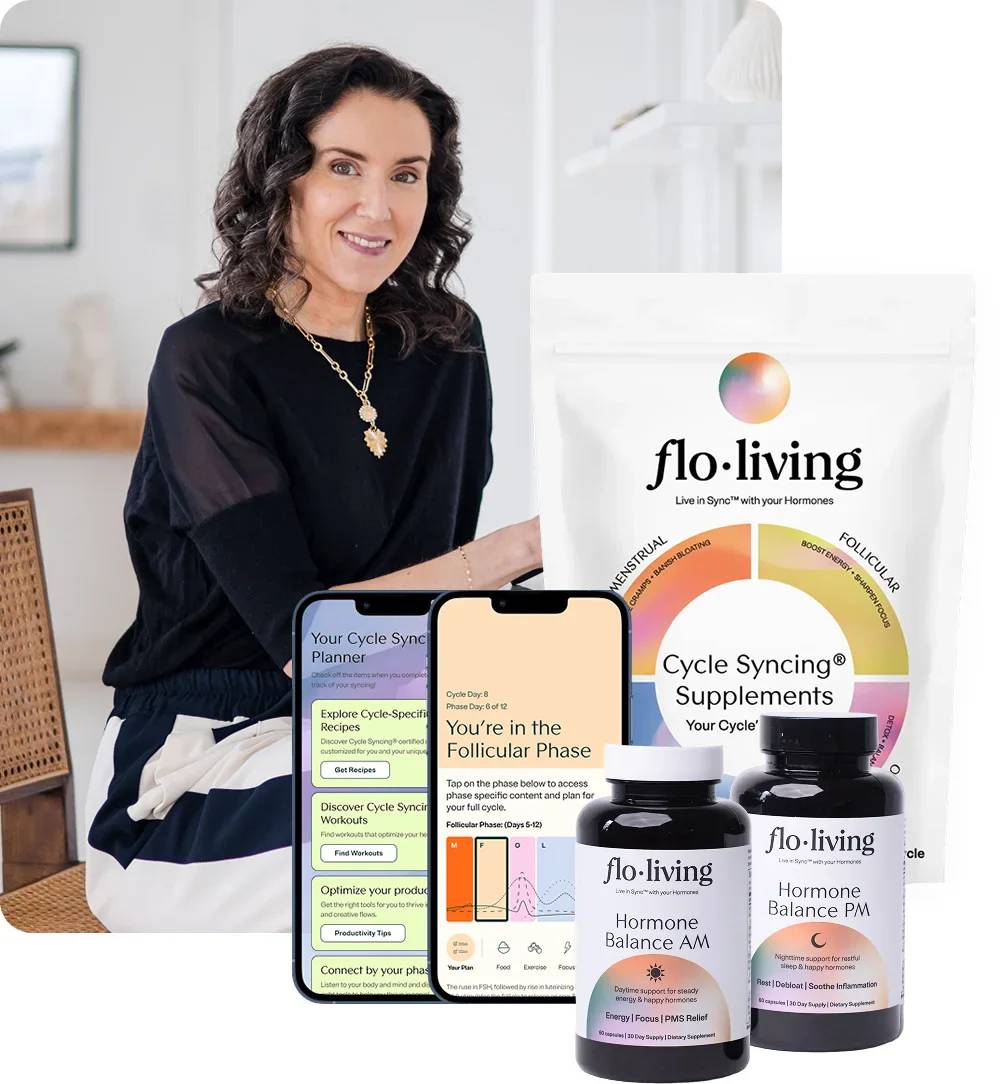
Rather than having to handpick all of these separately, you can get them as part of my Cycle Syncing® Supplements!
This month, I’m offering a bundle to get you started with the right supplements and support for the new year:
Cycle Syncing® Food and Lifestyle recommendations:
Your body needs more calories during the second half of your cycle - it’s not just your imagination.
During the luteal phase, the cerebellum is much greedier for glucose so your sugar cravings will be stronger and your mood will be less stable if you are not proactively giving the brain enough glucose. In addition, your metabolism speeds up after ovulation, so you need more calories just to keep blood sugar stable.
Here’s what you can do to counteract that:
🥣 Eat every 3 hours After ovulation, your cerebellum gets hungrier for glucose and your metabolism speeds up. This means you need more fuel to stay balanced. Skipping meals or going too long between them can tank your mood, blood sugar, and energy. Aim for a mini meal every 3 hours.
🍽 Ditch the snacks. Think mini meals. Instead of grazing, eat 4-5 balanced mini meals a day. Always include protein, healthy fats, and fiber. Never skip breakfast, and don’t drink caffeine on an empty stomach - it spikes cortisol and destabilizes blood sugar which down-regulates progesterone production and worsens your PMS symptoms.
Want my full list of PMS Biohacking + my favorite luteal phase snacks?
Subscribe to The Ovary Club to get Part 2 + the insider tips I only share with private clients.
Become a paying member - currently only $7/month - to get access to content that I only share with my inner circle.
And of course, if you are ready to dive deeper this year and finally clear up your symptoms, join me for the Ultimate Cycle Syncing® Reset:
A fully supported hormone reset—combining daily guidance, targeted nutrition, and clinically informed supplementation to restore balance across your entire cycle.
Bestselling author, creator of Cycle Syncing® and founder of FLO Living. Helping women thrive through every hormonal phase of life. Read my newsletter here.
Get personal support and guidance from me inside a small group coaching cohort, designed to help you get to the root of your symptoms and feel your best, naturally.
Our current cohort is full, but you can apply for future ones!