| | | | | | | | Data is provided by |  |
*Stock data as of market close, cryptocurrency data as of 4:00pm ET. Here's what these numbers mean. | - Stocks: Investors spent the day digesting a mixed jobs reports (more on that below). The Nasdaq enjoyed a late rally that pushed it into the green, ending a three-day losing streak.
- Economy: US retail sales were flat in October, below analyst expectations, in yet another sign that the economy may not be as sturdy as it seems.
- Commodities: Oil futures fell below $55 per barrel at one point today for the first time since 2021 thanks to renewed hopes for peace in Ukraine, sky-high domestic supply, and low demand from China.
| |
|
|---|
JOBS The jobs report arrived fashionably late, and unfortunately it did not dress to impress. Payrolls rose by 64,000 in November, slightly above expectations, but the unemployment rate climbed to 4.6%, the highest since 2021 and above forecasts. Heather Long, chief economist at Navy Federal Credit Union, told CNBC that the data points to a “jobs recession,” noting that nearly 70% of all new jobs came from healthcare, an industry that “is almost always hiring due to America’s aging population.” The details behind the data While today’s numbers weren’t great, investors weren’t too perturbed: Everyone was expecting this to be a weird report. The government shutdown forced the Bureau of Labor Statistics to cancel the October report and merge it with November’s, skewing the unemployment rate and masking a one-time drop in government jobs. “The Fed is unlikely to put much weight on today’s report given data disruptions,” Kay Haigh, global co-head of fixed income and liquidity solutions at Goldman Sachs Asset Management, told CNBC. Stagflation station The government shutdown muddied the waters this month, but if we broaden the lens a bit, the labor market doesn’t look very healthy. Revised jobs numbers revealed that 11,000 fewer people were hired in September than originally believed, and the number of lost jobs in August rose from 4,000 to 26,000. The US economy has now added an average of 55,455 jobs per month this year, putting it on pace for the worst year for the labor market since 2020. The economy is sliding toward stagflation, defined by both high unemployment and stubborn inflation. CPI rose 3% year over year in September, well above the Fed’s 2% goal, leaving policymakers trapped: cutting interest rates risks reigniting inflation, while tightening would further weaken an already fragile labor market. Warning signs are starting to pile up: - Supply disruptions: President Trump’s aggressive tariffs are pushing up costs across the economy. Companies are feeling the heat: Business activity in December grew at the slowest pace in six months, and input costs hit a three-year high.
- Demand disruptions: A CNBC Survey shows 41% of consumers plan to spend less on the holidays, and nearly half blame high prices, a 10-point increase from last year.
- Policy uncertainty: Trump continues pressuring the Fed for deeper rate cuts, even after three consecutive cuts since September. With a new Fed chair coming in May, political pressure to keep easing could undermine the Fed’s independence and worsen stagflation risks.
Markets remain cautious after today’s news, and investors now think there’s only a 24.4% chance of a January rate cut as the Fed remains stuck between a rock and a hard place.—SY | | |
|
|
Presented By tastytrade Staying on top of markets, a never-ending news cycle, and volatility that’s, well, volatile is a lot of work. Let alone knowing what to do with your portfolio once you’re caught up. No matter what the market is doing, tastytrade has the tools you need to stay up to date and trade your way through it. With tastytrade, you get advanced charts, in-feed news, and smart tools to help you quickly adapt your strategy when the market shifts. You can manage your entire portfolio (stocks, options, futures, forex, and crypto) all on one platform with low commissions. See why serious traders choose tastytrade. |
|
STOCKS 🟢 What’s up - Pot stocks jumped after President Trump said he’s “very strongly” considering an executive order to reschedule marijuana. Curaleaf rose 22.57%, Tilray Brands popped 27.54%, and Canopy Growth surged 10.24%.
- Quantum computing company IonQ rose 7.81% after Jefferies initiated coverage with a Buy rating and a $100 price target.
- Estée Lauder gained 3.35% after Bank of America named it their top beauty pick for 2026, citing confidence in the company’s turnaround.
- Elanco Animal Health moved 3.69% higher following a spate of insider buying activity.
- Circle Internet Group climbed 9.99% after Visa said US partners can now settle transactions in USDC.
 What’s down What’s down
|
|
|
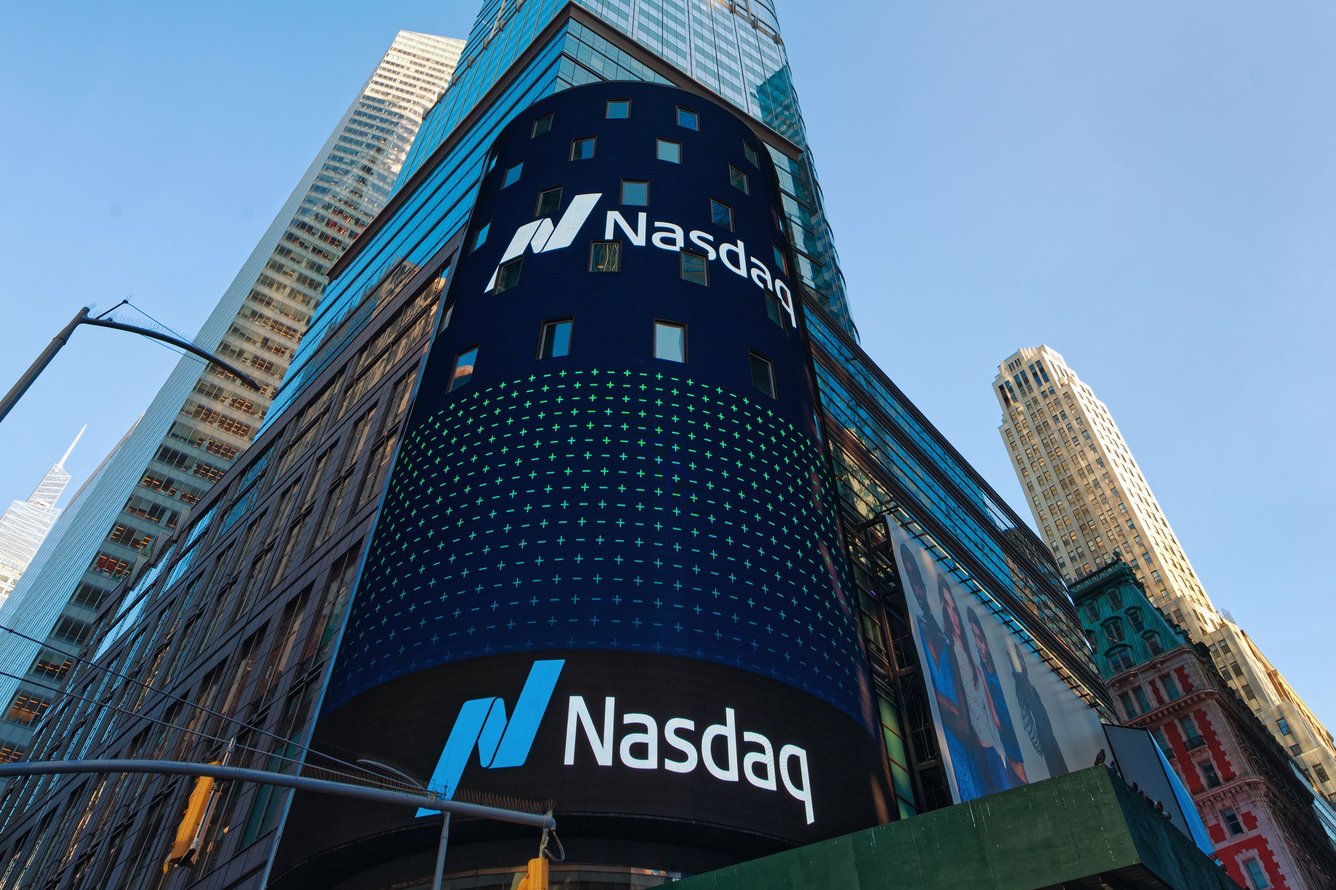
IDEA OF THE DAY Have you ever felt the sudden urge to trade stocks at 2am? Well we’ve got great news for you. Nasdaq already operates during regular market hours, of course, and there’s always pre-market (4am to 9:30am) and post-market (4pm to 8pm) trading as well. But on Monday, the exchange filed a request with the SEC to create a new trading session from 9pm to 4am ET, essentially asking regulators to let markets stay open 23 hours per day. Nasdaq touted the move as beneficial for international investors, whose insatiable appetite for US stocks has grown this year, and noted that markets will be able to quickly price in news and reports that occur outside of regular trading hours. It’s also a win for degenerate retail investors with nothing better to do in the middle of the night than YOLO their money into meme stocks. Opponents warn that liquidity in the middle of the night will be razor thin, which could create some serious volatility. Wall Street bankers also noted that providing customer support and building tech that trades around the clock will be expensive, and there’s no guarantee of returns on those investments. Before you start trading all day every day, the market’s plumbing needs to be updated: That means new systems established by the US Depository Trust & Clearing Corp and the Operating Committees of the Securities Information Processors. Both organizations already have plans in place to revamp their operating hours by the second half of 2026, and once that is done, the door will be wide open for investors to trade all night long.—MR |
|
|
AI When CoreWeave debuted in late March, the AI datacenter company had a lot to live up to. At the time, CoreWeave was the first big tech IPO since 2021 and a self-proclaimed “pure-play” AI firm, which came with all the hype—and all the baggage—you would expect. The day of the IPO was initially underwhelming, but in the first three months of trading CoreWeave surged roughly 300%, seemingly proving that traders were still hungry for more ways to invest in the “picks and shovels” of the AI boom. But now, CoreWeave is trying to weave together some optimism, because things have taken a serious turn for the bearish. Shares have plummeted 56% over the last six months, including a 23% drop in the last five trading sessions alone. The culprit is a combination of AI bubble fears, some genuine red flags about the business, and one really loud hater: Jim Chanos. The core of CoreWeave’s woes CoreWeave is one of those companies that you’ve probably heard of, but don’t really get what they do. Essentially, CoreWeave’s core business is capitalizing on the huge demand for AI datacenters. The company uses high-interest debt to buy tons of Nvidia chips, and then rents out access to those chips to Silicon Valley giants like Microsoft, Meta, and OpenAI. When the AI trade is bumping and CoreWeave is doubling its revenue, those loans look like a smart trade-off. But when fears start trickling through Wall Street that the circular AI trade is beginning to implode, all of a sudden investors start to see that high-interest debt, as well as CoreWeave’s reliance on a few high-powered customers, as a huge liability. D.A. Davidson’s Gil Luria, for example, wrote in a note that CoreWeave has the “ugliest balance sheet” in the whole tech sector. It isn’t just analysts that are concerned: In late October, CoreWeave’s proposed acquisition of Core Scientific fell apart after Core Scientific shareholders rejected CoreWeave based on its crummy balance sheet, according to the Wall Street Journal. Jim Chanos, the short seller who famously bet against Enron, is also calling BS on CoreWeave’s business, arguing that the datacenter construction business is too capital intensive. Finally, CoreWeave is contending with one more headwind: headwinds. Wind and rain from summer storms in Texas delayed the construction of one of its biggest AI datacenters, which it planned to lease to OpenAI, according to the WSJ. Management bungled communications about the delay, further scaring off investors. CoreWeave’s tumble hits right at the heart of AI bubble fears: If a hyped-up stock with so much initial demand can’t keep up momentum, then how can the rest of the industry survive?—LB | | |
|
|
NEWS - CEOs are starting to reluctantly embrace President Trump’s version of state capitalism.
- Speed bump: Ford is taking a steep $19.5 billion hit in charges tied to its EV business.
- PepsiCo worked to spike prices of soda and other products to help Walmart, the FTC alleged in a recently unsealed lawsuit that had been dismissed by the Trump administration.
- National Economic Council Director Kevin Hassett argued that his friendship with President Trump should not disqualify him from the role of Federal Reserve chair.
- Kraft Heinz chose a new CEO to lead it through its breakup.
- Here’s how one relatively unknown power market auction could spike utility bills across the country.
|
|
|
CALENDAR A week of big data reports takes a short pause tomorrow, but we’ve got plenty of FedSpeak to fill the void. We’ll hear from Fed governor Chris Waller, NY Fed President John Williams, and Atlanta Fed President Raphael Bostic. As for earnings, the only big names on deck are Micron Technology and General Mills. |
|
|
RECS  Enter the winners’ circle: These are the 10 best performing semiconductor stocks of 2025. Enter the winners’ circle: These are the 10 best performing semiconductor stocks of 2025.
 Move to San Francisco and make $7,092 per month: Here are the average monthly salaries in major cities around the world. Move to San Francisco and make $7,092 per month: Here are the average monthly salaries in major cities around the world.
 Don’t wait until you die to give your adult children money: Financial advisors say that monetary gifts during adulthood go a lot farther than an inheritance. Don’t wait until you die to give your adult children money: Financial advisors say that monetary gifts during adulthood go a lot farther than an inheritance.
 What does 3.2 billionths of a second matter? Ask the high-speed traders feuding over lightning-fast data connections and the hundreds of millions of dollars at stake. What does 3.2 billionths of a second matter? Ask the high-speed traders feuding over lightning-fast data connections and the hundreds of millions of dollars at stake.
 The oldest members of Gen X turn 60 this year, and they’re far behind previous generations when it comes to retirement savings. Here’s how they’re scrambling to close the gap. The oldest members of Gen X turn 60 this year, and they’re far behind previous generations when it comes to retirement savings. Here’s how they’re scrambling to close the gap.
 For modern traders: Low commissions, advanced tools, and smart support await on tastytrade. On their intuitive platform, you can trade stocks, options, futures, forex, and crypto. Learn more.* For modern traders: Low commissions, advanced tools, and smart support await on tastytrade. On their intuitive platform, you can trade stocks, options, futures, forex, and crypto. Learn more.*
*A message from our sponsor. |
|
|
|
ADVERTISE // CAREERS // SHOP // FAQ
Update your email preferences or unsubscribe .
View our privacy policy .
Copyright © 2025 Morning Brew Inc. All rights reserved.
22 W 19th St, 4th Floor, New York, NY 10011 |
|







.png)