 |
| |
Hello discoverers!Lately I’ve been receiving a lot of emails that follow a recognisable rhythm: a long-time reader of DD, appreciative of how the newsletter navigates technology and culture, reaching out because I once covered a topic related to their project. AI is now very good at describing DD back to me using fragments scraped from the web. The connection to my work feels just specific enough. The flattery is calibrated. Robin Sloan wrote about this recent uptake in fake personal pitches – a new flavour of AI-assisted outreach: someone runs a prompt to find people or publications who might promote their project, then generates a ‘personalised’ email for each one. “I don’t understand how anyone could think it’s okay to run the prompt above. I am here to tell you: it’s not okay! Besides being plainly rude and dishonest, these messages ‘pee in the pool’ of internet communication, making it more difficult for sincere creators to send authentic emails about their projects, simply by raising the ‘noise floor’ of simulation and bullshit.” I’m not categorically against using AI to help out with tedious work. But there’s a difference between using a tool to say something you actually mean, and using a tool to manufacture the appearance of meaning something. I know it’s a bit naïve to appeal to common decency when the same technology is busy guiding weapons systems, but please don’t outsource sincerity. Don’t pretend to care about someone or something just to get their attention. The damage isn’t just annoyance. It’s suspicion that gets attached to genuine messages. Emails I would have read warmly now carry an asterisk. Did a person write this? Does this person actually care about my work, or is this just another prompt in the dark? Some of my favourite emails are pitches – someone making something creative and replying to tell me about it, personally, thoughtfully. I love those. They feel like the newsletter working the way it’s supposed to. The AI-generated version wears that same face. And now, every time I see it, I have to decide whether I’m reading a person or a performance. And that adds up – a tiny erosion of trust, email by email, into something that feels like a much bigger loss. And now to this week’s discoveries. – Kai |
|
Hello there, and welcome to the Fog issue! This is Dense Discovery, your weekly dose of laboriously handpicked links from a quarterly-earnings-driven web. Writing to you and 35,505 others is Kai Brach based in Narrm. In the previous issue, this link got most of the clicks. Got thoughts on this issue? Simply hit reply – I read every email. Happy discovering! |
|
| |
Sponsor |
The hard part is not remembering to take breaks. It is taking them without breaking your flow. You are halfway through a sentence. Sharing your screen. Watching something. Finally getting into the flow of work. That is usually when a break reminder decides to appear. LookAway gives you a gentle heads-up, then waits when the timing is wrong. If you are in a meeting, recording your screen, typing, dragging, or watching a video, it holds off and comes back when the moment makes more sense. It still reminds you to blink, reset your posture, and step away. Just without making you want to turn the reminder off. It can also mirror breaks on your iPhone, so looking away from your Mac does not quietly become looking at your phone. Try LookAway. |
|
| |
Tools |
A hands-on explainer/guide that walks through the big ideas behind modern AI – neural networks, embeddings, attention, transformers – with interactive widgets built right in so you can poke at real models and see what breaks. I only read the first two chapters but already found the examples very enlightening. |
|
Natural language Finder commands |
Substage docks a command bar beneath your Mac’s Finder window and lets you just... describe what you want done. Select a file, then type ‘convert to MP4’, ‘resize to 100px width’ or ‘check the PDF’s author’ – all in plain English. It even has a ‘simulate before running’ safety feature – a nice touch for anyone who’s ever accidentally nuked a folder in Terminal. |
|
Mac folder automation rules |
Set up rules once and Rulebook handles the rest – sorting, renaming, converting, tagging, and moving files in the background whenever something lands in a monitored folder. |
|
A free weekly newsletter run by two brothers who simply love movies – each Tuesday, you get a hand-picked list of recommendations, with spoiler-free context for why it’s worth your time. A lovely idea and a nice antidote to the paralysis of infinite streaming choice. |
|
Guest |

Five recommendations by AI ethicist and action philosopher Nate Kinch. |
A video worth watchingIn less than 30 minutes, Daniel Schmachtenberger describes the core properties of our evolutionary universe, along with our responsibility as evolutionary beings to act courageously in service of better futures. A question worth askingI’ll be a tad cheeky and offer a series of supporting questions: 1) What is real? 2) What is knowledge and what can be known? 3) What truly matters? And 4) How should I act in this world? Together, the process of asking and living these questions will become your always evolving philosophy. A concept worth understandingAI is not magic. It’s materials, energy and mathematics. Because of the nuances of AI’s history and present reality, our development and use of AI is having an increasingly significant impact on the world we co-inhabit. So, before using AI in any context, pause and consider, are the possible benefits I’m motivated by actually worth the guaranteed costs? A word worth knowingAutopoiesis refers to ‘a network of inter-related component-producing processes such that the components in interaction generate the same network that produced them’. In other words, a self-making system. This is what you are. And the kinda crazy, sort of scary, yet very cool thing is that you have the ability to consciously impact aspects of this process! An activity worth doingDeath meditation. This is an activity that uses multi-sensory visualisation (a little like the practice of functional imagery training) to clearly imagine and experience your death and the death of loved ones. Be with the profundity of your emotions, be kind to yourself in the process, and allow yourself to embrace the tragic beauty of our finitude. It’s quite possible you will live with more freedom as a result. (Did you know? Friends of DD can respond to and engage with guest contributors like Nate Kinch in one click.) |
|
| |
Books |
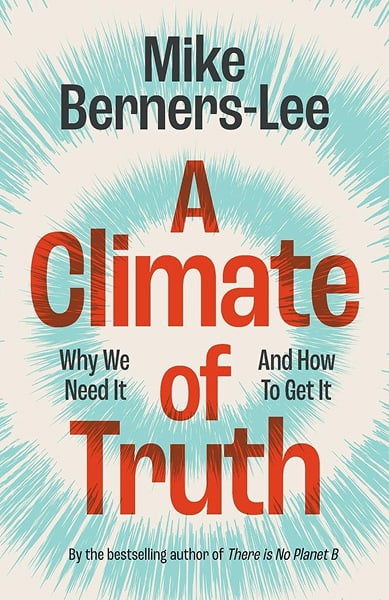 | Honesty as climate strategyThree decades of climate COPs and we’re still accelerating toward collapse. Mike Berners-Lee’s case is that the missing ingredient isn’t data, technology or public will, but honesty. He traces the polycrisis of climate, food, biodiversity and inequality back to a single root cause: the systematic tolerance of dishonesty in our institutions. Sobering, but apparently practical too. |
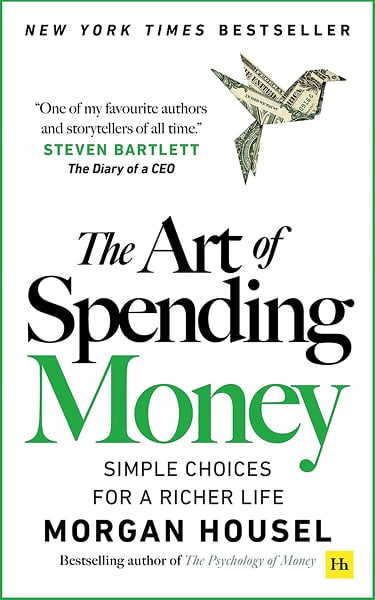 | Using money without regretMorgan Housel follows up his very popular The Psychology of Money with a more personal question: not how to accumulate wealth, but how to actually enjoy it. Not so much financial advice, but more a guide to the emotions and biases that shape every spending decision we make. Worth reading even if you already think you have a healthy relationship with money – maybe especially then. |
|
Socials |
To succeed on Substack you have to understand that everything is a matter of cultural decline. You don’t just post a picture of your sandwich and say “this was a good sandwich”. You post it and say “they don’t make sandwiches like this anymore”. The sandwich represents the West. on Substack |
| |
Media |
Read |
Fascinating to read how poorly the economics of current AI usage stack up. Companies like OpenAI and Anthropic face enormous data-center bills and investor pressure. This very insightful piece by Hayden Field shows that the ‘free’ era of AI is coming to an end. She explains the token economics behind price hikes, ads and usage caps, and how AI-based startups are scrambling to cut costs or go open source. |
“To reach that bare minimum of 7 percent [ROI], Gartner forecasts that large AI companies would need to earn cumulatively close to $7 trillion in AI-driven revenue through 2029, which is close to $2 trillion per year by the end of the period. In order to achieve ‘historic returns’, the providers would need to earn nearly $8.2 trillion in the same period.” |
|
Read |
The idea that engine decibel levels and the amount of smoke coming out of an exhaust are expressions of manliness is one of the more stupefying features of modernity. Somehow we managed to teach men that environmentalism is a feminine thing. In this essay, Andrew Boyd unpacks ‘petro‑masculinity’ – a macho fusion of fossil fuels, climate denial and fragile manhood – and argues for an ‘ecomasculinity’ rooted in care, responsibility and courage. |
“By painting green tech in a more traditionally masculine and ‘virile’ way, advocates are trying to he-code climate solutions. ... Ford’s 2023 testosterone-amped launch of its all-electric F-150 Lightning pick-up truck is one example. Meanwhile, more than a few renewable energy PR teams have deployed scenes of men strapping on a tool belt and climbing rung by rung 300 feet into the sky to fix a wind turbine, to convince manly men that they have a place in America’s brave Green future.” |
|
WatchThis is a very nerdy and necessary breakdown of how to tackle the climate and many related crises of our time. The extremely articulate Nate Hagens shifts from diagnosing our “more-than-human predicament” to outlining a detailed framework for action: grounding ourselves emotionally, building local trust networks and organising around six fronts from infrastructure to culture and post-growth economics. It’s ambitious and very sprawling, but I’ve never heard anyone map out an answer to ‘what now?’ as clearly as Hagens. |
|
| |
Inspiration |
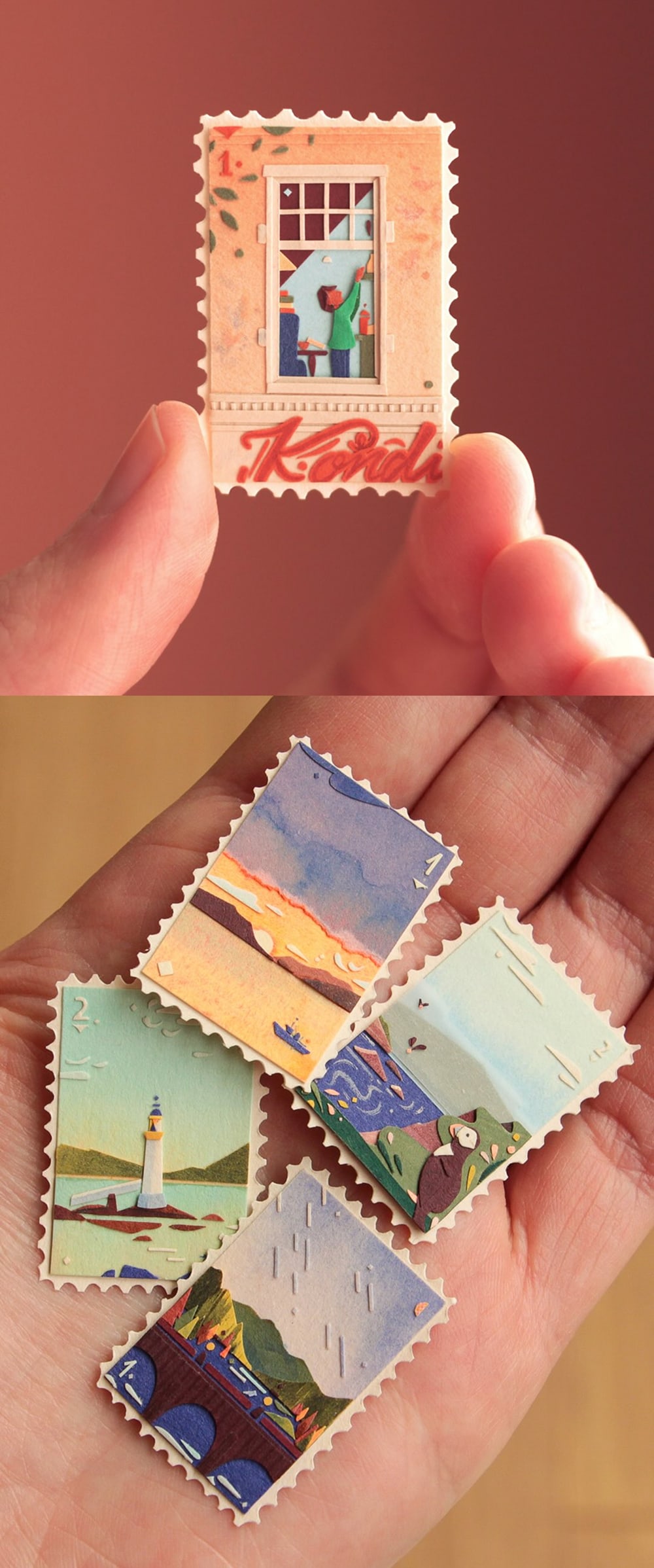
Glasgow-based illustrator Laura K Sayers crafts miniature paper worlds that express her joy in everyday moments and the turning of seasons. |
|
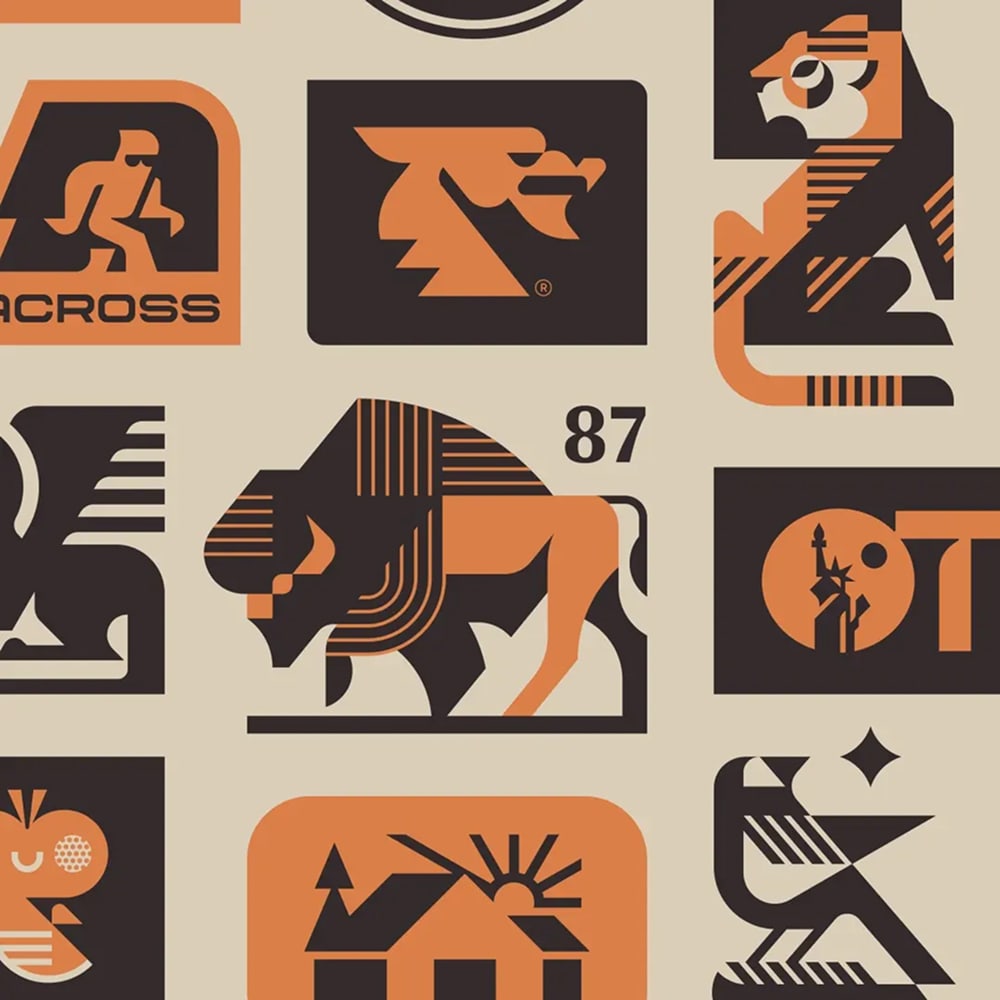
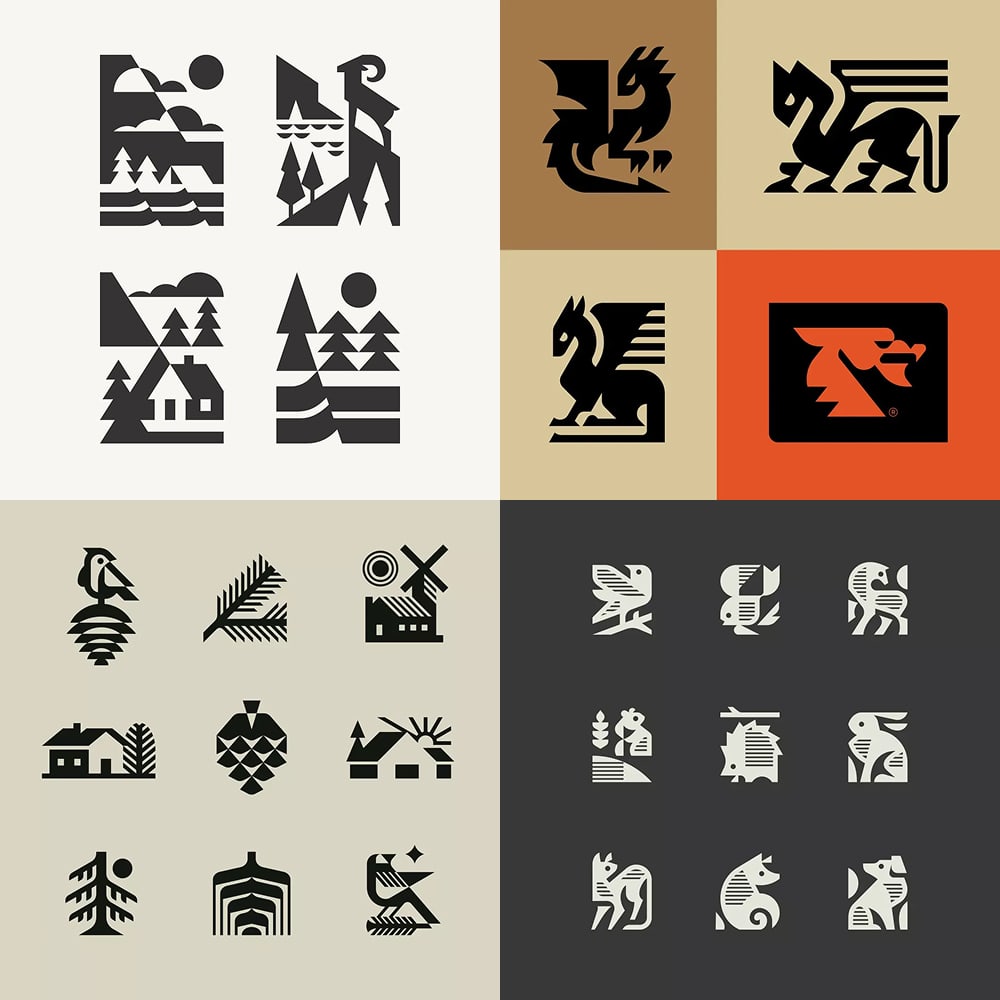
Konstantin Reshetnikov designs logos and brand identities with a bold geometric precision and a nod to folk and heraldic traditions. |
|
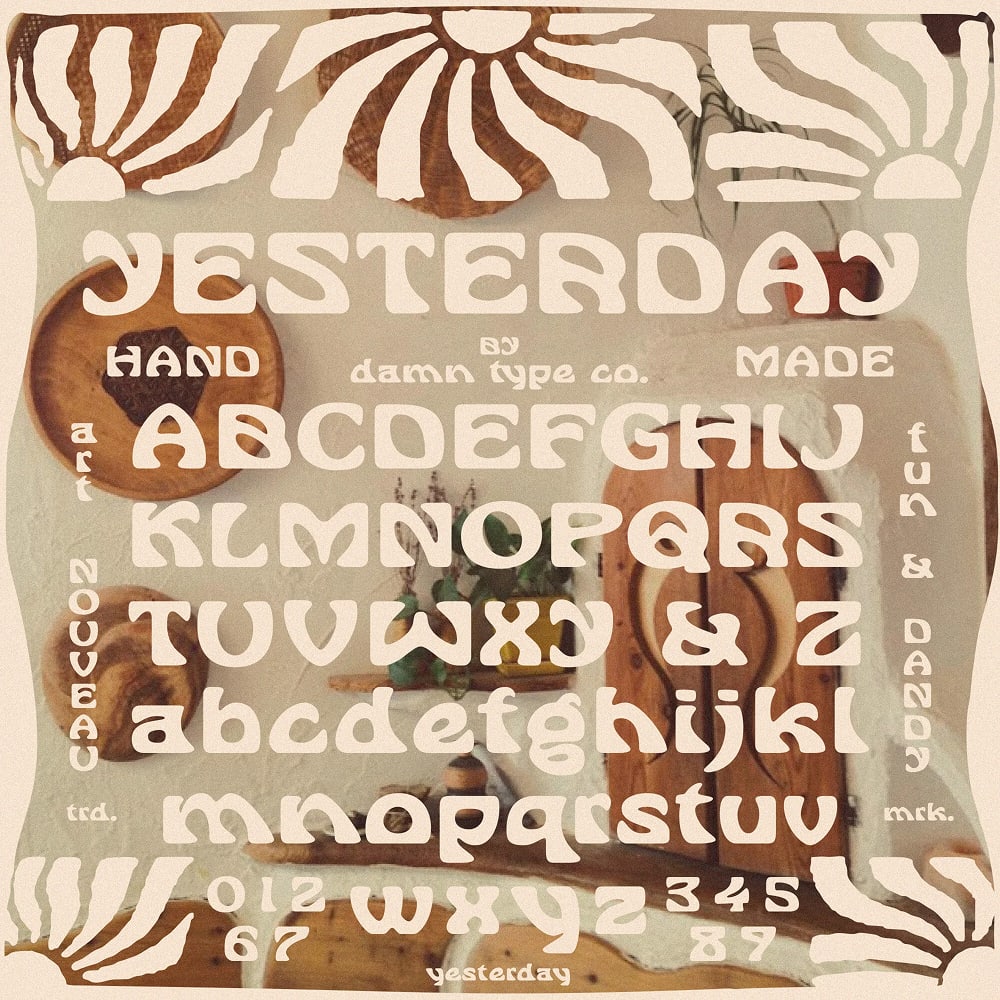
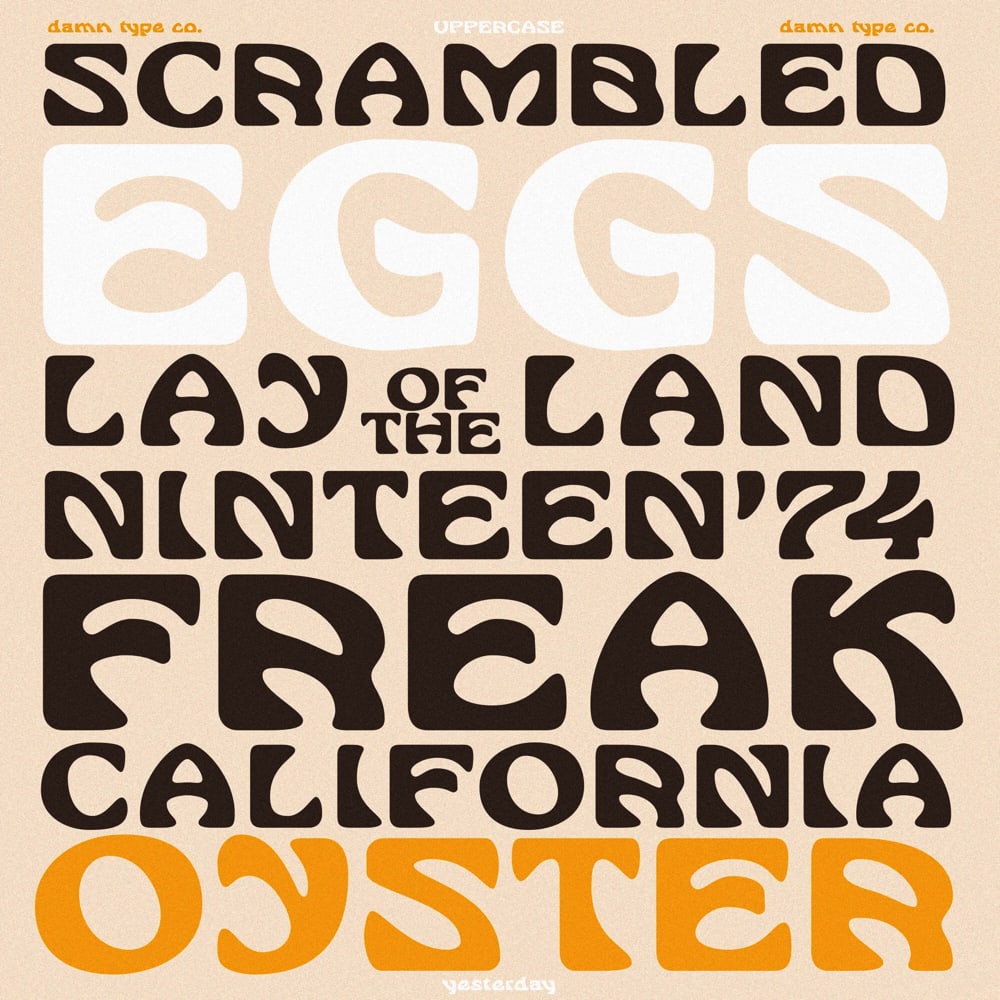
Font of the week: Yesterday is a display font that marries Art Nouveau elegance with 70s funk, drawn from a century-old menu and finished with distinctive flat-based lowercase letters. |
|
| |
Classifieds |
What do you quietly accept as normal – sometimes without even noticing? NORM are drawing a collective portrait of the invisible rules we live by. Every norm is revealing more. Add yours to NORMdrop. We just marked 9 years of the Weekly Thing, my personal weekend email. Readers say they feel informed, curious, and genuinely smarter. If you enjoy Dense Discovery, you’ll feel right at home. Paid a contractor $11K for six weeks of work. Shipped zero of it. The playbook I built from that is now how I run an AI-powered design studio. Studio Method A daily planner with integrated native and file-based markdown notes? A new experiment in personal productivity in the latest Finalist Beta. Indie iOS/macOS. |
Classifieds are paid ads that support DD and are seen by 38,000 subscribers each week. Book yours here. |
|
Numbers |
1.4 In 2025, the world was around 1.4°C (2.5°F) warmer than pre-industrial times – and that’s during a cooler La Niña phase. Today’s ‘cool’ years are now hotter than the ‘warm’ El Niño years of just a few decades ago. |
82 Australia’s renewables target of 82% by 2030 – long written off by some analysts – is back in play. A surprise boom in solar and batteries has the local regulator now calling it ‘plausible’, not a stretch. |
|
| |
Socials |
❌ Data breach
✔️ Surprise off-site backup on Mastodon |
| |
Mood |
|
| |