 | | | Hello discoverers!After making a case for our right to rest in public spaces last week, writer Leo Umilio got my attention with an essay that turns the whole premise on its head. Not just rest in public, but rest itself. His argument: the kind of rest our culture endorses isn’t really rest at all. It’s maintenance. It’s the oil change your employer needs you to perform so you show up on Monday, sharp and ready to perform. Umilio draws a line between rest and idleness. Rest, he writes, “is idleness with an alibi”. It can be justified, sold, optimised. It earns its place in the economy of your time by making you better at everything that comes after. “Rest can be sold, because rest promises a return. Buy the mattress, the app, the retreat, the supplement, and you will work better, earn more, perform at your peak. The promise is always, in the end, a promise about your output.” Idleness, by contrast, refuses the whole framework: “The idle hour does not exist in order to improve the hours around it. It does not recharge you for anything. It is not an investment whose return is collected later at the desk. It serves nothing, points toward nothing, produces nothing, and answers to no one, and this is not a flaw to be corrected but the entire substance of the thing.” Which is why the wellness industry adores rest and has nothing to offer idleness. Rest can be packaged. Idleness cannot. “You cannot monetise a man staring at rain. You can sell him a meditation app that promises the rain-staring will lower his cortisol and improve his quarterly performance, but the moment he accepts that pitch he is no longer idle. He is resting, strategically, on the advice of his wellness coach. The rain has become a tool.” You could argue this is splitting hairs or fighting over semantics, but Umilio is pointing at our broader habit of absorbing acts of refusal and selling them back as a technique. Walking becomes a ‘wellness practice’ with a step count. Doing nothing becomes ‘niksen’, a Dutch lifestyle trend, complete with methodology and a book deal. Even boredom has been captured: “Boredom is good for you, the articles announce, boredom boosts creativity, boredom makes you more productive when you return to work. And there it is again, the inevitable return to work, the alibi reattached to the very thing that was supposed to escape it.” I can think of many other examples of this semantic creep. Leisure becomes ‘recreation’ and now implies a purposeful activity designed to restore you. Learning becomes ‘upskilling’ – curiosity reframed as labour-market capital. Community has gradually become ‘audience’ – people are not participants but consumers surrounding a brand or a creator. The counterpoint, and it’s a big one, is that most of us aren’t really in a position to treat idleness as a philosophical stance. Some people rest strategically because that’s all the time they have. Umilio acknowledges this too – rest is good, rest is necessary. His argument isn’t against recovery but against the belief that recovery is the only legitimate form of stillness. The case he’s really making is for an hour that answers to nothing: “not time freed up for other tasks, but time that is genuinely free, owned by no purpose, answerable to no return.” Worth sitting with – unproductively, if you can. And now to this week’s discoveries. – Kai | | Hello there, and welcome to the Japonica issue! This is Dense Discovery, your weekly dose of impeccably second-guessed links from a hopelessly cluttered web. Writing to you and 35,766 others is Kai Brach based in Narrm. In the previous issue, this link got most of the clicks. Got thoughts on this issue? Simply hit reply – I read every email. Happy discovering! |
| | | Sponsor | Invest in a future that feels more human, creative and alive. Built by a fellow DD reader, VAWAA is a global platform where people travel to learn directly from master artists in their studios through immersive, multi-day apprenticeships across 42 countries, from pottery and shoemaking to basketry, sculpture and culinary arts. After hosting thousands of hours of hands-on creative learning, VAWAA is opening its next chapter through a Wefunder community round designed to let thoughtful humans around the world help own and grow the category with us. As AI reshapes more of our lives, we will need more human creativity and real-world connection. There are 26 days left to join the round. Starts at $1,000. Check our investment options → Email us for larger investments. |
| | | Tools | Finally, a book landing page |
I’ve long wanted a single ‘landing page’ for my book recommendations: a list of links of where to purchase (ideally locally), borrow and keep track of the book in question. Well, indie dev Bodo Tasche built exactly that with Bookpile, and I want to see it thrive! From now on, all DD book links will go there. (Here’s an example or click on a link in the Book section below.) One small ask: if you know a good local bookstore or just a national chain, add it via the suggestion form – the more stores in the system, the more useful it gets for everyone. So please go ahead and make sure your city is represented! |
| Rate, review, queue and list your way through a life in music – then see what others are spinning and how compatible your taste is. It’s what Last.fm always promised but never quite delivered, with a clean, clear interface and (what looks like a) great sense of community around it. |
| Clop sits in the background and automatically optimises images or videos the moment you copy them. It also can edit them (e.g. scale, add watermarks, convert to WEBP) to make regular handling of media quick and easy. |
| A browser extension that does two useful things: snooze any tab to a specific time in natural language (e.g. ‘tomorrow 9am’ or ‘in 2 hours’) and auto-close anything you haven’t looked at in a set amount of time – though you can recover them. |
| Wanderings | Charming discoveries from the internet’s back alleys that you don’t need but might love. |
A searchable archive of every question ever asked of ISS astronauts – by students, journalists and curious people – across more than two decades of in-flight interviews. Click anywhere on a map, set a radius and get an estimated 2025 population for that circle – anywhere in the world. John Wallace has an obsession with physical media – the punch cards, magnetic tapes, shellac discs and cartridges that stored human culture before the cloud made storage invisible. Here he collects, documents and explains over 1700 different data storage objects. Drop down a freedom or democracy index, click any country and the Civic Atlas shows you where its legislative power actually sits, how it’s governed and how it scores across multiple measures of democratic health. Part of a campaign of UK’s Labour party, but a really smart idea: a browser-based budget simulation that puts you in charge of a fictional UK council – modelled on real data – and asks you to balance the books over four years as social care costs spiral. The verdict is the same every time and almost anywhere: no council can succeed under the current funding system. I’d love an Australian version of this to stop the endless complaining about council inaction. |
| | | Books | 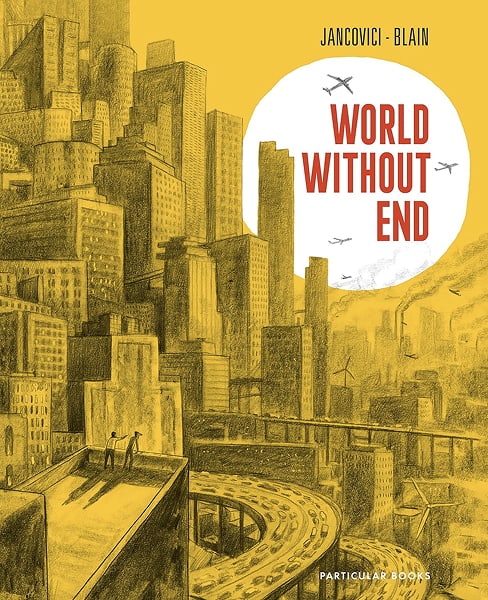 | A graphic guide to energy realityA climate scientist and a cartoonist walk into an energy crisis – and what comes out is a graphic novel and one of the most accessible explainers on how our world actually works. Scientist Jean-Marc Jancovici reframes everything: oil, history, economics, food systems, and why the math of a liveable future is so much harder than switching to solar. Christophe Blain listens and draws. |
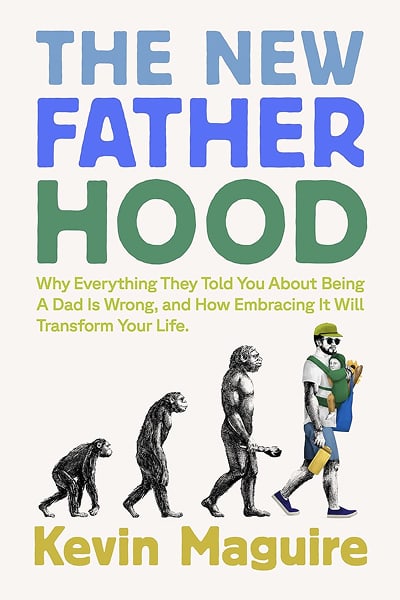 | A manifesto for modern dadsKevin Maguire runs a very popular newsletter on fatherhood and The New Fatherhood is the book that grew out of it. It’s about the gap between the fathers we were raised to be and the ones our kids actually need: rethinking success, masculinity and the stories we inherit, with practical frameworks for even the most turbulent moments. Friends of DD can win 1 of 3 free copies. Become a Friend to access specials like this. |
| Socials | The question is not how fast someone can create software. The question is how long after creating the software will someone support it. on Mastodon | | | Media | Read | This essay teases apart ‘rest’ from true idleness and shows how the wellness industry keeps smuggling work back into our downtime. Leo Umilio argues that rest is sold to us as a way to optimise performance. Instead, we ought to consider idleness, which refuses to be useful at all. It’s a lovely piece that defends moments that produce nothing – time that isn’t a tool, a habit or a hack, but an end in itself. |
“Because a life in which every hour serves work, including the hours of rest that serve work by restoring you for more work, is a life that belongs entirely to work, even in its leisure, even in its sleep. Such a life has no outside.” |
| Read | An absolutely wonderful reflection on how David Attenborough’s once‑gentle nature docs evolved into a clear, urgent warning about a planet in crisis. As he turned 100, this piece traces his voice from boyish awe to weary authority. I love the way it describes his unique power of articulation which made him something like Earth’s narrator-in-chief, though it also suggests, rightfully in my view, that this awakening to climate danger came rather late. |
“In his old age, Attenborough’s words are held together largely by the dueling poles of enthusiasm and concern; once formed, they leave a trail and dissipate like vapors. Yet his voice is paradoxically more powerful than it ever was in the vigor of his youth. It doesn’t boom or bellow. It resonates like a conscience.” |
| Read | My fascination with Dubai continues. It’s such an odd place that seems to exist purely to impress, all shiny and dramatic attractions that feel somehow unsustainable. In this piece, Richard Florida uses it as the emblem of a new kind of ‘placeless’ global city – built for money and mobility rather than rooted communities – and argues that when identity is decoupled from place, you get something dazzling and deeply fragile at the same time. |
“The more mobile we become, moving across borders and among cities, the more we hunger for the identity that once came from being rooted in place. That simple fracture lies behind much of today’s social and political turmoil, feeding the anger that fuels populist movements and the tribalism that splits societies.” |
| Read | Some great visualisations in this piece on California’s proposed one‑off 5% tax on extreme wealth. It shows how tech fortunes have exploded while contributing vanishingly little in tax and argues that fears of capital flight are overstated. A modest levy could plug the state’s budget holes and to – a minor extent – rein in extreme inequality without harming Silicon Valley’s image as the venture capital capital of the world. |
“The billionaire class in California includes roughly 250 households, a mere 0.001 percent of the state’s families. Yet its wealth now amounts to more than half of California’s entire annual economic output.” |
| Inspiration | Felix Chesher’s hyper-realist oil paintings find their subject matter in the unglamorous, intimate corners of male life. His work shows the technical precision of classical portraiture, but applied to moments most painters wouldn’t bother to notice. |
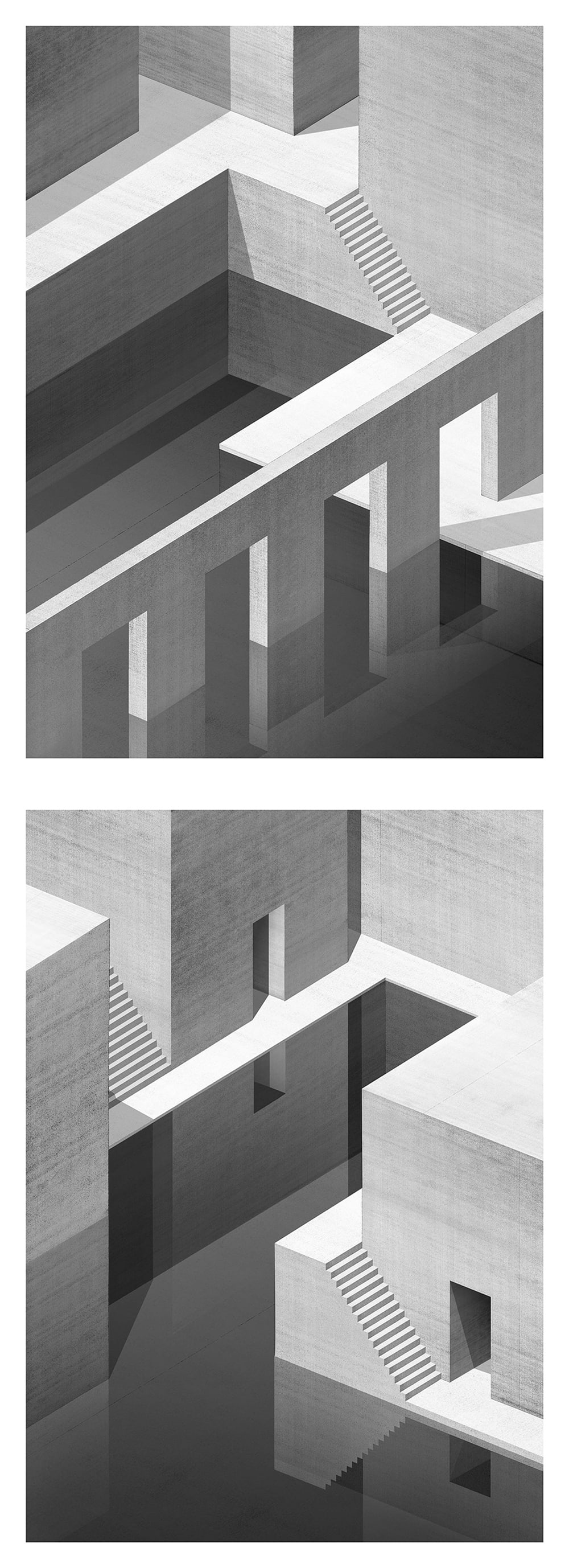
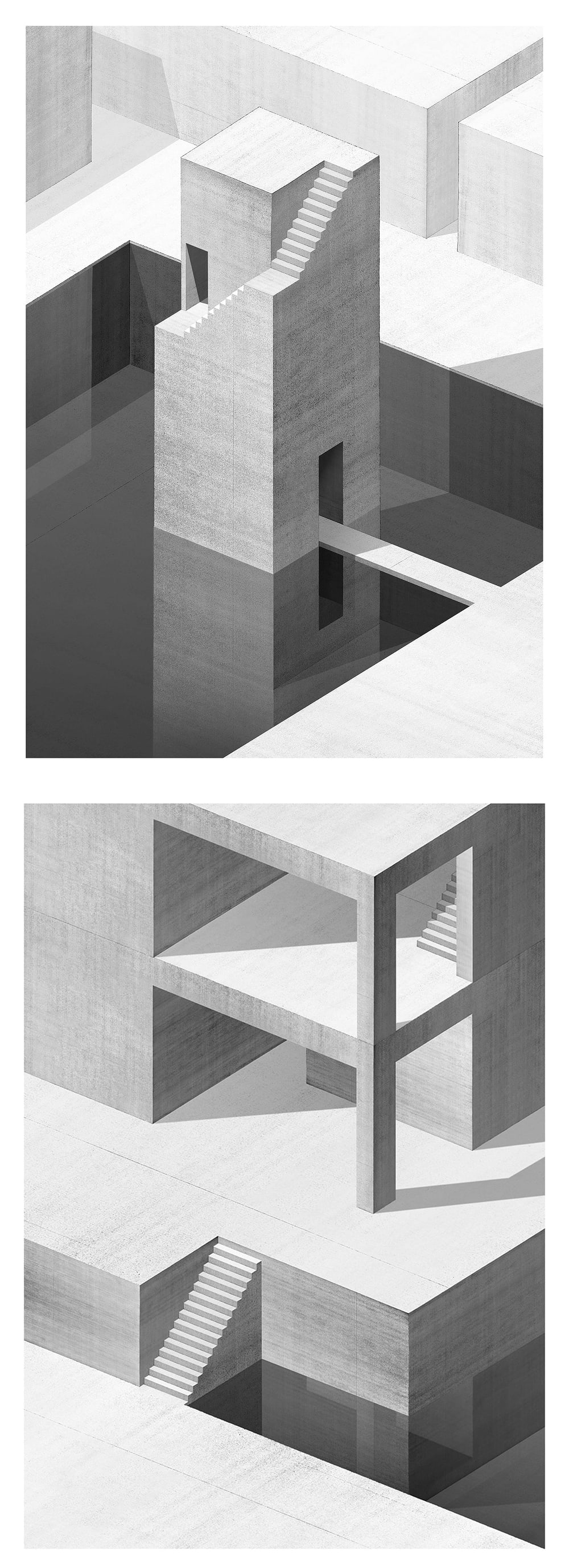
| Takaaki Yagi is a Japanese art director and designer whose Still City series conjures imaginary architecture from the grain and noise of old copy paper – brutalist staircases, shadowed colonnades and cantilevered voids. |
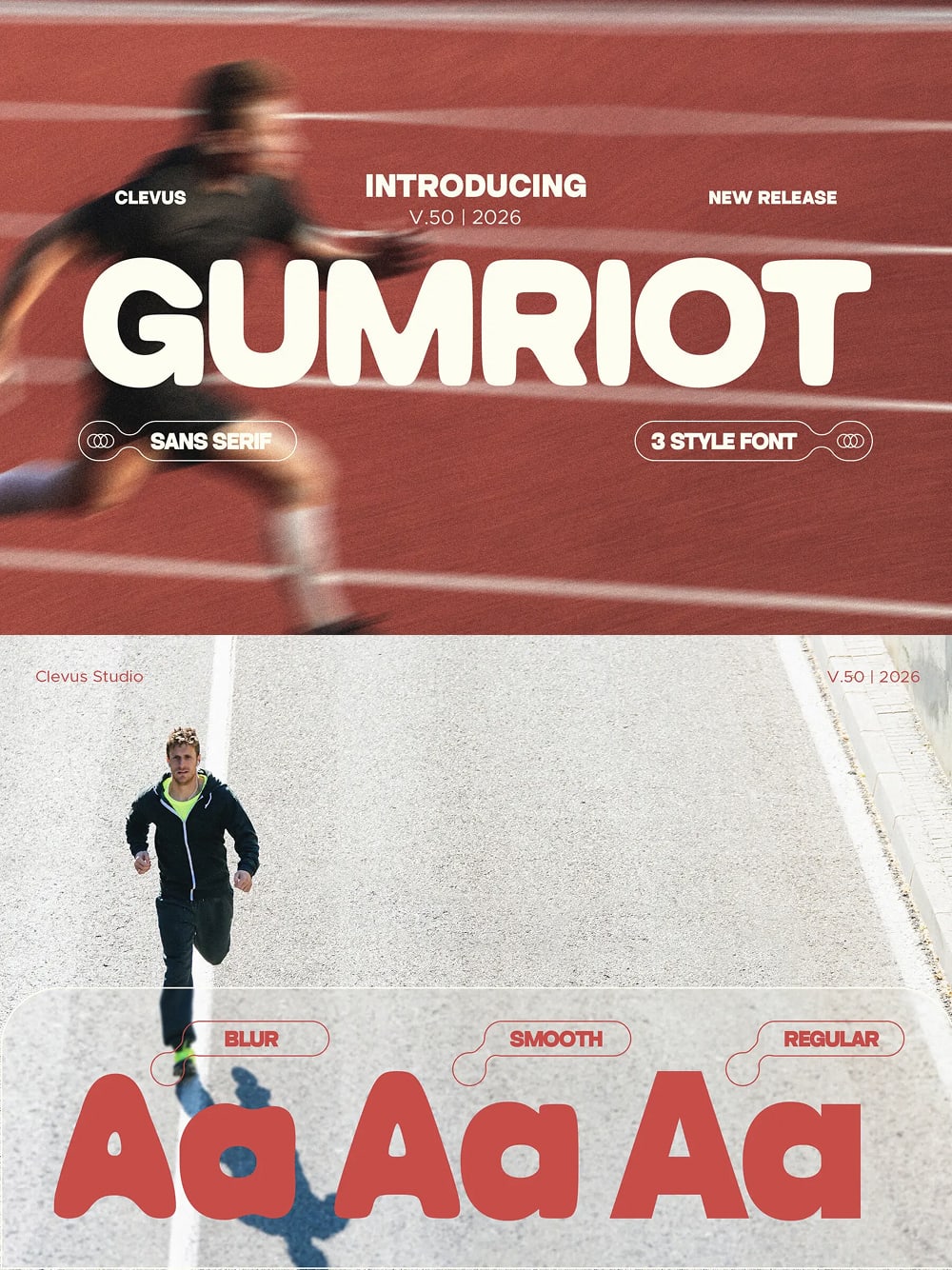
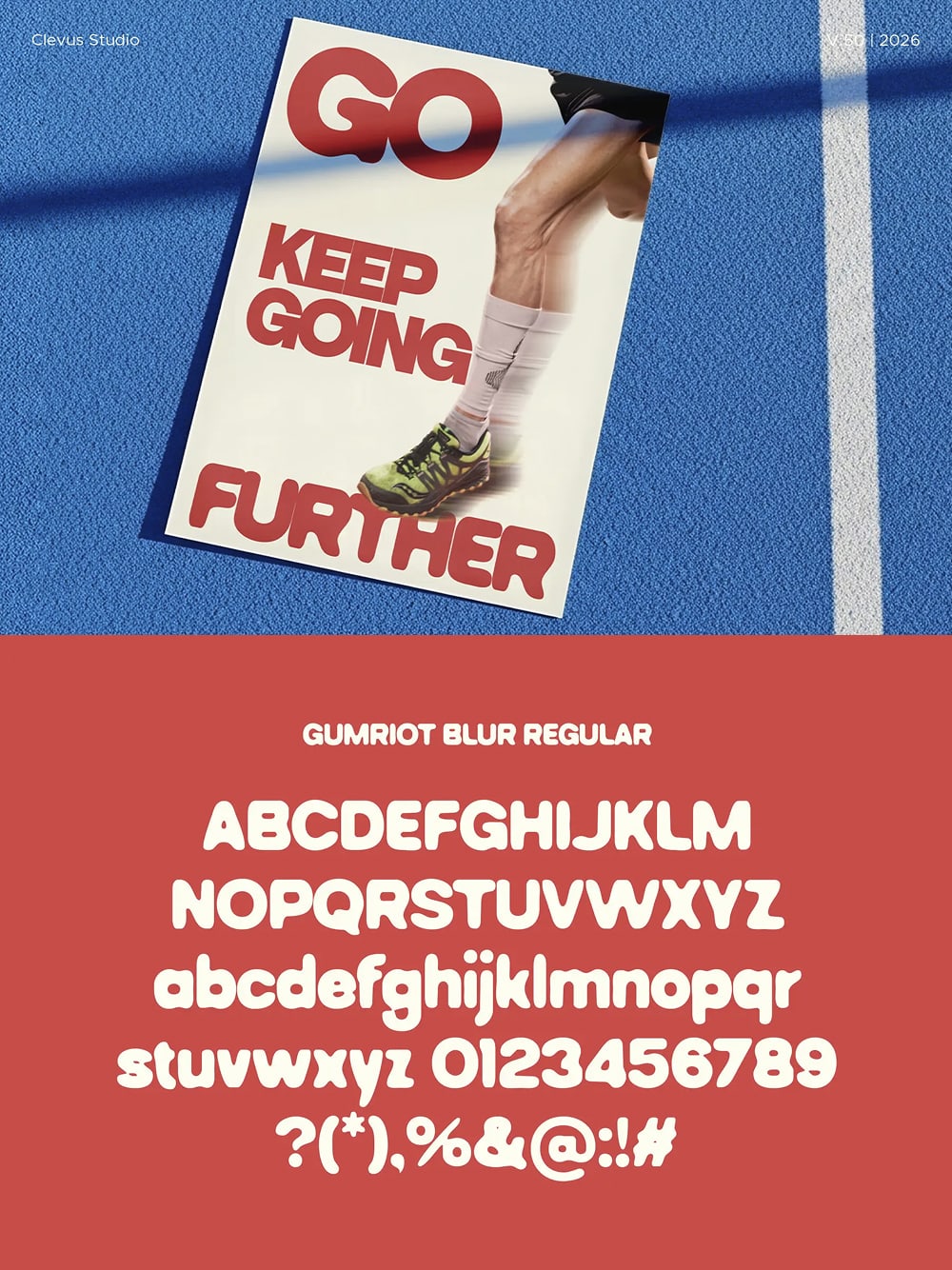
| Font of the week: Gumriot earns its energy through sheer mass rather than gimmicks. The font comes in three weights of attitude: Regular for logos and lockups, Smooth for lifestyle packaging, and Blur for overconfident headlines. |
| | | Classifieds | The newsletter your overthinking brain didn’t know it needed. Miss the feeling of finding art before algorithms dehumanised everything? Jessica Cotten’s Patreon is a quiet room for songs, stories, process notes and creative company. From $5/month. Need to decompress from your screen and get something that looks good on your coffee table? Get this linen-bound Wordsearch Book that’s just like 4th grade but all grown up. Curating is dead. mymind is a place to be messy, contradicting and yourself. Save what genuinely interests you, without the pressure to perform. No audience watching, no algo telling you what to like. |
Classifieds are paid ads that support DD and are seen by 38,000 subscribers each week. Book yours here. |
| Numbers | 100 More than 100 UK data centres are requesting gas connections – not as a backup, but as primary power. Those requests add up to 15 terawatt hours a year, enough to run the whole of London for four and a half months. |
100 The UK government quietly admitted its carbon emission estimates for AI data centres were 100 times greater than previously thought. Revised projections now put AI-related emissions at up to 123 million metric tons of CO2 between 2025 and 2035, or 3.4% of total UK emissions. |
| | | Socials | The average AI programmer in the US makes $160,000 per year.
The average preschool teacher makes $37,000.
We’ve decided that it’s 4x more valuable to train a plagiarism machine than the next generation of Americans. on Threads | | | Mood | | | |
|