 |
| |
Hello discoverers!One of the more bizarre features of this era is that even people who are doing objectively well by any reasonable measure can’t seem to shake the feeling that they’re falling behind. Financial journalist Hanna Horvath has written a very clarifying essay on why this might be happening. She traces how ‘middle class’ stopped being an economic category and became a psychological one – a story about the kind of life you think you deserve. Which means when the story doesn’t match the reality, the gap hits hard: “‘Middle class’ has become a psychological container that absorbs all of this anxiety – the gap between self-concept and lived experience, between what you were trained to expect and what the economy actually delivers. The term ‘middle class’ holds a feeling. And right now, the feeling is dissonance. ‘I have what I was told would be enough, and it isn’t, and I don’t know who to be angry at.’” Horvath argues that there are two distinct experiences at play. Some of us feel ‘material precarity’ – when the basics genuinely slip out of reach – and others feel ‘positional precarity’ – when you earn well but the life that income was supposed to buy keeps receding. What unites both groups is structural. Neither is accumulating capital. Both live off income perpetually – although at different levels. The resentment from not being able to get off the treadmill – rather than flowing upward toward those who are hoarding vast amounts of capital and/or shaping policies – tends to travel sideways (hatred of ‘elites’) or down (hatred of immigrants). “The family earning $75K and the family earning $350K have more in common with each other – structurally, in terms of their relationship to capital – than either has with the family whose wealth generates its own income without labor. Both are running on the treadmill. One is running slower, but neither is able to get off.” When the big goals feel permanently out of reach, doom spending becomes rational: if the future you want isn’t coming anyway, you might as well buy the thing that makes today bearable. Meanwhile, “they’re dealing with an entire consumer economy that’s been redesigned around making the base tier uncomfortable enough to push you toward a premium tier you can’t afford.” The result is a growing share of our society who did everything right and yet are one bad quarter away from a financial crisis. The psychological result is the same across both groups: “the inability to plan, to imagine a future, to trust that effort connects to outcomes”. The misdirected anger isn’t an accident, Horvath writes. Rather than recognising their shared position, the two groups tend to organise against each other: “The fallen working class turns atavistic – nostalgic for a past economy that included them. The educated-but-blocked class turns progressive – demanding systemic reform. Both are responding to the same structural forces. But instead of recognising that shared position, they organise against each other. The resentment becomes horizontal instead of vertical.” I really appreciate that Horvath doesn’t just leave it at diagnosis. A phrase that stood out to me was ‘manufactured dissatisfaction’ – the idea that some of what we feel is structural and real, but some of it is the consumer economy doing exactly what it was designed to do: keeping us in a state of aspirational lack so we keep spending, upgrading, chasing the next tier. Understanding this and separating the two is where agency begins. Her most useful and immediately practical suggestion is really simple: name which precarity is yours. “Money anxiety feels similar at every income level, but the mechanics are often different. If you’re in material precarity, the work is protecting the floor – building a buffer, reducing exposure to the extraction economy, making the system work for you where it can. If you’re in positional precarity, the work is harder to see because it’s quite psychological: separating what you need from what you were trained to expect.” And now to this week’s discoveries. – Kai |
|
Hello there, and welcome to the Linen issue! This is Dense Discovery, your weekly dose of painstakingly gathered links from a platform-monopolised web. Writing to you and 38,915 others is Kai Brach based in Narrm. In the previous issue, this link got most of the clicks. Got thoughts on this issue? Simply hit reply – I read every email. Happy discovering! |
|
| |
Sponsor |
From hospital shifts to software sprints. Grace was working as a radiographer while raising three young children. Making a career change into tech felt unrealistic. “I needed something that worked around an already full plate.” Then she found Scrimba and studied in the gaps between family life. ”From signing up to Scrimba to starting work in my new role took roughly eight months.” That role was associate engineer with one of Australia’s biggest banks! Ready for a new career? Start with one of the many free interactive coding courses. DD readers get an extra 20% off a Pro subscription which unlocks everything – including the career paths for fullstack, backend, frontend and AI engineering. |
|
| |
Tools |
Your life, Wikipedia-style |
What started with Jeremy sitting with his grandmother and 1,351 loose family photos turned into an open-source tool that turns your digital archives – photos, messages, location history, bank transactions – into a browsable, Wikipedia-style encyclopedia of your own life. The tool uses AI agents running locally on your machine. The origin story alone is worth reading; the idea that cross-referencing a decade of WhatsApp messages could surface forgotten moments of friendship and prompt you to actually call someone, is an AI use case that feels genuinely humane. |
|
Crank lets you wire together macOS system events and actions, like connect headphones > switch audio output, or join a work Wi-Fi > enable a VPN. You can do this without touching Automator or writing a line of shell script – unless you want to. But it also lets you write plain English operations that built-in AI translates into the required scripts. Friends of DD can get one of 20 free licenses. Become a Friend to access specials like this. |
|
Weekly planner built around energy |
Interesting side project by a Friend of DD: rather than asking what you want to get done, Momentum asks how much you actually have to give – sizing tasks by energy cost, letting you set your daily capacity each morning and surfacing overcommitment before you feel it. |
|
Children’s book discovery tool |
A wonderful resource for parents and teachers: Dream Books is a well-organised database for finding kids’ books by age, grade, reading level, series or award – with a community layer that lets children/families build a library, share progress and see what friends are reading. |
|
Wanderings |
Charming discoveries from the internet’s back alleys that you don’t need but might love. |
A lovely 3D flight tracker. Every plane is real, pulling live position data from a global network of hobbyist roof-mounted receivers. A grid of 100+ emotions plotted by energy and pleasantness, designed to nudge you past ‘I’m fine’ toward something more honest. Excellent. Despite its good international reputation, German trains are notoriously late. Vienna-based artist Caio van Caarven has turned the delay frustration into a satirical prediction market – drag a slider, wager your fictional euros, and see if you can out-guess Deutsche Bahn’s own infrastructure. (Train data is real and live.) Scales, chords, intervals, circle of fifths, a sequencer, a beat maker, fretboards, tuners – Muted has assembled one of the most comprehensive free music theory toolkits on the web. A Wikipedia for architecture lovers that celebrates the most relevant architects and buildings of all times: 1,300+ buildings, 1,200 architects from 548 cities. |
|
| |
Books |
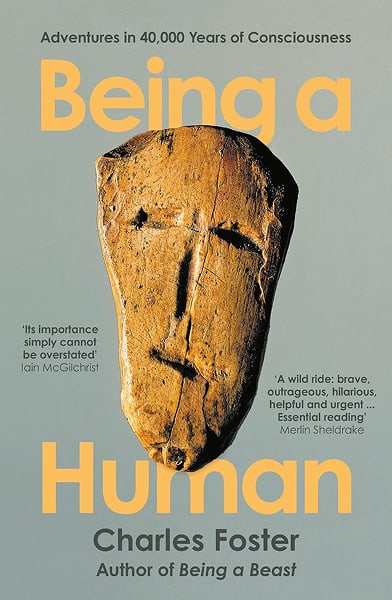 | Experiencing human historyCharles Foster is a legal scholar, veterinary surgeon and naturalist: he sleeps rough in English woodland with his son, forages for roadkill and moves through reconstructed Neolithic settlements, all in an attempt to physically inhabit what we’ve lost across 40,000 years of human consciousness. Less philosophy lecture, more feral field trip. Dense, strange and potentially transformative. |
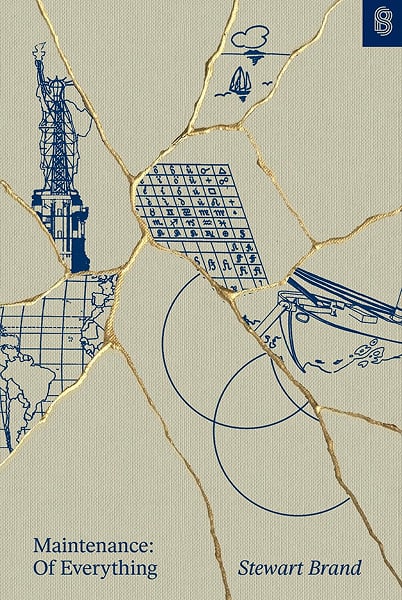 | The radical case for upkeepNew from Stripe Press: Stewart Brand – the mind behind the Whole Earth Catalog – turns his attention to the unglamorous world of maintenance, the work of keeping systems going. He “invites us to understand not only the profound impact maintenance has on our daily lives but also why taking responsibility for maintaining something – whether a motorcycle, a monument, or our planet – can be a radical act”. |
|
Socials |
We should’ve stopped somewhere between discovering fire and filing taxes. We did too much. via Instagram |
| |
Media |
Read |
Financial planner and money psychology expert Hanna Horvath with a sharp, empathetic look at why ‘making good money’ doesn’t feel secure anymore. She traces how the postwar middle-class bargain was systematically dismantled, leaving both struggling workers and high earners stuck on different versions of the same treadmill. It’s a very enlightening analysis of our collective money anxiety and how that translates to political views – and what we can/can’t do about it. |
“The family earning $75K and the family earning $350K have more in common with each other – structurally, in terms of their relationship to capital – than either has with the family whose wealth generates its own income without labor. Both are running on the treadmill. One is running slower, but neither is able to get off.” |
|
Read |
The wonderful Nate Hagens walks through 11 big ideas that shattered and rebuilt his worldview: from energy as the real engine of the economy to money as a claim on future resources. I’m not easily drawn into a listicle piece but this one does not disappoint: sweeping and occasionally a bit grand, but very worth the mental stretch. |
“Competition drives innovation, but cooperation sustains it. So the ‘selfish gene’ story that I’d grown up with wasn’t wrong per se, but it was incomplete. The real story is about balance between the individual and the collective – between winning and belonging. In our culture, we’ve spent decades or longer glorifying winning and pretty much neglecting belonging.” |
|
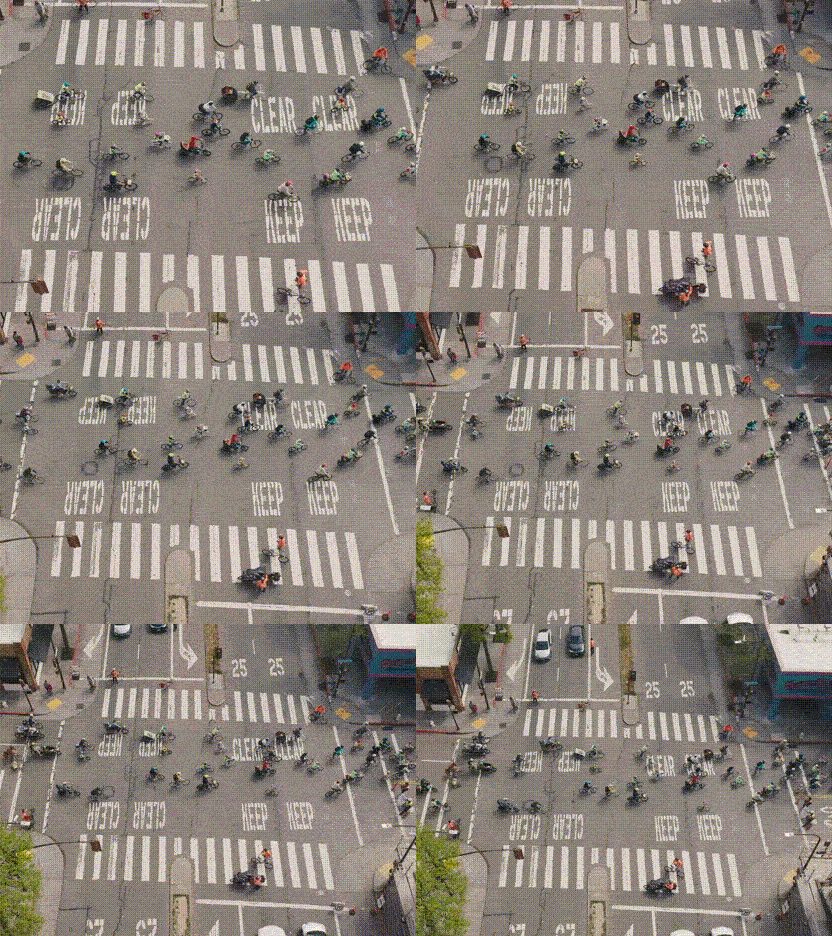
WatchIn case you’ve never heard of it, Critical Mass is a global series of bike rides protesting unsafe streets and weak bike infrastructure. This short video explores Kidical Mass, a kid-centered offshoot where families rediscover joy, safety in numbers, and a vision of streets designed for children, not cars. |
|
| |
Inspiration |
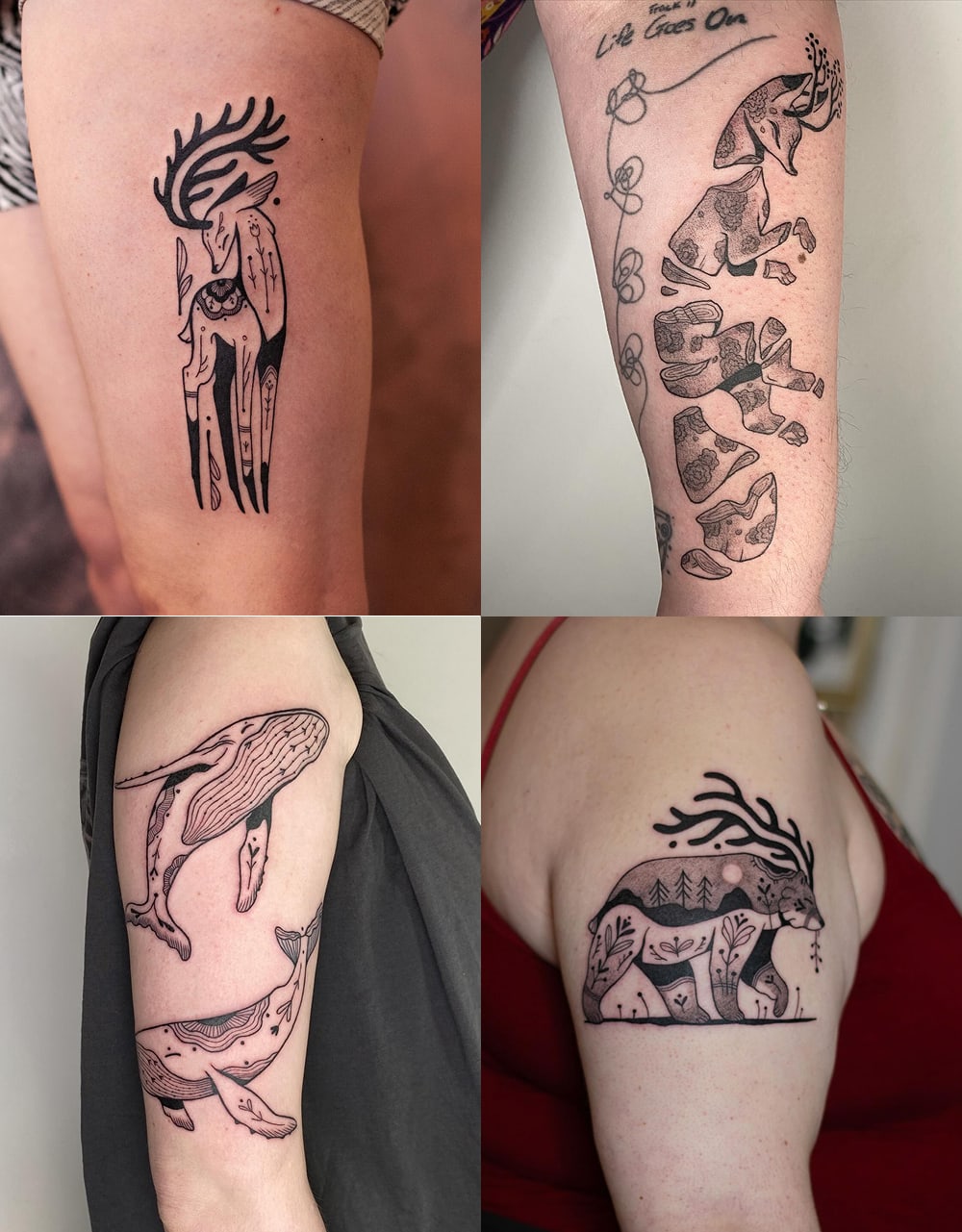
Luiza Kwiatkowska is an illustrator and tattoo artist whose work draws from nature, folklore and mythical tales, expressed in whimsical, detailed linework. |
|
UK sculptor Anna Cross weaves English willow into life-sized wildlife and figurative sculptures that feel less made than grown. |
|
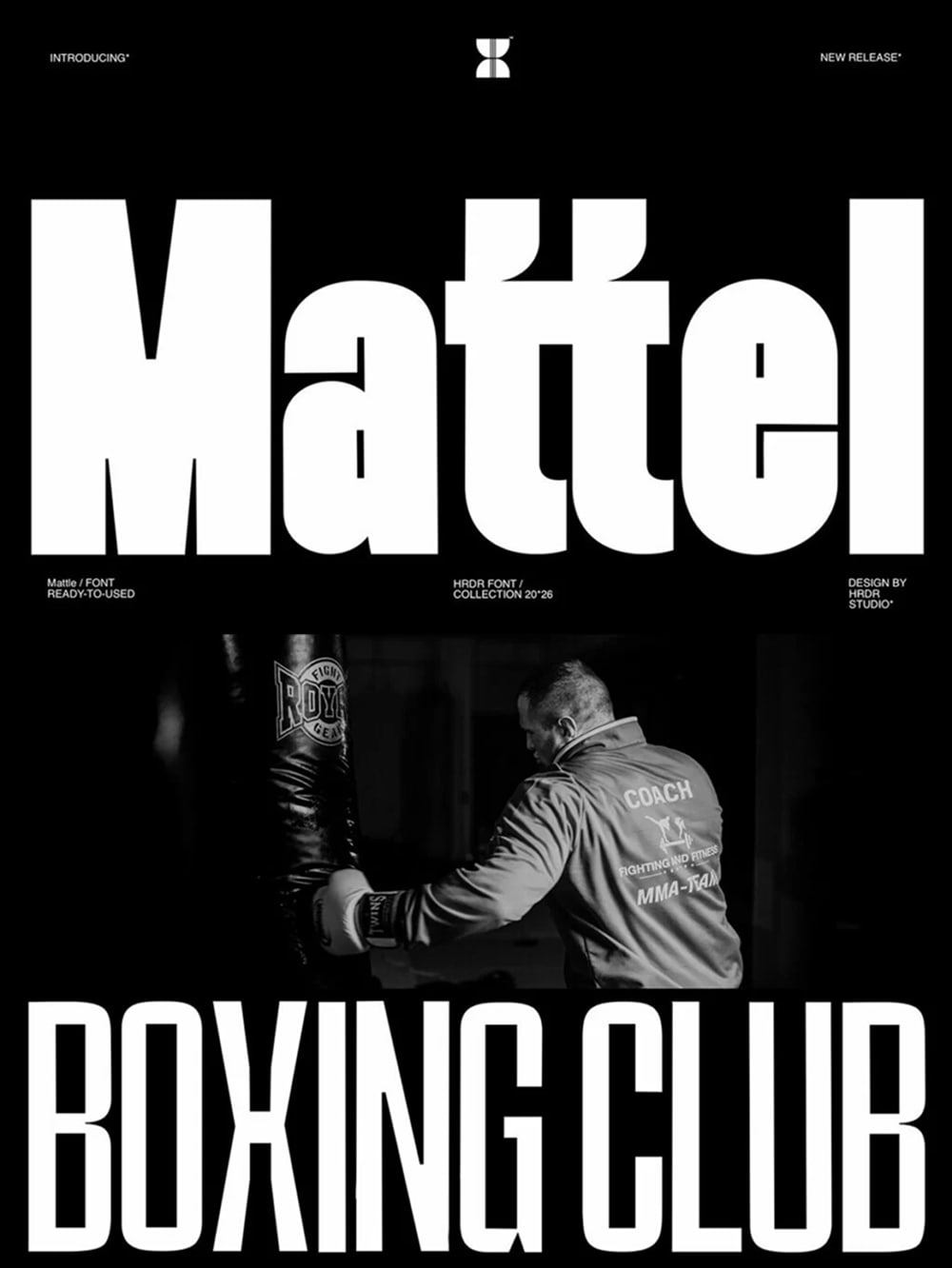
Font of the week: Mattel is a sleek variable font that flexes across five widths, built for designers who need one typeface to carry a whole visual identity. |
|
| |
Classifieds |
Celebrating 150 episodes, Time Sensitive is a culture-forward podcast featuring candid, revealing long-form conversations with leading minds through the lens of time. An island that wasn’t on any map, an AI model too powerful to release, and how horses decided US election day. A weekly newsletter for the curious – things you didn’t know you wanted to know. Are you hooked on speech to text? I was too, until I realised most apps send your voice to the cloud. That felt wrong, so I built Flowstay, a free private alternative that runs locally for macOS The Index is a twice-weekly free newsletter featuring 5 high quality, human-curated design, dev and tech links that only takes up a couple of minutes of your day. |
Classifieds are paid ads that support DD and are seen by 38,000 subscribers each week. Book yours here. |
|
Poll |
|
| |
Numbers |
2009 Anyone born in 2009 or later will never legally be able to buy tobacco or vapes in Britain, after Parliament passed a landmark lifetime smoking ban – the most ambitious of its kind in the world. |
15.9 Reported scam and fraud losses in the US have risen 430% since 2020, reaching a record $15.9 billion in 2025. Although the Federal Trade Commission estimates actual losses could be as high as $195.9 billion when accounting for underreporting. |
|
| |
Mood |
|
| |