From Dr. Sanjay Gupta —
At any given moment, more than 100,000 people in the United States are waiting for an organ transplant — most of them in need of a kidney. But the reality is that relatively few will actually receive an organ. Every day, 17 people on that list die while waiting.
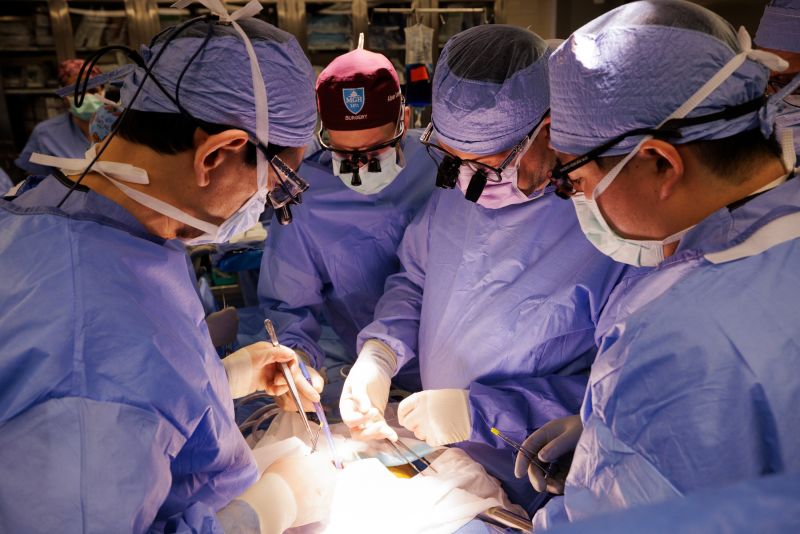
For the past two years, I’ve spoken with surgeons, genetic engineers and patients who have told me about the goal of using genetically engineered pigs as donors to help end the organ shortage crisis.
In many ways, the idea of using pigs is not all that far-fetched. After all, we have been using pig heart valves to replace humans' valves since the 1970s. Because of their similarity in size to humans, a pig’s organs are a pretty good match for ours. And our long history of breeding them and their ability to produce large litters in just under four months makes them a reliable, steady and speedy source of potential organs.
But it was the more recent development of CRISPR and genetic engineering that has truly accelerated the field of xenotransplantation because scientists can now modify a pig’s DNA so that its organs are more compatible for human transplant, controlling for rejection, growth and possible viruses.
Just a handful of patients have undergone the experimental procedure, and each of them is adding to our understanding of this potential solution.
One of them is 66-year-old Tim Andrews, who had been on dialysis for two years before he received a gene-edited pig kidney. He had end-stage kidney disease, and the likelihood that he could find a human donor match was extremely low in part because of his rare blood type. Doctors put the chances of him finding a match within the next five years at just 9%, but the likelihood of him dropping off the list altogether in that same period because of illness or death was nearly 50%.
Even though he knew there was tremendous uncertainty about the outcome of the transplant, Tim pushed forward. He told me, “It may shorten your life, but you're going to do something for humanity. And I'm like, oh, God, that's what it's all about.”
That kind of altruism is a stunning show of humanity. As much as the scientists behind all of this are heroes, the even bigger heroes are the patients, like Tim, who are helping move the science forward.