I knew cheese ice cream had a long history, but I didn’t understand quite how long. |
|
|
|
Black ice cream makers deserve more recognition in the canon of American ice cream |
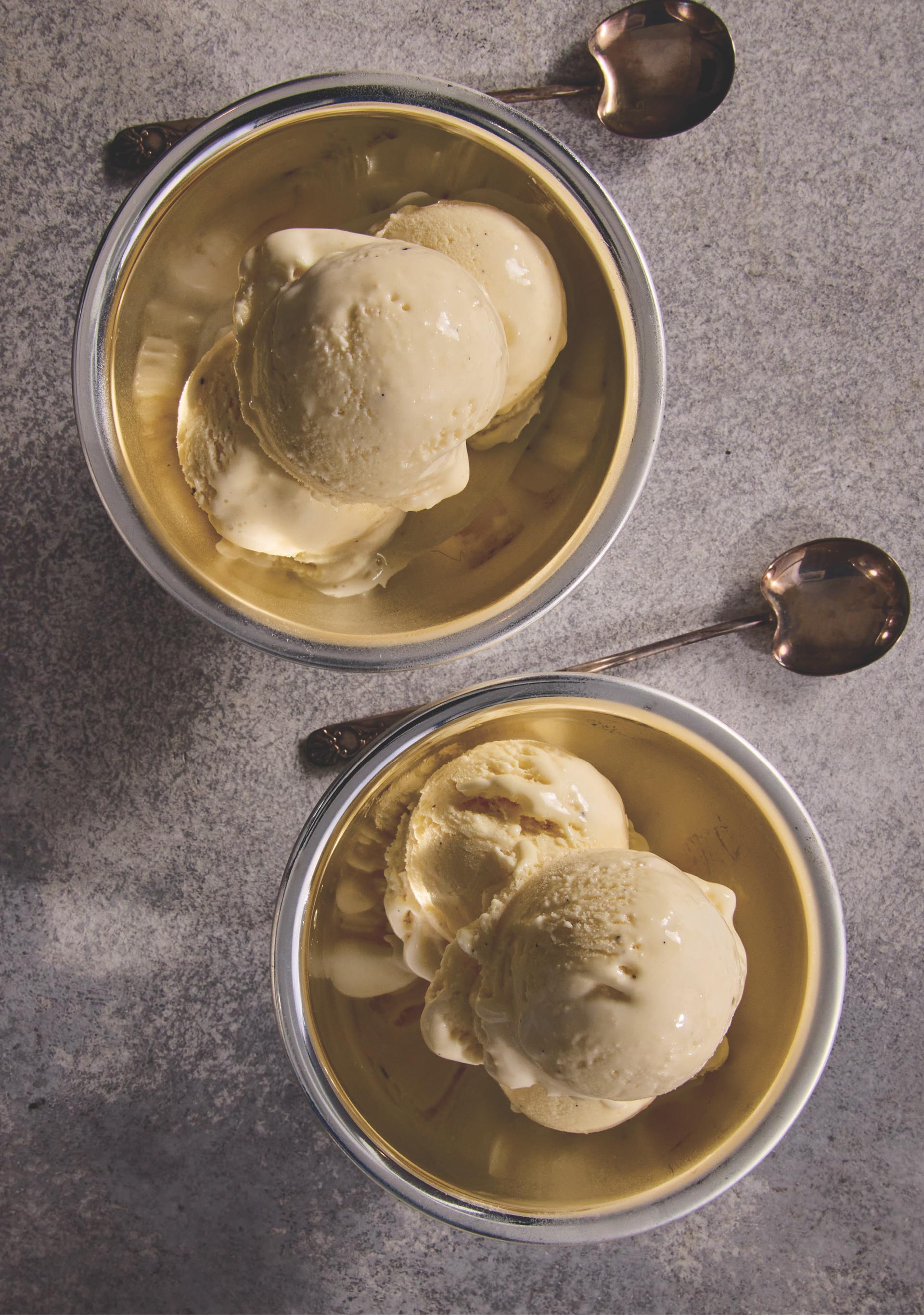
Parmesan ice cream inspired by Sarah Estell | Credit: Brittany Connerly/W.W. Norton. & Company |
In the mid-1800s, Sarah Estell, a free Black woman, earned the title of Nashville’s “Ice Cream Queen,” spinning up confections that she served from her ice cream saloon. That moniker is now the name of a new cookbook by Lokelani Alabanza, a pastry chef who previously worked at Hattie Jane’s Creamery in Tennessee and now runs her own ice cream company called Saturated. For Alabanza, the parallels between herself — “a young, curious Black woman chef wanting to enter the wild world of food,” as she writes in the book — and Estell were too hard to ignore, and from there came the discovery of more influential Black figures in American ice cream history.
In the book, Alabanza pays tribute to Black contributions to American food culture through recipes such as Parmesan ice cream and Nashville hot chicken ice cream, and uncovers the lineage of Black ice cream makers in the United States, who, Alabanza writes, “deserve front-and-center placement in the canon of American ice cream.” I talked to Alabanza about how the Ice Cream Queen project got started, and how she’s broadening our understanding of American ice cream beyond Ben & Jerry’s and Jeni’s.
Eater: Who was Sarah Estell and how did she set you off on this project about ice cream and history?
Lokelani Alabanza: I was the culinary director of Hattie Jane’s Creamery [outside Nashville] for four years. [In 2018, the Nashville Metropolitan Historical Commission] sent an email [asking me] to make ice cream inspired by Sarah Estell. Sarah Estell was a free woman of color in 1840s Nashville. No one had uttered her name the entire time that I had lived in Tennessee. They sent all these beautiful things out of the archives to read [about her]. Especially with me making ice cream all the way in Columbia, Tennessee, I was so enamored. I couldn’t believe it; at the time, we had a 175-year difference, and we were in the same city, doing the same things.
Being a Black woman, I didn’t see other ice cream makers like myself around the time in Nashville. Even in culinary school, we weren’t taught a lot about Black food history, so I connected the dots. As soon as I learned about Sarah Estell, I was like, “If there’s this person, there have to be more people like her.” [More people have] heard about Augustus Jackson [who is nicknamed the “father of ice cream”] and Alfred L. Cralle [who patented the first ice cream scoop], but there are more, so my goal was to find out more. I constantly say that a ghost was haunting me. It’s a story that had to be told, and it just made the most sense to do it through ice cream.
|
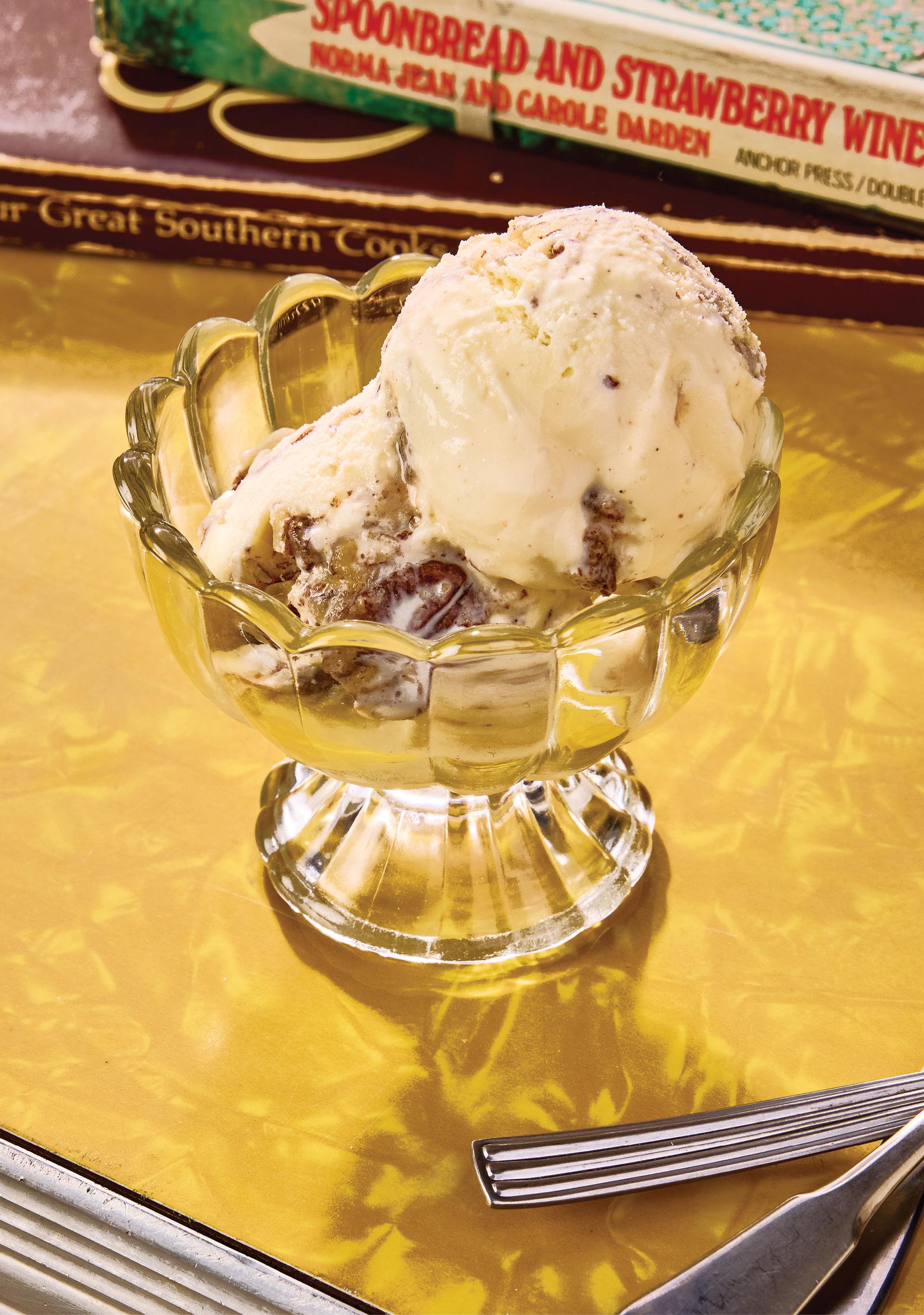
The book traces the history of ice cream flavors like butter pecan | Credit: Brittany Connerly/W.W. Norton. & Company |
|
|
|
You have a recipe for Parmesan ice cream, inspired by Sarah Estell. What’s the backstory there?
We don’t have any documentation of Sarah Estell’s actual recipes, and there aren’t any photographs of her either, but we know she had a business and she existed. Parmesan ice cream is so interesting because it dates back pretty far; I think people don’t realize that it’s not a new flavor. When you think about the flavors of that time period, they were very specific ones, like apricot, almond, asparagus — just things that they had at that time. For me, when I was going through flavors from that time period, it seemed unusual, but you can understand it: Parmesan is a hard cheese and it travels well.
You also have more solidly modern ice cream flavors, like one inspired by Nashville hot chicken that actually includes crispy fried chicken skins. Can you share a bit about that flavor?
The first time I did it, the reactions to it were so funny. But this is the thing: I want people to know that you can get wild, and I think you should be able to experiment. With hot chicken, it was really an homage to the Prince family, who are the reason why hot chicken is out in the world. It’s to say thanks for that, but to also put it in a form that has people like, “Wait a minute, is that real?” It’s to challenge yourself, if you’re a home cook that wants to do something that you've never done before.
Why is ice cream so interesting to you?
A lot of this book, for me, is about identity. It’s a love letter to my grandmother, who didn't leave any recipes when I was younger, when she passed, and that’s who I dedicated the book to. I realized ice cream is an extraordinary vessel that holds history. It holds joy; it holds memory. Everyone has something tied to it. To know that Parmesan ice cream was made in the 1700s and it’s still being made in 2026: There’s the bridge. It’s just getting people to realize it’s more than just air, sugar, and cream.
This conversation has been edited and condensed for length and clarity.
Ice Cream Queen: Flavors from Black America's Past, Present, & Future is now available at Amazon, Bookshop, or your favorite bookstore. |
|
|
|
|