Recently, I finally unfollowed a popular bar on Instagram. It was using too much AI, in a way that felt completely at odds with its emphasis on technique and craft. |
|
|
|
This is not an AI-slop restaurant |
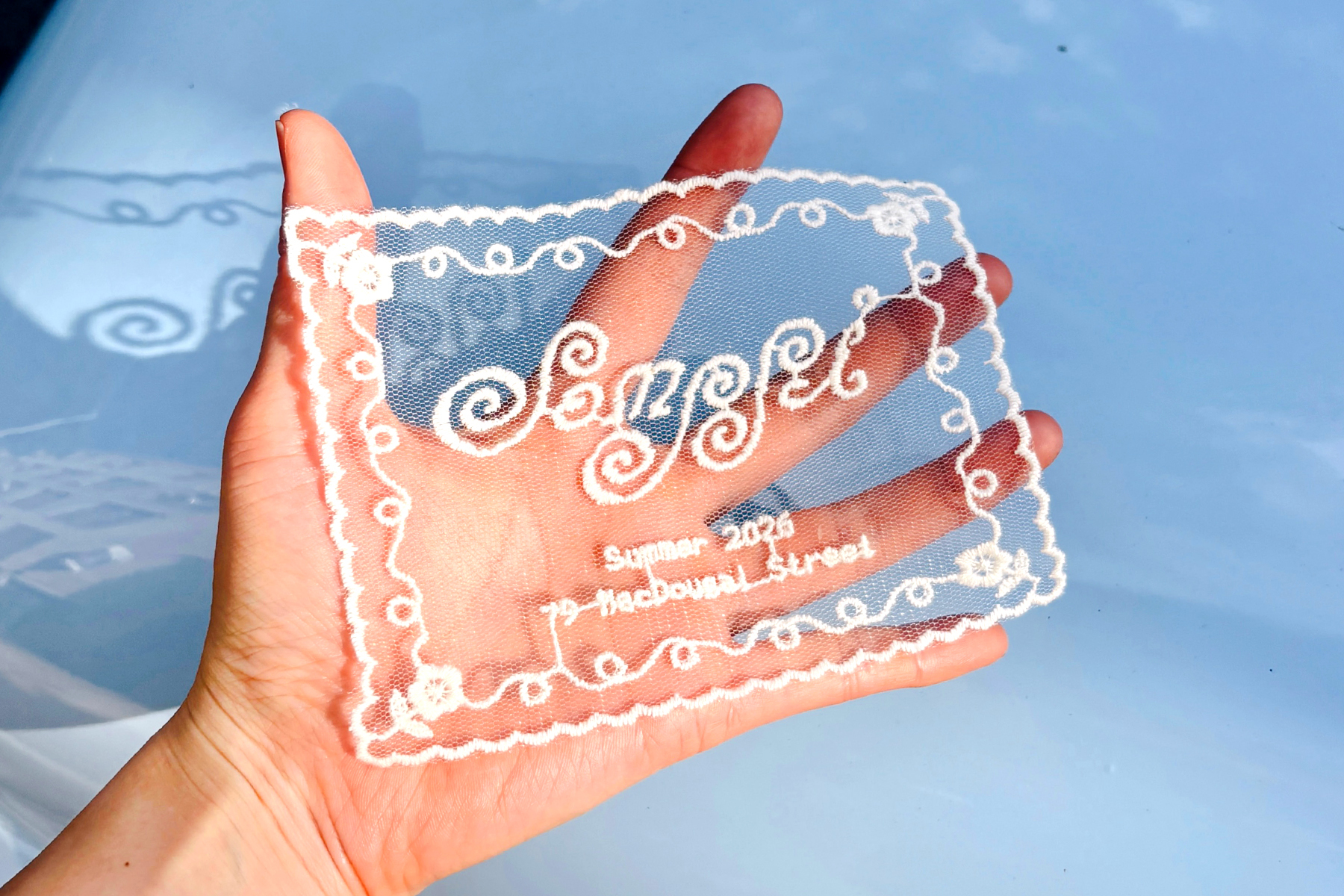
What spoke to me the most about the Instagram announcement for the new Manhattan restaurant Somssi was the fact that it was presented in such an unexpected manner. In the photo, a hand holds a piece of lace against the shiny backdrop of a powder blue car. The lace, custom-made, is about the size of a postcard, bearing the restaurant’s name in looping swirls of white thread, its address and opening date sewn in blockier letters beneath it. Sunlight streams through the lace, casting shadows of the curlicues that border the piece’s scalloped edges. The scene looks tangible, like a moment that really existed. It stopped me in my scroll.
“Somssi” is a Korean word that refers to “a skill or a knack that you polish over time, and has a lot to do with things that you craft with your hands,” explains managing partner Ahris Kim. For Somssi, that sense of the handcrafted continues into the logo, which features the restaurant’s name stitched into cloth, its custom typeface designed to evoke Asian calligraphy. Its curtains are made from old crochet and lace tablecloths, with the one at the front door spelling out the restaurant’s name in cutouts embellished with embroidery (it, too, has been the focus of an Instagram post). Margaret Muza, Kim’s childhood best friend, did the interiors, sourcing vintage glassware and tchotchkes; Muza’s mom made the curtains, using fabric from her own collection built over decades.
|
|
|
|
But this is all a counterpoint to another trend — one I don’t like. More and more, I’m stopped in my scroll by something that evokes the opposite feeling: a kind of semi-defeated revulsion, which I attribute to the barrage of images that bear the grotesque hallmarks of being AI-generated. They are the opposite of handcrafted, often riddled with errors that only a technology without real human experiences would make: sandwiches that defy gravity; cocktails in glasses that cast physically impossible shadows; flyers for events at restaurants that are so overstuffed and overstylized that they’ve almost come full circle into camp. Some fantastical scenes, like a cat holding two tacos, would be cute if dreamed up by an illustrator, but which instead feels cheap and smug in one’s absence.
Amid this glut of AI content from restaurants on Instagram, photos of handwritten menus or of specials scrawled onto scraps of tape now fill me with a similar feeling as Somssi’s lace and cloth — something between relief and admiration, a grounding in the realm of the real. These markers of real hands behind something appear even more charming: a direct confrontation with what’s taken over. “Anywhere where we could impose a handmade detail, we did,” Kim says. Thus, “even AI-generated work would go against what ‘somssi’ should stand for.”
I understand why restaurants might opt to use AI. Putting a creative, inspired photo on Instagram — and doing so often enough and in a way that appeases the picky, gluttonous algorithm — is often at the bottom of the priorities list compared to prep and cooking and paperwork and, Yikes, it’s 95 degrees and the air conditioner’s out! Working with a designer or commissioning a photographer is laborious and a cost many restaurants can’t cushion. At the same time, though, I can’t help but feel a fundamental disconnect in ideology when restaurants that purport to care about ingredients, culinary traditions, or technique capitulate to the culture of slop.
This week, I wrote about the radical appeal of restaurants that lean into the handmade approach in the age of AI-generated food photos and event flyers. Read my full story here. |
|
|
|
|