3X Summer of Science Match NOW ACTIVE through July 31! |
|
|
|
UCS Supporter,
Danger Season, the time of year when extreme weather is increasingly likely to occur, is in full effect. Climate attribution science by UCS and others has proven that many of these impacts—such as wildfires, droughts, and extreme heat—have significantly worsened as a result of fossil fuel emissions from Big Oil companies like Shell, BP, and Chevron.
We have also proven that these companies lied about their role in accelerating climate change for decades. Now, the Trump administration and its cronies are trying to give them a pass by giving them legal immunity for their harms.
While they line their pockets, our communities feel the impact—and it's more important than ever to be aware of what we're up against. As I outlined in a recent blog post, we're facing a crisis across three fronts this Danger Season: climate change, a reckless authoritarian government, and economic insecurity. I thought you may be interested, so I'm sharing the first part of that post below. Read the full blog post to learn more!
|
|
|
|
Danger Season Is Here Again, with Triple the Danger for 2026 |
|
|
|
For the past five years, the Union of Concerned Scientists has been tracking the climate extremes of what we call “Danger Season”— |
|
| | |
|
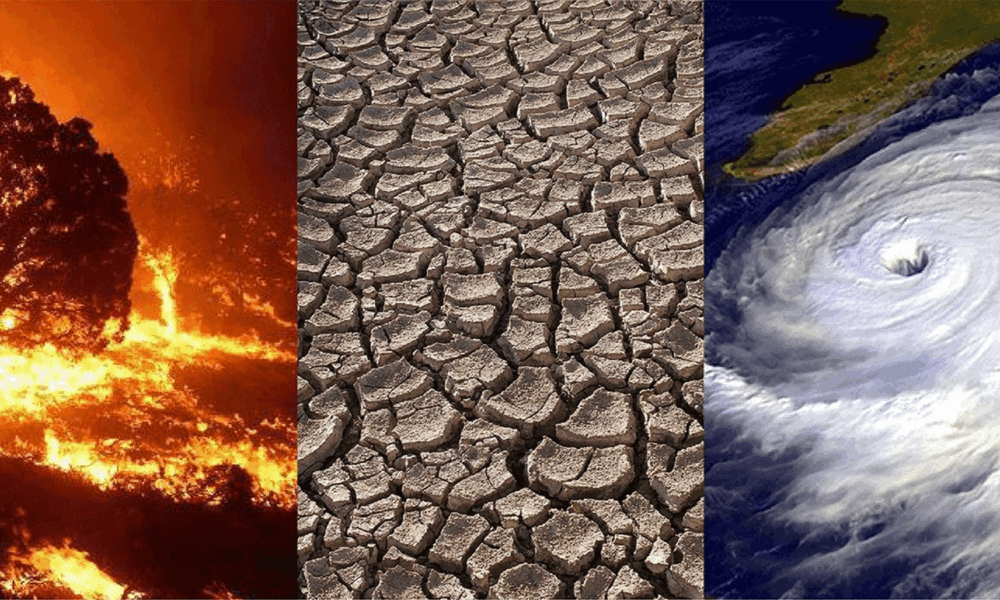
the period between May and October when North America is hit hardest by extreme weather, like heat, drought, wildfire and hurricanes. Because of fossil-fueled climate change, each year brings new degrees of danger, but 2026 is uniquely perilous. This is the year when the triple crises of climate change, a reckless authoritarian government, and economic insecurity will start to collide. Stay informed, stay safe, stay mad, and demand better. |
Crisis One: The Climate Kind |
Climate change news has been so seismic lately that it should be breaking through the news cycle. Except that the steady explosions of new emergencies, largely caused by the Trump administration, quickly gobble both the headlines and our beleaguered attention. But let's be clear: we are no longer on the edge of the climate crisis. We are fully inside it.
2023, 2024, and 2025 were the three hottest years on record, and during those years, we surpassed the critical 1.5°C threshold, at least temporarily. So far in 2026 scientists are grappling to understand the accelerating rise in global average temperatures, and to make sense of the developing El Niño—the speed and timing of its arrival, the intensity it could reach, the impact that could unleash, and the lasting effects. Against this climate change backdrop, the northern hemisphere is warming as it does each summer and Danger Season is kicking in, with the outlook for climate extremes, spring through fall, coming into focus …
Learn more about the other crises we're up against in the full blog post. |
|
|
|
Science for a healthy planet and safer world |
|
|
|
|