|
In this eye-opening report, you’ll discover:
| ✓ |
The subtle signs of afib that are often dismissed or misdiagnosed |
| ✓ |
How to reduce your risk of stroke, even if you can’t take blood thinners |
| ✓ |
The truth about high blood pressure and afib |
| ✓ |
The difference between warfarin and newer medications |
| ✓ |
The three types of afib, and why knowing which one you have matters |
| ✓ |
Simple steps you can take to lower your risk naturally |
| ✓ |
And so much more. |
|
|
|
|
Dear Reader,
You may have heard of atrial fibrillation, also known as afib, but did you know that most people living with it don’t even realize they have it?
Afib affects millions of Americans — especially those over 50. It’s an irregular heartbeat where the heart’s upper chambers beat too fast and unevenly. This can prevent the heart from pumping blood properly and significantly raises the risk of stroke.
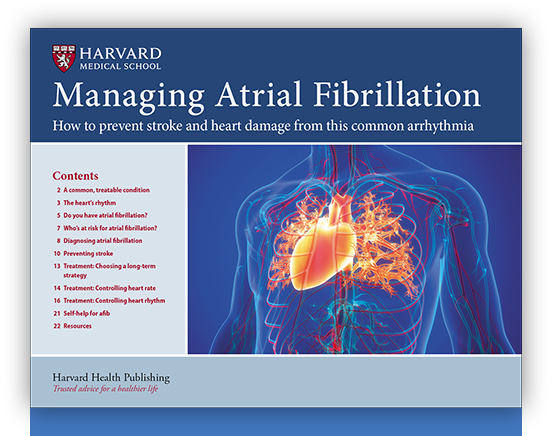
Even more surprising? Many of the most effective ways to detect, prevent, and manage afib aren’t widely known. That’s why Harvard Medical School has created a special online guide, Managing Atrial Fibrillation — a
clear, easy-to-follow guide designed to help you understand afib, recognize warning signs, and explore the latest treatments that can help protect your heart and health.
Is afib silently putting you at risk?
Some people with afib experience dizziness, shortness of breath, fatigue, a fluttering or racing heart that alert them to the condition.
But even if your heart feels fine, afib can still be silently increasing your risk of stroke and heart failure. The good news? With the right knowledge, you can take action early — and Harvard’s guide can help you do exactly that.
Inside this online guide from Harvard Medical School experts, you’ll also find:
-
The Band-Aid-sized heart monitor that can uncover hidden rhythm problems
-
A breakthrough afib procedure
-
Details about the medications used to control heart rate, such as calcium channel blockers beta blockers (and their potential side effects)
-
Up-to-date information on AV node ablation, pacemakers, cardioversion, catheter ablation and other advanced procedures for afib
The science is evolving — and so should your knowledge
Protect your heart. Lower your stroke risk. Order your copy of Managing Atrial Fibrillation from Harvard Medical School today, and empower yourself with trusted, evidence-based information that could make all the difference.

Sincerely,
Howard E. LeWine, MD
Chief Medical Editor, Harvard Health Publishing
|