Is it the right time for a knee replacement?
Knee replacement surgery is the most common inpatient surgery in the U.S. But that doesn't mean the decision to have a knee replacement is an easy one, especially if you're younger than 60.
Older and younger people benefit equally from knee replacement surgery, if they are generally healthy to start. However, people under 60 are encouraged to delay total knee replacement if they can.
The reason? Artificial joints have a limited life span. Assuming an average level of physical activity, you can expect today's joint implants to last 15 to 20 years — sometimes longer. However, if you are overweight or more physically active than average, your new joint will face additional stress and may wear out faster.
Get your copy of Knee Replacement
|
|
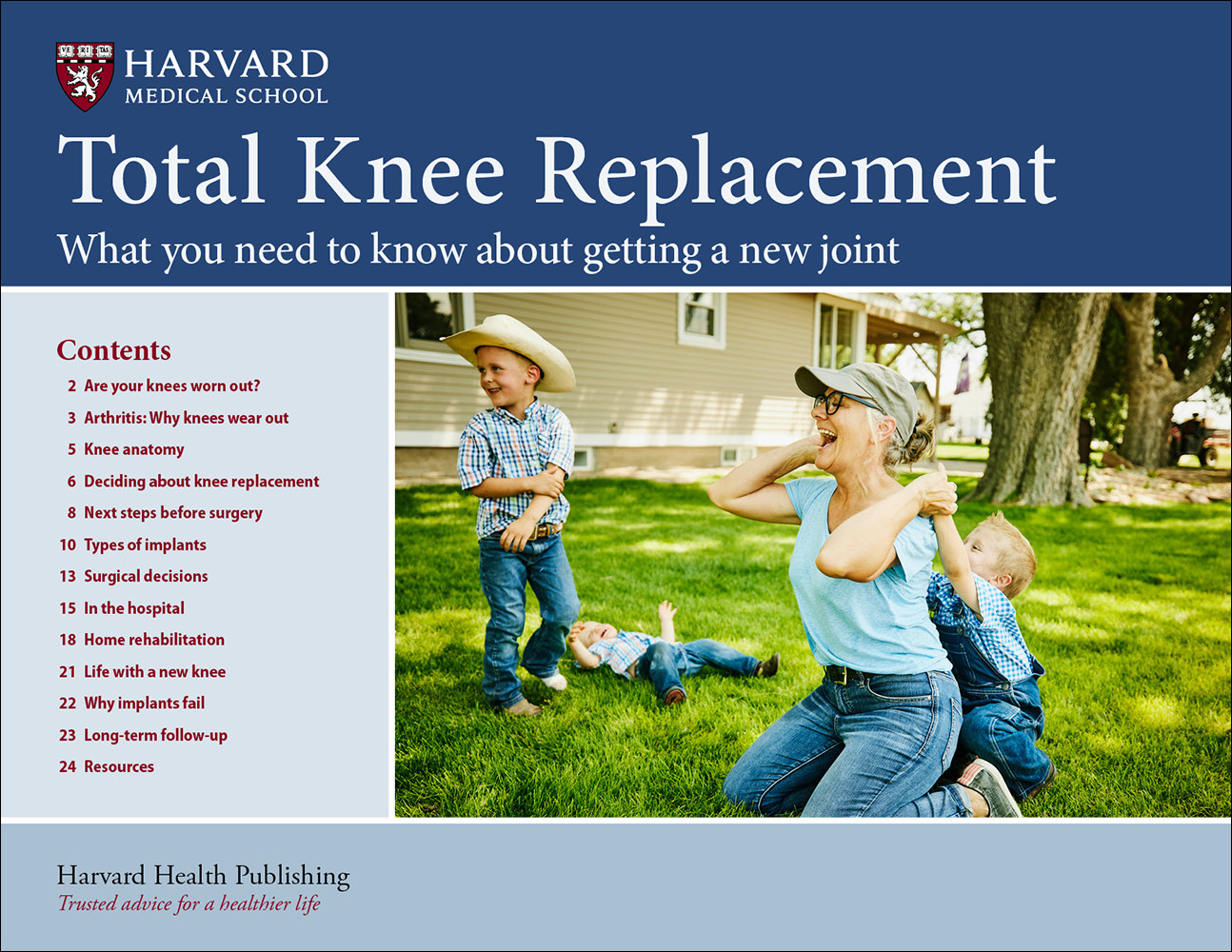
If you need a replacement, or think it’s time to seriously consider it, Harvard’s Total Knee Replacement guide is invaluable. This guide can help you make that important decision, in consultation with your primary care doctor and orthopedic specialist. You’ll find a list of critical questions to ask your doctor to help ensure you have the best possible surgeon. The guide explains why people end
up needing knee replacement, the alternatives to surgery, the different types of knee implants, the risks and complications of surgery, and how to make a safe and full recovery.
|
|
Ideally, you want your first knee replacement to be your last. Given the average life span for Americans, most older adults who get a new knee will not need to have it replaced.
The situation is more complicated if you are in your 40s or 50s. In this case, the new knee is more likely to wear out during your lifetime. Then you'll need to have a revision surgery to take out the old one and replace it. The number of people under age 55 having knee replacements is growing rapidly.
But it's also possible to wait a bit too long. If the joint becomes crooked because of breakdown of cartilage and bone, it can make the surgery more complicated (such deformities can make you bow-legged or knock-kneed). Some research also suggests that it may provide less benefit in the long term for people who wait until they have significant disability to get surgery. But other research finds no difference in results for people who wait longer.
The decision about when to have knee replacement is a highly individual one, further highlighting the need for shared decision-making between you and your doctor.
To learn more about getting your knees replaced, read Total Knee
Replacement, an Online Guide from Harvard Medical School.
Image: © Wavebreakmedia/Getty Images
|