|
|
|
|
|
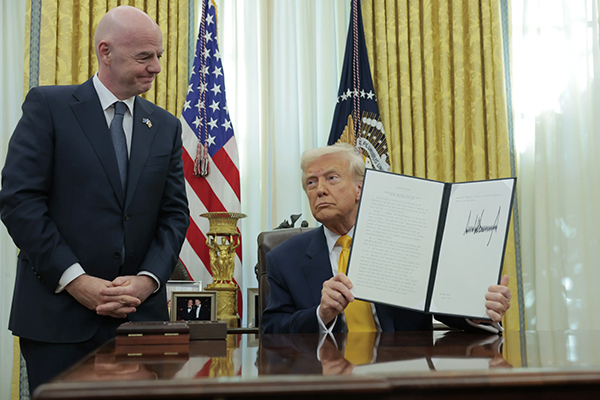
As FIFA’s Club World Cup unfolded across US stadiums in June and July, empty seats told a story that FIFA’s $50 million in promotional ads did not. The Club World Cup was meant to preview and generate excitement about the FIFA 2026 World Cup, the men’s soccer tournament coming to the US, Canada, and Mexico. But the message from FIFA about the World Cup being the most inclusive ever was drowned out by the sound of Immigration and Customs Enforcement boots on the streets and sidewalks, including at stadiums.
More than 90 human rights and civil rights groups including Athlete Ally, the NAACP, the ACLU, Amnesty International, Human Rights Watch and the AFL-CIO wrote to FIFA president Infantino to call out escalating risks around the 2026 World Cup. It is now clear that without pressure from FIFA, the 2026 World Cup could be marred by scenes of fans, families and host city residents caught up in immigration sweeps. Even for the most loyal fan, no soccer match is worth risking detention, interrogation, family separation and deportation. |
|
| | |
 |
|
|
|
|
|
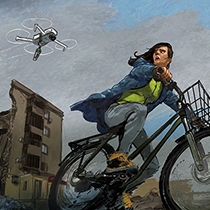
Russian forces have repeatedly used drones to attack civilians and civilian objects in Kherson city in southern Ukraine, serious violations of the laws of war, Human Rights Watch said in a recent report. The implications of this kind of abusive strategy, in which militaries and armed groups can adapt relatively cheap and accessible commercial devices, to ruthlessly and accurately target civilians and civilian property, are far-reaching and global.
To minimize harm to civilians and to help prevent these tactics from being repeated by abusive warring parties in other conflict zones around the world, commercial drone companies, states and international bodies should work together to identify how to improve protection for civilians against the unlawful use of drones in warfare, including through prosecutions for use that amounts to war crimes and crimes against humanity. |
|
| | | |
 |
|
|
|
|
|
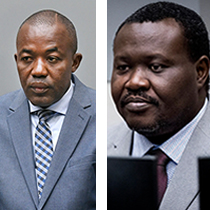
The International Criminal Court (ICC) conviction of two anti-balaka militia leaders for serious crimes in the Central African Republic is an important step toward justice in the country, Human Rights Watch said last week.
Human Rights Watch has documented war crimes and crimes against humanity by both Seleka and anti-balaka forces since 2013. Some of the most egregious abuses occurred in the central regions of the Central African Republic between late 2014 and April 2017. Human Rights Watch has documented hundreds of cases of rape and sexual slavery by anti-balaka groups and fighters from Seleka factions. |
|
| | | |
 |
|
|
|
|
|
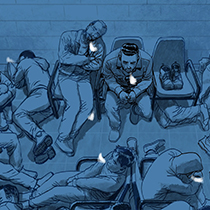
The United States government has subjected immigrants detained in three Florida facilities to abusive, degrading, and in some cases life-threatening conditions, Americans for Immigrant Justice, Human Rights Watch, and Sanctuary of the South said in a report released earlier this month.
The 92-page report, “‘You Feel Like Your Life Is Over’: Abusive Practices at Three Florida Immigration Detention Centers Since January 2025,” documents that people detained at Krome North Service Processing Center (Krome), Broward Transitional Center (BTC), and the Federal Detention Center (FDC) in Miami have been held in overcrowded and unsanitary conditions, subjected to degrading treatment, and have not been given access to prompt and adequate medical care. |
|
| | | |
 |
|
|
|
|
|
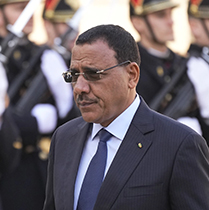
Authorities in Niger should immediately release former President Mohamed Bazoum, who remains arbitrarily detained two years after he was ousted in a military coup, Human Rights Watch said earlier this month.
“Each day Bazoum spends in detention moves Niger further away from a democratic path,” Allegrozzi said. “Two years on, Niger’s authorities should reconsider what type of message his continued detention sends across the region and the world.” |
|
| | | |
|
|
|
|
|
|
|
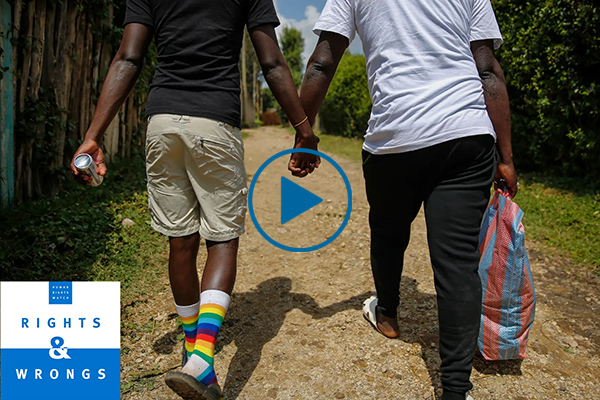
In 2012, a Ugandan TV host asked trans activist Pepe Julian Onziema a now-infamous question: “Why are you gay?” The clip went viral, spawning internet fodder around the world – but behind the memes lies a chilling reality. In this episode of Rights & Wrongs, host Ngofeen Mputubwele looks at Uganda’s Anti-Homosexuality Act, a 2023 law that punishes same-sex intimacy with life in prison or even death.
He speaks with “Emmanuel,” a young man in Kampala whose Grindr date turned into a violent police sting. Human Rights Watch researcher Oryem Nyeko explains how the law has fueled mob violence, extortion, and fear. But amid the repression, mothers of queer children are speaking up, leading the resistance in one of the world’s harshest anti-LGBT climates. |
|
| | |
Donate now to help defend human rights & save lives |
|
Our supporters allow Human Rights Watch researchers to expose tyranny, to empower victims, and to tell their stories to the world. Please rush a donation now. |
|
| | | | |
|
Top Image: US President Donald Trump holds up an executive order alongside President of Fédération Internationale de Football Association (FIFA) Gianni Infantino in the Oval Office at the White House in Washington, DC, March 7, 2025. © 2025 Anna Moneymaker/Getty Images |
|
|
Human Rights Watch | 350 Fifth Avenue, 34th Floor | New York, NY 10118 USA
Tel: 1 (212) 290-4700 | [email protected] |
|
Unsubscribe | | |
|
| |
|
|
|
|