Welcome back to another week of Shorts. This week, by popular demand, we dive into the Liquid I.V. sponsorship in hit television show Off Campus, which fans of the show could not have missed (unless they were doomscrolling at the same time, and even then I’d be impressed if you didn’t catch it from the corner of your eye).
We also cover the Patagonia vs Pattie Gonia debacle, look at film production company A24’s brand health in the wake of Backrooms’ success, and check the stats on BrewDog, a craft beer brand that’s posted some not-great sale results. And, once again, we cover the World Cup (this might go on for a while).
Plus, the first results from Ben Stiller’s Stiller Soda launch is in – how have they managed to do in the past six months?
Happy reading,
Jean from Tracksuit 💜
Why the Liquid I.V. x Off Campus sponsorship makes perfect sense
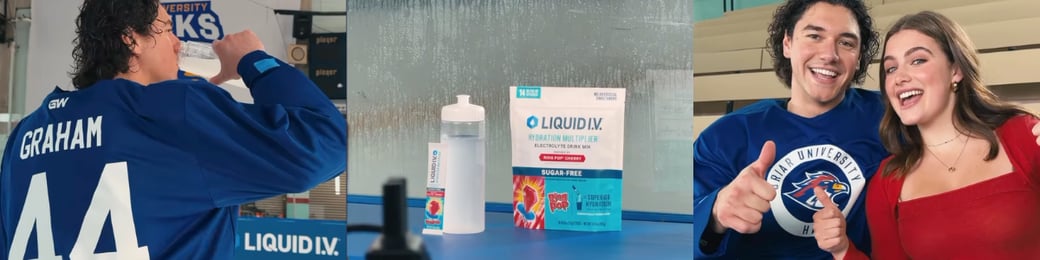
If you’ve found yourself subconsciously reaching for a box of Liquid I.V. at your local supermarket, then you may have fallen victim to the brand’s not-subtle product placement in Amazon series Off Campus, which has spawned a million TikToks just like this one.
Although your initial reaction might be to cringe at the amount of times Liquid I.V. is brought out in front of the camera to be “conveniently” consumed by one character or another, it’s obvious this in-your-face sponsorship has worked in Liquid I.V.’s favour. First, because it’s the buzziest show on streaming; second, because it taps into the most perfect use case for the product (sports, and college kids recovering from hangovers); third, because it already has an established fanbase, since Off Campus is based on a book; and fourth, well, hockey is just really hot right now.
We’ll let you know in a few months if this partnership has done anything for Liquid I.V.’s brand, but let’s see where the brand is at right this moment.
In the Hydration Products category, Liquid I.V. has 51% awareness, compared to brands like Gatorade (88%), Body Armor (58%), Prime (47%) and Vita Coco (34%).
Great news, though – awareness has climbed from 45% (Feb ‘25) to 52%. In fact, all their metrics have had a little boost: consideration has increased 5-percentage-points from 30% to 35% for example.
When it comes to brand perception, Liquid I.V. is leading the pack when it comes to the statements “Is unique” and “”Is innovative”. Amongst people aware of the brand, 37% believe it’s innovative – its closest competitor there is Cure (35%).
So why does the Off Campus integration make sense? Well, 18 to 34 year olds make up 36% of the category. Plus, 65% of consumers in this category say paid streaming platforms are one of their commonly consumed media types.
Plus, “Is for people like me” (aka relatability) is the second biggest conversion driver in this category (after “Is great tasting”, which makes sense, considering it's a drink). Liquid I.V. could definitely improve with this statement, with 35% people aware of the brand believing it’s for them, compared to 45% for Gatorade and 39% for Powerade. We’ll have to check in on this soon to see if the Off Campus hype has worked its magic on these numbers.
Tracksuit data: Feb ‘25 to May ‘26, USA
A drag queen, outdoor apparel brand and innocent bystander (you) walks into a social media storm
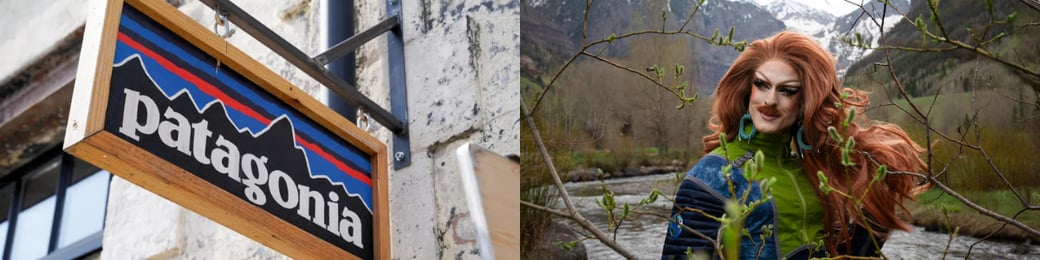
In this episode of Jean Tries To Understand Internet Discourse, I bring to you the Pattie Gonia vs Patagonia debacle that has unfolded over the last two weeks. Maybe you’ve heard of it, maybe you haven’t. From what I understand, at its core this is essentially a trademark infringement case – Pattie Gonia (a drag performer and climate activist) applied for a trademark for exclusive rights to use her brand to “sell merchandise and promote her activism”. Patagonia (the outdoor apparel brand) was not happy at this, filing a lawsuit to sue Pattie Gonia for $1, plus legal fees.
“To maintain our own rights, we must prevent others from copying our brands and logos. If we do not, we risk losing the ability to defend our trademarks entirely,” Patagonia wrote.
While this must be a trademark infringement case in the courts, it’s an entirely different thing in the court of public opinion – that is, social media. Since Pattie Gonia is a small drag artist, and Patagonia a global apparel company, this David vs Goliath-esque narrative playing out in front of us on our screens have definitely rubbed people the wrong way.
This is a bit of a knock on the Patagonia brand, which is pretty much universally beloved. Alongside its environmentalist activism, the brand also famously has a long history of supporting LGBTQ+ rights.
This blemish also doesn’t come at a good time for Patagonia, seeing as their brand metrics have taken a tumble the last year.
Consideration fell 3-percentage-points from 38% to 35%, and Preference from 10% to 6%.
Patagonia converts only 62% of people in this category from awareness to consideration, lower than the competitor average of 75%. North Face converts a whopping 81% at the top of the funnel.
Though the category has a slight skew towards those aged 25 to 34 years, a significantly lower proportion of those aware of Patagonia are younger-age consumers when compared to the category average. But maybe this controversy has changed that (for all the wrong reasons).
Tracksuit data: June ‘25 to May ‘26 (USA)
Once again, we ask the question: does the power of the celebrity work?
A bit more than six months ago, we wrote a Shorts story about Ben Stiller’s new soda brand Stiller’s and promised that we’d check back in. Well, never say we don’t keep promises, because here I am with some Tracksuit data, HOT off the press.
Stiller’s Soda has increased its Awareness from 0% to 4%. While this may seem small, it’s notable in such a crowded category – and is higher than competitors like Mayawell (2%) and Tractor (3%).
The first brand themes have rolled in and it seems the brand is more or less achieving their positioning, with “Classic” and “Health conscious” coming through strongly as unique themes when compared to Culture Pop. “Natural ingredients, classic flavors” someone wrote – a pretty good encapsulation of what the brand said they were setting out to do.
If they’re looking to increase this 4% Awareness, the brand might want to look into YouTube – 72% of consumers in this category say they regularly use it. Second would be Facebook at 67%, then paid streaming platforms at 64%.
Tracksuit data: June ‘26 to May ‘26 (USA)
If you identify as a “cinephile” this one goes out to you
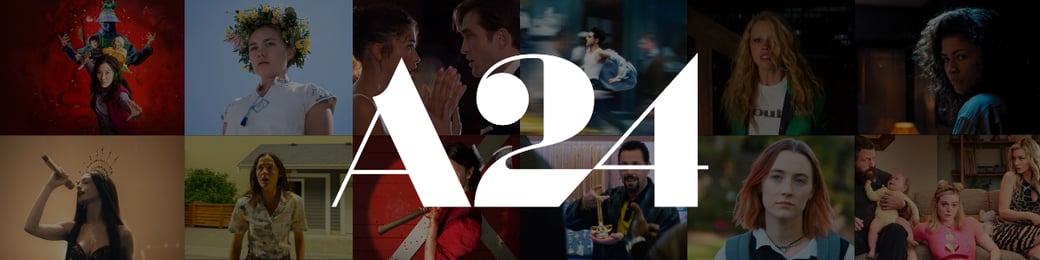
There aren’t a lot of film production companies that are able to command a fanbase of evangelical die-hards willing to wear T-shirts, caps and jackets (cough, Marty Supreme) – except, of course, indie darling A24.
For a production company, A24 has a startlingly well-defined brand (think: Letterboxd nerds, auteur directors, FILM NOT MOVIES, weird and wonderful merchandise). And, by the way, despite being an “indie darling” it actually is a billion-dollar company.
The studio also just released its highest-grossing film ever, horror flick Backrooms ($213 million worldwide), made by a 20-year-old director plucked straight from YouTube (a little fact just in case the world hasn’t made you feel bad about your age yet today).
Our Tracksuit data shows that A24’s brand perception absolutely checks out.
Amongst people aware of the brand, A24 leads the category with the statements “Is passionate about what they do”; “Is really on the way up”; “Is a trendsetter”; “Is unique”; and “Is innovative”. Sheesh. For example, with the statement “Is innovative”, 51% of people associate it with the brand, compared to 37% for Netflix and 39% for Neon.
The brand does better amongst the 18 to 34 year old age group. When filtered by that demographic, Awareness increases from 19% to 29% and Consideration from 16% to 22%.
While a production company like Netflix is thought of as “Accessible”, “Varied” and “Reliable” when looking at our data’s verbatim themes, A24 is thought of as “Creative”, ‘Edgy” and “Scary” (that’s probably the horror association coming out).
Tracksuit data: Sep ‘25 to May ‘26
BrewDog on the decline
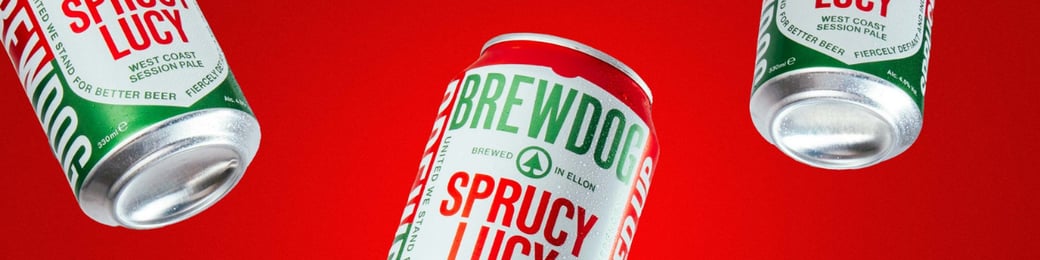
UK craft beer brand BrewDog’s retail sales have dramatically declined after being sold to US company Tilray Brands – and there was major backlash after the sale resulted in the loss of almost 500 jobs.
According to The Grocer, “BrewDog’s share of total craft beer sales has dipped from 53.7% a year ago to 49.3% today.” Yikes.
In the Craft Beer category, BrewDog is leading in metrics of the brands we track, with 81% awareness in the UK. However, in the last year, Awareness has decreased 3-percentage-points and Consideration 5-percentage-points, from 68% to 63%.
BrewDog is also near the bottom of the category when it comes to the statement “Is a brand I trust”. When someone trusts a brand in this category, they are 2.6x more likely to move from awareness to consideration. This has decreased by 4-percentage-points when comparing the last six months to the preceding six months, prior to the sale in March 2026.
Tracksuit data: Jun ‘25 to May ‘26
The World Cup shenanigans continue – but what do people actually think about football in the first place?
Basically every single one of my favourite marketing news sources right now are covering the FIFA World Cup, and the takes have come in thick and fast, with some of the opinion columns pretty much going immediately out-of-date upon publication. Case in point – our last Shorts, which pitted Adidas and Nike against each other, suggesting that Adidas was going big with the launch of a traditional commercial, versus Nike’s more fragmented approach.
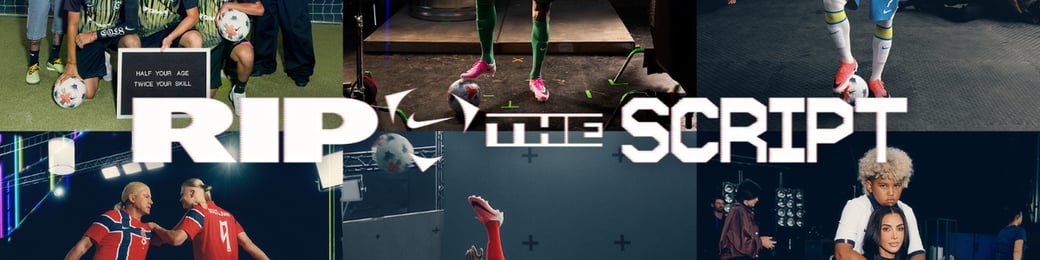
Well, Nike hit back with a six-minute ad titled ‘Rip the Script’, complete with its own packed star-studded cast: LeBron James, Kim K, Channing Tatum, plus football stars Cristiano Ronaldo, Kylian Mbappe and more. This short film is apparently slated to just be one part of what Nike is calling a “universe of Nike Football”, spreading their messaging across fashion, entertainment, retail, product innovation, community participation and other culturally relevant corners of the world.
Let’s zoom out for a second to look at what our data says about football’s place in the National Sports League category in the US (or “soccer”, as they call it).
Major League Soccer (MLS) sits at 49% awareness, which is much lower when compared to the NFL (90%), NBA (83%) and MLB (82%).
Only 1 in 3 people who are aware of MLS go on to consider it (31% conversion rate compared to a competitor average of 47%). It still has a lot of room to grow.
So what’s the issue? Well, people in this category still kind of think soccer is a little boring – with the strongest shared themes coming through including “slow” and “dull” (the NBA gets things like “athletic” and “fast” in comparison).
However, again, the data shows evidence of this shifting. In the past three months (Feb to April 2026), the “Is for people like me” score amongst MLS considered jumped +12-percentage-points when compared to the three months previous. Plus, unique word associations for MLS include “international”, “global” and “cool”, which I think speaks to football’s deep DNA of, well, coolness (at least I always thought so; have you ever seen a little movie called Bend It Like Beckham?).
All of this basically means that more and more people in the US are starting to identify with the sport – and shows that this is the perfect opportunity for brands to capitalize.
Tracksuit data: May ‘25 to April ‘26 (USA)
Beautiful, affordable and always-on brand tracking
You've received this in your inbox as you've opted into Tracksuit's emails.
Feel free to unsubscribe if it's not for you ✌️
Tracksuit Limited, 34-38 Drake Street, Freemans Bay, Auckland, CBD 1010