It’s Cannes Lions season, and I don’t think it’ll surprise you all to know that we’ve been locked in following it all. Last week, Tracksuit co-presented an event calledBrand Love Matches for Cultural Heat and Business Impact, all about brand collaborations and what makes them really succeed – and achieve that elusive “cultural relevance” that marketers are always searching for. If you’re a LIONS member,you can watch it here (btw, the session features K-pop star Eric Nam?!). So ‘tis the season, and we’re celebrating a handful of the winners today by highlighting the work that got them that Grand Prix – and what our own data says about the brand. You can scroll throughall the winners here.
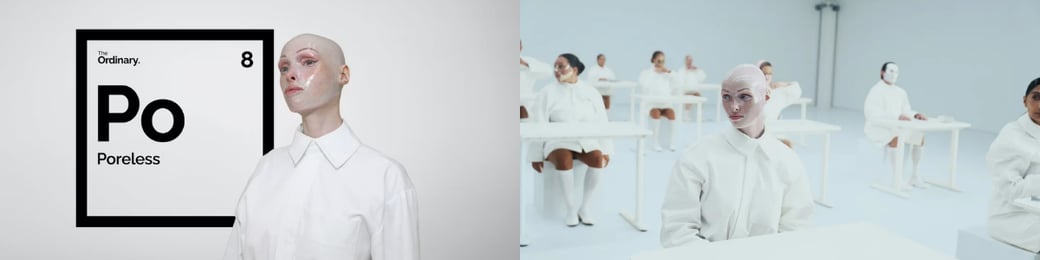
What the judges said: “The communication is right on what the brand is about: simplifying beauty. The beauty industry has been complicated so badly, and beauty trends are affecting young people in a way that’s really hurting their mental being… It is so relevant to the times we live in.”
This is a classic expression of the brand as cultural capital theory (well expanded on by Ana Andjelic in her bookThe Business of Aspiration). Brands that tap into cultural tensions create associations which transcend the product attributes – which is what The Ordinary is doing here. It’s tapping into an ever-present anxiety that we’re never doing enough; that we have to stay as young-looking as possible; that we need to be on top of a million products to exist in this modern world. It’s saying: stop stressing, and keep it simple.
Against close competitor CeraVe, unique themes that emerge for The Ordinary include, “Simple”, “Natural”, “Inexpensive”, “Innovative”.
It also does really well among the 18 to 34-year-old age group. When filtered, Consideration goes from 16% to 28%, and Preference from 4% to 8%. Awareness has stayed stable, meaning the brand isn't reaching new people but converting the ones already aware.
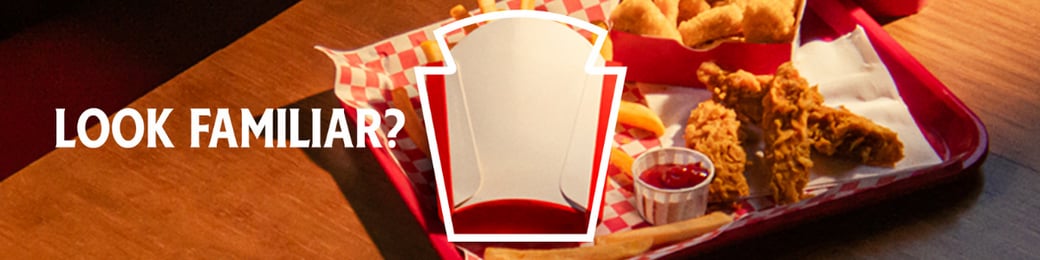
What the judges said: “We rewarded the presence of the brand. The campaign trusted the audience, trusted years of consistency, and trusted that a brand built over time could do the work. Its simplicity wasn’t an executional choice – it was proof of extraordinary confidence.”
This campaign compares Heinz’s distinctive logo shape to the shape of fast food fry packets everywhere to make the connection in consumer’s minds between fries > Heinz ketchup.
Essentially, Heinz’s long-term brand building is the thing that made this campaign possible. According to the ‘ole The Long and Short of It by Binet and Field (a pretty seminal work on brand; this is your sign to finally crack it open), brand effects compound over time in ways that short-term activation never can. When it comes to “Is a memorable brand”, Heinz tops its competitors, with 50% of people aware of the brand associating Heinz with that statement. Its closest rivals are French’s at 43% and Hellmann’s at 42%.
Plus, according to the Mere Exposure Effect, repeated exposure builds familiarity that converts into trust and emotional connection – which we can see in the data. It wins with “A brand I love” (53%, compared to Hellman’s 42%) and “Is a brand I feel connected to” (36%, compared to Hellman’s 27%).
So consumers aren’t just aware of Heinz – they feel connected with it. The gold standard.
Tracksuit data: March ‘25 to May ‘26
⚽️ We interrupt your reading for this special FIFA Corner break
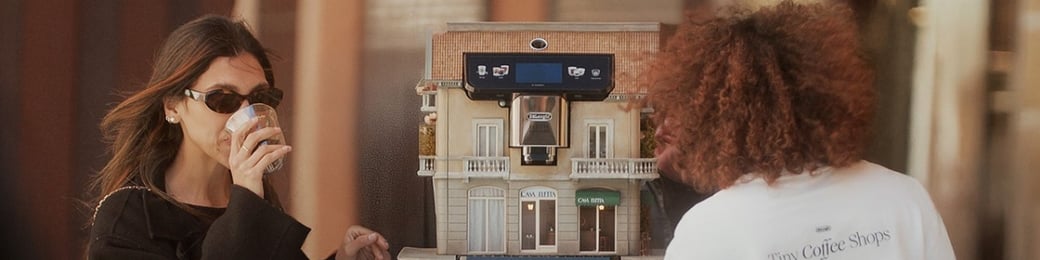
What the judges said: “Tiny Coffee Shop reconnects us with something rare: the ability to feel like children again. Every detail was crafted with extraordinary care, turning tiny decisions into giant emotions. And in the final moment, when the lights of the tiny coffee shop turned on, something else lit up as well: our conviction that this was the perfect symbol of what Craft can be.”
Everyone loves a good story – a fact that we as humans instinctively know to be true. However, the science backs it up. According to Orlando Wood’s Right-Brain Creative Effectiveness Research, human-centric, narrative advertising captures a “broader and more sustained type of consumer attention, building stronger mental availability over time than purple informational ads”. Copy and paste that into your next pitch deck, fr fr.
Our data shows that this kind of narrative brand building can pay off. People associate De’Longhi with craft and quality – big time. Among people aware of the brands, they lead with the statement “Has high quality coffee machines” at 57%. Their closest competitor Nespresso only enjoys 41%. They also lead in “Makes consistently great coffee” and “Makes cafe quality coffee at home.”
Plus, even though De’Longhi has a lower Awareness to rival Breville (57% to 64%), they are neck-and-neck when it comes to Preference (both 15%).
What the judges said: “Kit Kat didn't just manage a crisis, it transformed it into a cultural moment, proving that creative bravery and crisis counsel can coexist. This work didn’t eliminate risk, it choreographed it. We hope this work serves as a reminder that the greatest opportunities often hide inside the biggest challenges, and that crisis, handled with creativity and courage, can become a brand's finest moment.”
We loved this Kit Kat heist moment, which flooded our feeds so thoroughly that everywhere we looked another brand was jumping on the band wagon – a sign of a truly viral moment.
However, though Kit Kat has high awareness (89%), it still has low Preference in its category (7%). Their bottom-of-funnel conversion is below the competitor average (7% vs 18%). Although this cultural moment spiked its salience (e.g. standing out amongst the crowd), there’s still obviously some work to be done here in sustaining the brand – and converting more people down the funnel.
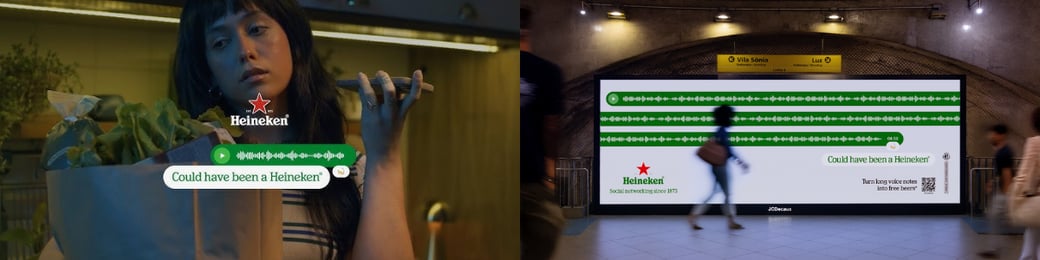
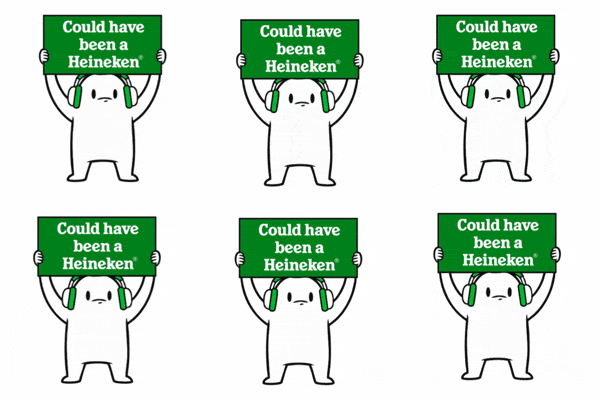
What the judges said: “Heineken makes a beautifully crafted argument that a long voice note is best delivered in person. Whether you love voice notes or hate them, you can’t really argue with that. The jury decided to award the Grand Prix for its social-first simplicity and iconicity, and for converting a new social behaviour into the oldest social behaviour.”
Heineken is hacking into our newfound love of voice notes – and flipping it into an excuse to catch up with someone in person (over a beer, of course). It essentially identified a new category entry point, linking itself to yet another relevant buying situation.
Our data shows that while Heineken has the second highest awareness in this category (85%), but when it comes to perception, they could certainly fare better.
When it comes to the statement “Really stands for something”, only 20% of people aware of the brand agree with this statement, compared to 38% for Guiness. They could also improve with the biggest conversion driver in this category, “Is for people like me” (30% vs 38% for Peroni).
Note: this campaign was primarily rolled out in Brazil, while our data is from the UK. Tracksuit data: March ‘26 to May ‘26, UK.
Beautiful, affordable and always-on brand tracking
You've received this in your inbox as you've opted into Tracksuit's emails.
Feel free to unsubscribe if it's not for you ✌️
Tracksuit Limited, 34-38 Drake Street, Freemans Bay, Auckland, CBD 1010