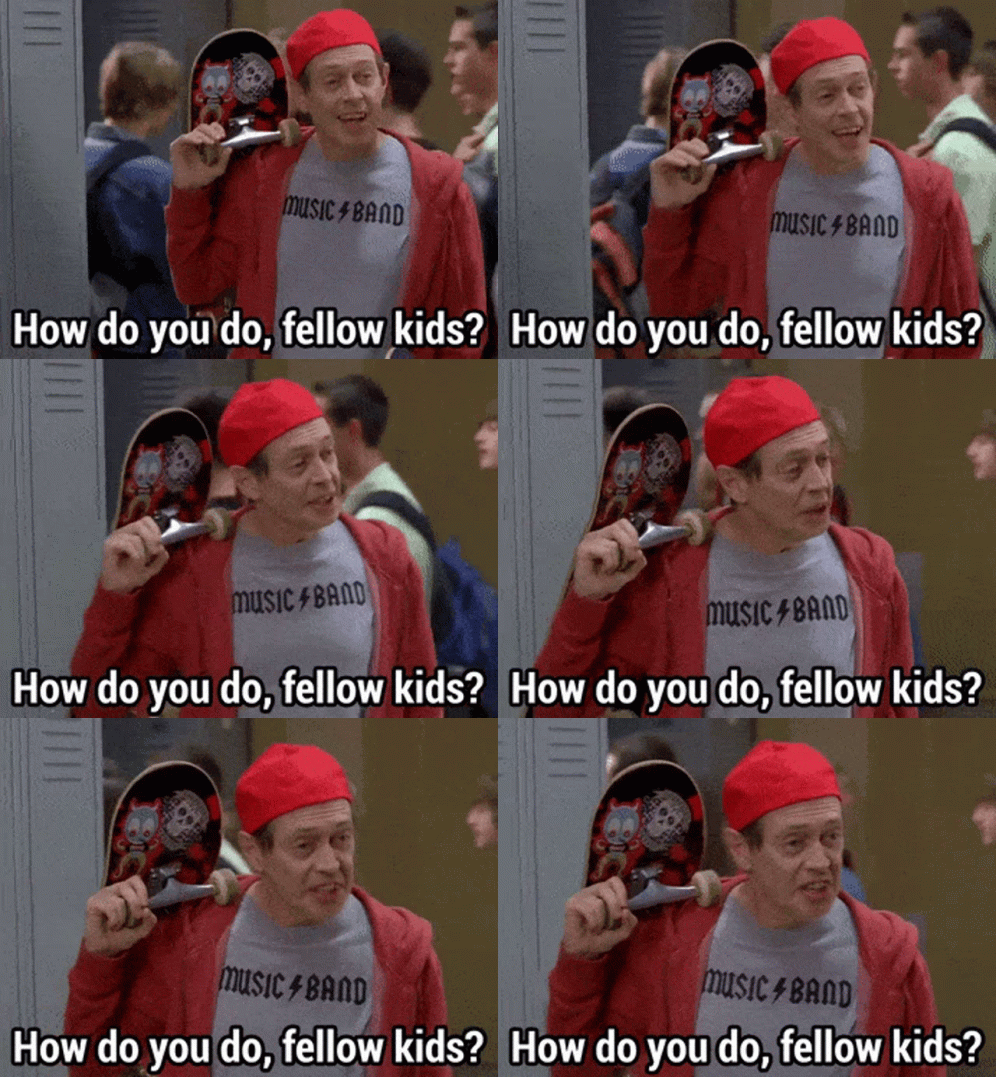
I am “just threw out my back while turning to adjust my seatbelt” years old, so I was especially excited to talk to Jayde Powell, who’s made a name for herself as a bit of a Gen Z whisperer.
I am also chronically online, so I’m aware of a lot of the Gen Z slang/memes/jokes that wend their way through the fiber optics. But does that mean I should start addressing this newsletter, “Heyyyy besties!”?
In today’s email:
Marketing to Gen Z? Don't waste your money
The anti-cringe marketing checklist
Inside the digital consumer’s mind
|Meet the Master
Jayde Powell
Creatorpreneur and the founder and head of creative, The Em Dash Co
Claim to fame: Jayde made $100k+ last year just from creating content on LinkedIn.
Fun fact: She plans to retire by the time she’s 40. “If you see me [on social when I’m 40], it’s because I have a team managing my social media presence.”
Lesson 1: Use influencers to reach new audiences —
not existing ones.
Influencer marketing doesn’t have to be expensive — think micro influencers with niche audiences — but if you’re like most marketers right now, you're probably feeling a budget squeeze.
That can make it especially hard to relinquish control over how your brand is presented to the world. But you gotta let go: Let influencers “speak to their audience in the way they’re used to,” Powell says, otherwise you could be flushing your hard-won budget down the drain.
“What you're doing when you work with influencers is — you're trying to reach new audiences, not your existing customers.” If you want the influencers to sound like your brand, “then it’s a waste of money,” Powell says. “You could have just had that asset made in-house.”
“It doesn't make sense for a creator or influencer to all of a sudden start posting this branded asset that doesn't even sound like them. It's going to confuse their audience,” she tells me.
Powell says that the last thing you — or the influencer, for that matter — want is for followers to ask, Why is this sponsored content on my feed? "That’s how you lose their trust.”
“To put it simply, let your creators and your influencers cook. Let them do their thing.”
Lesson 2: You don’t need to be a part of every moment.
It’s only been a couple of weeks since the Coldplay concert incident revealed a CEO’s affair to the world… followed by dozens of major brands trying to get in on the action on social. But does your brand need to be a part of it?
Maybe! But also, let’s be honest, maybe not.
Brands are “rushing to be a part of the conversation because obviously there's a pressure of relevancy to maintain on social,” Powell tells me.
“But that's where brands need to remember that you don't actually need to be a part of every moment. It’s okay to take a step back and just be an observer — learn from the conversation rather than being a part of it.”
It’s not that you should actively avoid whatever’s floating through the zeitgeist this week. “You want to move at the speed of culture,” Powell acknowledges. She recommends finding a balance of “figuring out where and when to engage, and how.” (Pro tip: It’s probably not at a Coldplay concert.)
Lesson 3: Don’t be cringe.
You may well associate slang like “cringe” and “delulu” with Gen Z. But, Powell reminds me, “Gen Z is our most multicultural generation yet,” so “Gen Z” isn’t just shorthand for “the youth.”
A lot of Gen Z lingo is born from that multiculturalism, often originating in queer and Black culture. So if your century-old legacy brand suddenly starts claiming you’ve “left no crumbs,” you might think you’re reaching a younger audience — but you might not realize that the term came out of Black and Latino queer culture.
“Brands start adopting [slang] because they want to flex their tone and voice and be a little bit more relatable to Gen Z. But in the effort to be relatable, there's something that kind of gets lost in the process,” Powell says.
A good rule of thumb? If it’s not part of your brand voice already, best to skip it. If you want to expand your market share into new communities, Powell says to consider working with multicultural agencies that can help you keep your foot out of your mouth.
If that’s not in the budget, she also suggests using the "research that’s [already] available, like Pew Research or Statista,” both of which put out “a lot of reports around multicultural audiences.”
Instead of zeroing in on a specific phrase or iconography you want to use, reframe your approach: Use the existing research to examine “the best ways to actually speak to [Gen Z] and how you should be marketing to them.”
|Make Yourself a Master
The fast way to cringe-audit content
Unsure if your efforts are cringe? Then download this checklist.
We highlighted the five common pitfalls to stop brands from trickling out the ick, ugh, guh, blah, and all related onomatopeia.
Because no one will tell you when things suck, they’ll just keep on scrolling.
🥰 Community is important — both for marketing and for our sanity. HubSpot contributor Cristina Jerome has 5 community-building tips for you that she’s learned from her years in social media, TV, and nonprofits
🫱🏿🫲🏼 Digital marketing, meet neuroscience. Neuroscience, meet digital marketing. Go inside the digital consumer’s mind with Dr. Imed Bouchrika
🤖 Hiring a world-class data analyst sounds nice, but if you don’t have that kind of cash, these free AI prompts, engineered to turn data into revenue, have you covered.
|Lingering Questions
THIS WEEK'S QUESTION
"You’ve built an incredible reputation for understanding Gen Z behavior and creating authentic, community-first content. In a world that’s constantly chasing virality, how do you balance consistency with creativity, and what advice would you give to brands trying to build genuine relationships over time, not JUST reach?" —Sheena Hakimian, senior digital consumer marketing at Condé Nast and certified life coach
THIS WEEK'S ANSWER
Powell says: Remember that there's a difference between consistency and cadence. Oftentimes I feel, especially as it relates to building community on social, that there's this mentality that the more content you pump out, the more you engage with people — and the more beneficial it is for your brand. And I disagree.
I think what people are looking for is a sense of comfort, a sense of home, a sense of familiarity. And that's what you can accomplish through consistency. Consistency is less about how much and how often you're putting content out and more about the feelings that your audience will associate with your brand.
It could literally be something as simple as the style and the tone in which you communicate or create your content. It could be the visuals you use. It can be how you greet your audience when you post — those are the things that really build community.
Think of it as like a relationship. You're not in a relationship with someone just because of the amount of things that they do for you, it's how they do it for you. That's the same way it should be for your community.
NEXT WEEK'S QUESTION
Powell asks: What sparks joy for you?
This week's email was brought to you by Laura M. Browning. Editing by Curt del Principe.
Subscribe to our other newsletters Business news, but not boring: The Hustle | Stay current on AI: Mindstream


![Ryanair [handshake emoji] Coldplay. Splitting up couples.](https://asset.emaillove.com/5df4109e7087ff75c27a1e54a5617188.png)