Fun fact: This year, she published her first book: Human-Centered Marketing: How to Connect with Audiences in the Age of AI
Lesson 1: Use AI as your unbiased focus group.
Even with AI at your fingertips, why wouldn’t you want to talk to your actual customers to get audience insights?
“Sometimes it’s harder to talk to your customers because they might tell you what they think you want to hear,” Faus tells me. Or “they think they have to put everything in the context of your products and services.”
In other words, a customer in a focus group might introduce bias because “they think, ‘Oh, you're asking on behalf of this company, so you want me to talk about your products and services?’ And it's like — no, I want you to talk about you and your job and your challenges!” says Faus.
“AI doesn’t do that.”
Of course, good prompt engineering is essential — we’ve got more on that below — but Faus says that however counterintuitive it sounds, she can get better audience insights from AI than focus groups.
Pro tip: Put some time and effort into creating your ideal customer profile in the AI tool of your choice — the results will only be as good as the info you give it.
Faus believes that too many companies right now are getting stuck in the conversation stage of marketing, and failing to build real community.
There’s two main ways that brands are getting unstuck, and they both involve influencers — more commonly, we’re seeing brands partner with external influencers, which lets them tap into an existing community.
The other way is what Faus calls internal influencers.
“It’s different than employee advocacy or evangelists or ambassadors,” she says. Their expertise is still rooted in the company, or in the company’s products or services. True internal influencers? “Their expertise is rooted in the industry,” Faus explains. “They are the ICP.”
In some companies, this might look like a research lab, where an internal influencer might start developing their own thought leadership. But, Faus cautions, we’re not talking about “we surveyed 50 of our customers to determine which features they use most.” That’s helpful sales data, but “it’s not thought leadership, industry-shaping, influencer, community-building data.”
Internal influencers — and this is going to be hard for a lot of brands to swallow — shouldn’t be solely focused on the company. You should be able to learn from an internal influencer, whether you use their company’s products or services or not.
“You want somebody who has that balanced expertise between the company and the industry, and that has credibility with the ICP.”
Lesson 3: Use AI personalization to be human — not creepy.
I ask Faus how she uses AI to be more trustworthy — and how to avoid letting overpersonalization turn you into a real creep.
“It sounds counterintuitive when the question is about AI, but it’s actually about the humans, right?” she says.
To prove her point, she stares at me with a ferocious intensity and says, “If AI were to come in here and it’s like, ‘Laura is wearing a blue sweater vest and a bee necklace and a bow in her hair’ — it’d be real weird.” Yes, yes it would.
But as a person, Faus might see me and say, “I love that color blue! I’m going to wear that color blue for my presentation tomorrow. Where did you get that vest?” Not creepy at all, and it even starts a conversation between us.
Because human conversation isn’t just a recitation of facts, it’s about connection.
It’s all about “pairing the facts that AI uncovers with the common ground that humans naturally find,” she says.
| Make Yourself a Master
Your customers are lying to you...
But (probably) not on purpose—it’s just human nature for people to augment opinions based on what they think they should say, what they think you want to hear, good ol’ anxiety, etc.
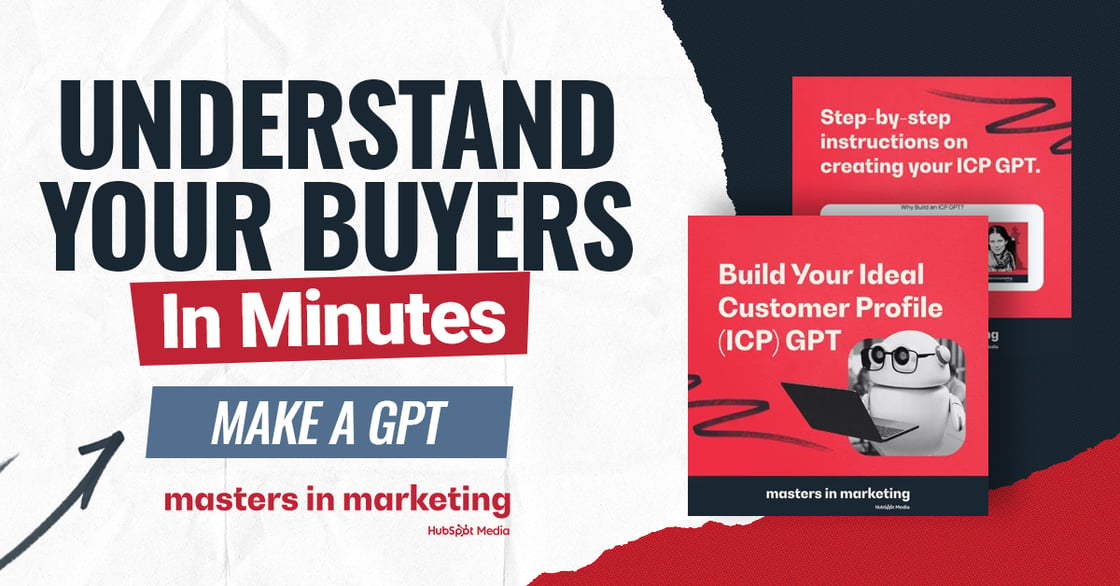
Thankfully, AI is a brute for allegiance-less feedback and flak. Make your own Ideal Customer Profile (ICP) GPT to save time on better knowing buyers.
No need to overspend on focus groups and spend a season studying faces. We laid out the stats, steps, and master prompt for simulating months of research.
What’s something your team does purely out of love for the user — not metrics, not growth, just because it feels right? —Ashley Judge, Executive Director, Destination Salem
THIS WEEK'S ANSWER
Faus says: We offer the Atlassian Team Playbook, available free and un-gated, to make it easier for teams to collaborate. It's full of practical advice, exercises, and templates to help teams discover dependencies, run retros, and define roles and responsibilities.
We've also added some whimsical experiences to the product, like a Halloween-themed animation, or confetti when you move a task to “done.” These make the day a little brighter for our users!
NEXT WEEK'S LINGERING QUESTION
Faus asks: What tactics are marketers using to make their messaging stand out in a show floor filled with booths about AI?
This week's email was brought to you by Laura M. Browning.
Subscribe to our other newsletters Business news, but not boring: The Hustle | Stay current on AI: Mindstream | Sell better: The Science of Scaling