Black boxes aren't
Very recently in this newsletter, I talked about misleading names of countries and software features, and today I have a new one for you. The aircraft black box. It’s not physically black; that name came from British WWII radio and radar devices which were deliberately made inconspicuous in case an enemy took possession of a downed craft. Modern black boxes are bright orange to make them easier to find (the same goes for the photo up there ^)
They are also not black boxes in the scientific sense; that is, systems in which the inputs and outputs can be known, but nothing about the inner workings. In fact, black box is an outdated colloquial term for what are officially known as flight recorders.
They record flight data and cockpit voices, and are built to survive extreme conditions so that the vital information can be recovered in the event of an incident. They are all about transparency, very much the opposite of a black box.
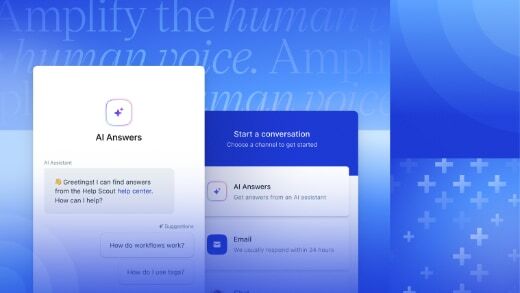
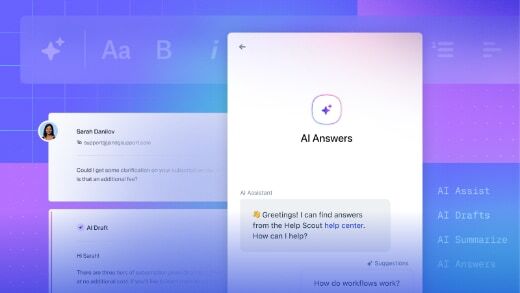
Transparency has also been on our mind at Help Scout recently as we integrate AI in various forms. In Alexa’s article on our AI product principles she shares this list our product teams use to help decide where and how to implement AI:
- Use AI where computers excel
- Skip the blank page
- AI should never be the only way to complete a task
- AI should behave like a co-worker
- AI isn't a bolt-on feature
Generative AI is by nature a scientific black box, a system where the decision-making between the input and the output can be literally inexplicable. That’s currently a technical constraint, not something any of us can fix, but if we wish to use AI and deliver high quality service then we need to grapple with all the resulting issues.
One approach Help Scout is taking is to be as transparent as possible with all of our customers about how our set of AI features work, what data they use, and how we keep your information safe. That’s all spelled out in the recently released Help Scout AI Transparency Hub.
We may not be able to explain every output of a generative AI model, but we can make sure you understand what information it has access to, where that information goes, and what protections are in place for you. Not to mention making sure your customers are always aware when they are dealing with an AI and not a human.
Can you trust the tools that you use, and the companies that make them? The answer may differ from person to person even for the same tool. A document proclaiming principles is not the same thing as being trustworthy, but it does put a stake in the ground. It is something you can measure a company’s actions against.
This moment is one where deciding who to trust (and verifying what can be verified) is a critical skill. Every company should strive to be like my mechanic, Peter, who always showed me the parts he took out and the new parts he installed.
Be transparent, build trust, and then act in ways that are worthy of that trust. That's the path to success.