Greetings! Here’s the latest from the MIT community.
Replies to this email will not be received. If you have feedback to share, email [email protected].
Love the Science
|
For 250 years, discovery, courage, and tenacity have driven America forward. From medicine to infrastructure to breakthroughs we can’t yet imagine, science touches every part of daily life because someone followed their curiosity.
Can a $350 million gift change AI’s trajectory? // The Chronicle of Philanthropy
The creation of the MIT Schwarzman College of Computing allowed MIT to develop new “interdisciplinary programs to prepare students for an AI-saturated world and help them understand the social and ethical implications of digital technologies.” Says Daniel Huttenlocher, dean of the College of Computing, “MIT realized that effective education in the age of AI has to look different than it has in the past. Traditional siloing of expertise won’t work when AI is expected to touch nearly every part of people’s lives and is changing the way people in disciplines outside of computing are advancing their work.”
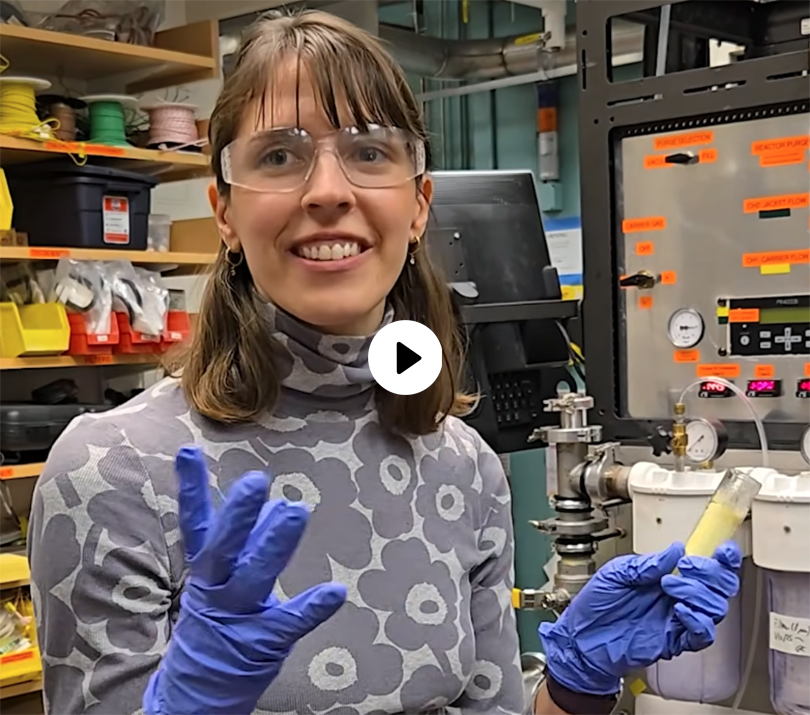
For thousands of years, the raw material for steel has been produced by heating iron oxide and coal together, which generates carbon dioxide as a byproduct. Research Scientist Katie Daehn and her team are working on producing steel that comes from a different raw material: iron sulfide. With the help of electrolysis, the iron sulfide is split apart, and sulfur exits as a gas, leaving behind pure iron. “We think that working with the sulfide really minimizes the energy required. We can make steel at what we think are rates competitive with a blast furnace,” says Daehn.