2026 Aquarium monthly newsletter—With gratitude for an extraordinary legacy and excitement for what’s ahead, we’re proud to share an important leadership transition for the Aquarium.
Aquarium updates
Full hearts and hopeful horizons
With gratitude for an extraordinary legacy and excitement for what’s ahead, we’re proud to share an important leadership transition for the Aquarium. After a global search, we are thrilled to welcome Dr. Jenny Gray as the Aquarium’s Chief Executive Officer—a position endowed through the generosity of longtime donor Nancy Burgermeister. One of the most influential zoo leaders in the world and a passionate champion for conservation, Jenny brings decades of experience advancing wildlife protection, research, and animal well-being. Originally from South Africa she is widely respected for her bold, forward-thinking leadership in the global conservation community.
Her appointment represents a new wave of opportunity for the Aquarium. As we honor the legacy that has guided us here, we look ahead with gratitude, momentum, and a shared commitment to protecting our blue planet.
They say there are plenty of fish in the sea—but have you ever stopped to think about what those fish are actually doing down there? Beneath the waves lies a world of unexpected romance, intricate partnerships, and perfectly-timed seasonal rendezvous that would put any dating app algorithm to shame. From clownfish couples who mate for life to coral reefs that synchronize their spawning with the moon, the ocean is basically one giant lesson in connection, cooperation, and cosmic timing. Welcome to ocean hopecore: where biodiversity meets belonging, where every creature finds its niche, and where love—in all its weird, wonderful forms—flows with the tides. Dive in with us as we explore what the sea can teach us about relationships, resilience, and the beautiful truth that
we're all just looking for our school to swim with.
As hefty winter swells rumble along the Central Coast, marine animals get down to the serious business of passing on their genes. Large predatory fish like lingcod and cabezon lay sticky egg masses, which the dutiful dads guard for weeks until they hatch. Meanwhile, the water itself gets a little… hazy, as other animals release their reproductive cells straight into the water column. Many invertebrates (that’s animals without a backbone) such as abalone, mussels, sea stars, and sand dollars are broadcast spawners and rely on perfect timing rather than romance. When conditions are right, they shoot eggs and sperm into the water. Once one animal starts the spawning party, everyone else joins in, dramatically boosting the odds of successful fertilization. So cue up the Marvin
Gaye, set out the chocolate-dipped strawberries, and dive in. Monterey’s underwater love-fest is in full swing!
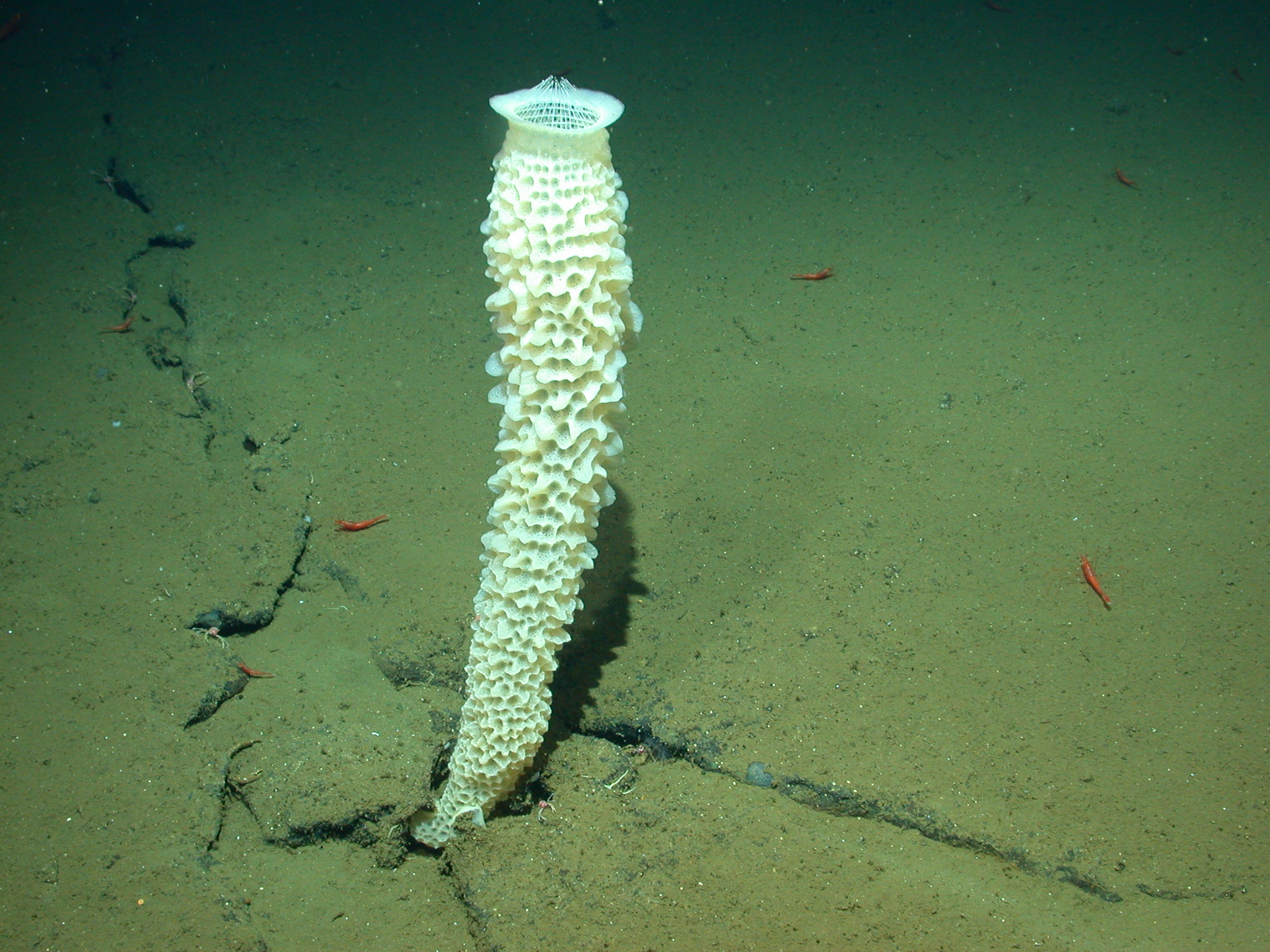
On the deep seafloor, glass sponges like the Venus’ flower basket filter food through delicate silica lattices, drawing shrimp into their shimmering halls. This mutualistic bond turns the sponge into a living keep—shrimp tend to glassy halls, grazing away excess food, while the Venus’ flower basket rewards them with protection, shelter, and a bountiful feast. Scientists have observed some shrimp mates swear lifelong allegiance within these crystal walls—mating, raising young, and eventually growing too large to leave their throne of glass. A deep-sea love story more fantastical than fiction!
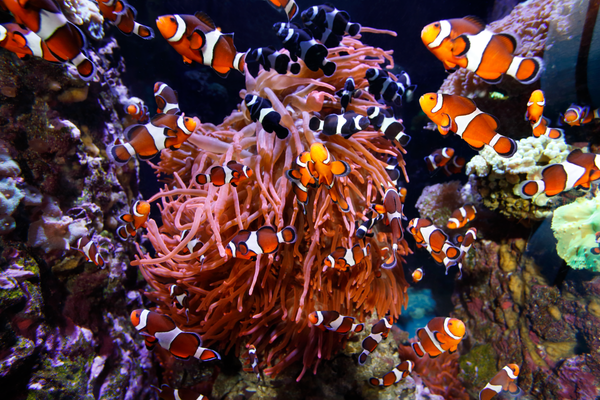
It’s a relationship built on protection, survival, and mutual benefit: clownfish often find sanctuaries in the tentacles of anemones, while anemones receive a nutrient boost from their finned tenants. The clownfish chases off predators, and its special mucus keeps it safe from stings—a true “mucus-match" made in the reef. These species aren’t codependent, yet they can thrive together, reminding us that sometimes the strongest bonds are built on trust, teamwork, and a little splash of hope.
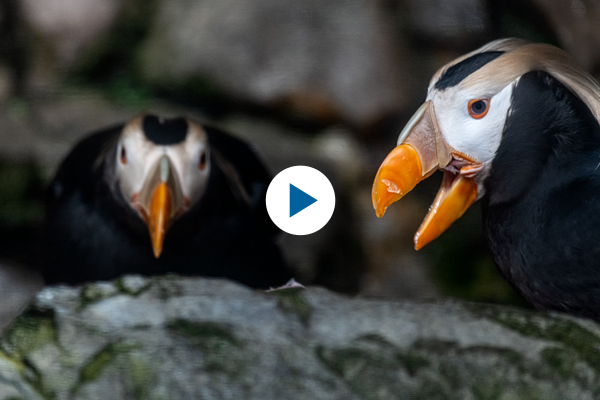
Tufted puffins are gearing up for the breeding season in early spring with bright orange beaks and devoted hearts. They reunite each spring, reinforcing pair bonds that can last for years. When it’s time to breed, the tufted puffin returns to its birth colony—often reuniting with the same mate. Talk about true love. Our newest bilingual video celebrates this season of love and dives into the fascinating life of tufted puffins!
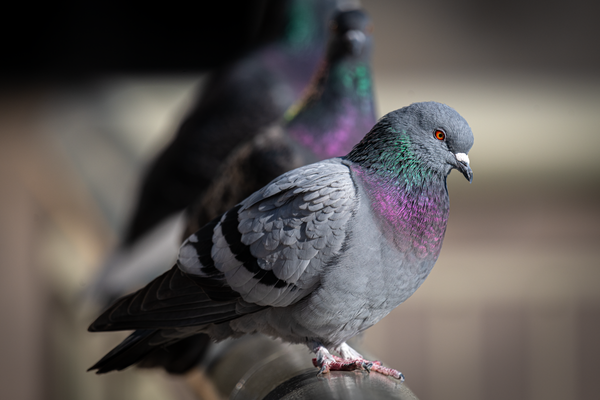
Appreciating the extraordinary in the seemingly ordinary. City pigeons might surprise you, they actually have coastal roots. Pigeons descend from rock doves that once nested along sea cliffs, which is why ledges, bridges, and buildings feel like home. They’re incredible navigators, capable of finding their way across long distances, and many form long-term pair bonds and share parenting duties. On top of all that, these clever birds can recognize human faces, see more colors than we do, and they can recognize themselves in puddles and mirrors. Tough, loyal, and quietly adaptable, pigeons remind us that love and resilience often show up in the most
familiar places, even right outside our window.