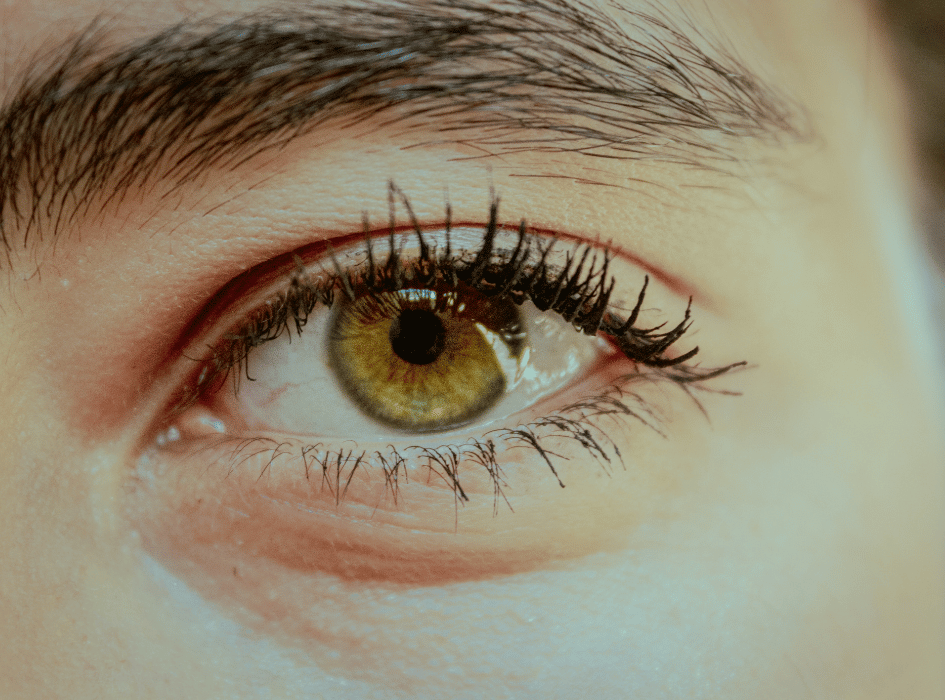
What you see as "bags" or under-eye puffiness is actually a combination of small physiological changes happening simultaneously beneath that ultra-thin skin:
THINNER SKIN + VISIBLE BLOOD VESSELS
The skin around the eyes contains very little subcutaneous fat - the cushioning layer that provides volume and conceals underlying structures elsewhere on the face.
This means blood vessels become more visible as translucent shadows, particularly when circulation slows (during sleep, dehydration, or poor lymphatic drainage). What looks like darkness is often actually visible vasculature showing through paper-thin skin.
FATTY CUSHIONS SHIFTING WITH AGE
Small fat pads naturally cushion beneath your eyes, held in place by connective tissue. As we age, this tissue weakens and stretches - allowing fat to shift forward with age and gravity, resulting in noticeable puffiness or bulging.
Interesting fact: This process typically begins in the mid-30s but accelerates significantly after 50, as collagen production declines by approximately 1% per year after age 20.
FLUID IMBALANCES FROM MULTIPLE CAUSES
Under-eye puffiness often stems from fluid retention linked to several factors:
-
Poor sleep - lying flat for extended periods allows fluid to accumulate rather than drain naturally
-
Dehydration - causes the body to retain water, including around the eyes.
-
Hormonal changes - menstrual cycles, perimenopause, and menopause significantly affect fluid balance.
-
High sodium intake - excess salt causes water retention throughout the body, visibly manifesting in the thin under-eye area.
INFLAMMATION FROM ALLERGENS
Spring brings elevated pollen levels that trigger histamine release - causing mild swelling, fluid buildup, and inflammation. Even if you don't experience obvious allergy symptoms like sneezing, your eyes may show subtle puffiness from airborne irritants.
Makeup and skincare products left on overnight also contribute - residual makeup removes cause mild swelling that stretches the delicate under-eye area, making tissues appear looser and puffier over time.
Interesting fact: Under-eye puffiness is often linked to meibomian gland dysfunction (MGD) - the tiny oil glands in your eyelids. When inflammation or hormonal shifts affect these glands, it impacts both tear quality (causing dryness) and fluid drainage (contributing to puffiness). The two issues frequently occur together.