How bootlegging worked during Prohibition.
View in browser | Update your preferences

Classics Newsletter Header
An illustration of Eustace Tilley with “100 YEARS” on it.

New Yorker subscribers enjoy unlimited access to a century of reporting, commentary, criticism, and fiction. If you’re not a subscriber, join us today »

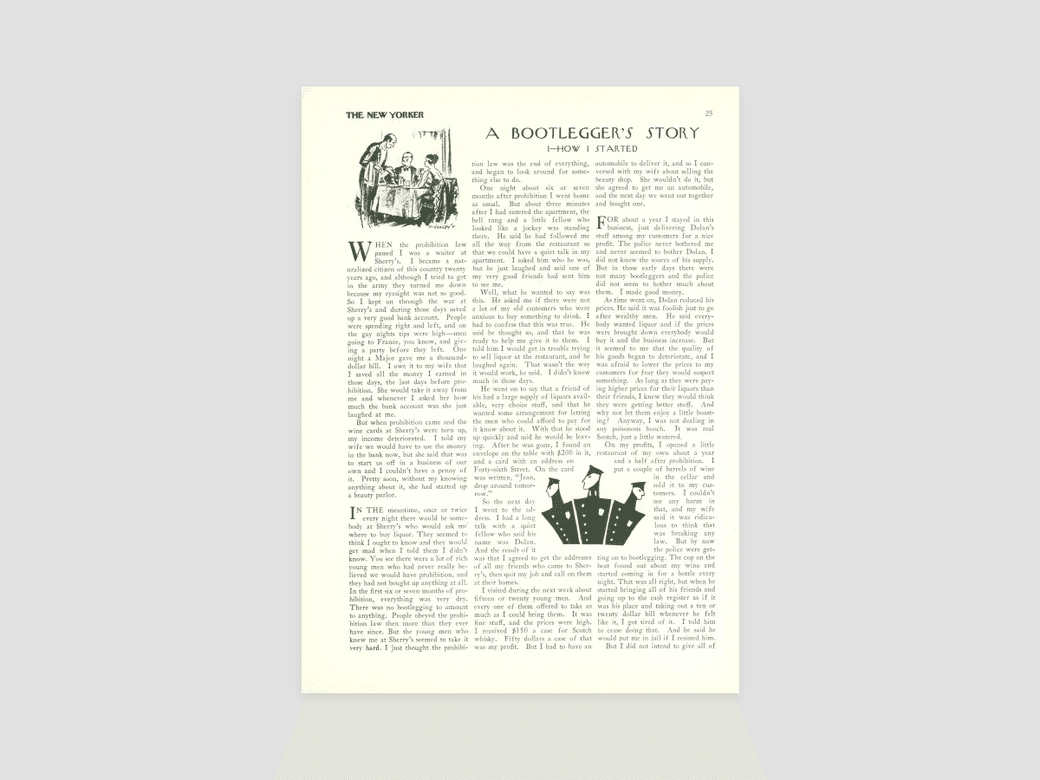
Page 25 of the September 25, 1926, issue of The New Yorker. Reflections
A Bootlegger’s Story: How I Started

At my wife’s beauty parlor, women were always asking where they could buy something to drink.

Congratulations! You’ve nearly made it through 2025. If your New Year’s celebrations include an alcoholic beverage, pour one out for the revellers of Prohibition, who had to show spirit without spirits—or get creative with sourcing. In 1926, not long after The New Yorker’s founding, the magazine published “A Bootlegger’s Story,” a four-part series by an anonymous smuggler. “In the first six or seven months of prohibition, everything was very dry,” he reports—but pent-up demand soon created a booming black market. The writer was working as a waiter at the start of the ban, but unexpected opportunities soon led him to quit the restaurant and climb the ranks of clandestine suppliers instead. As he recounts his rise from deliveryman to upper management, he answers questions that you didn’t realize you had about smuggling routes, the psychology of pricing, and how word got around about where to find a forbidden drink.

The New Yorker of that era did its part to aid those seeking alcohol. At a time when aspiring drinkers might not know what to pay, The Talk of the Town published regular updates about what bootleg liquor should cost. Since that service is no longer relevant, we’ll just thank you for your readership and wish you a happy New Year.

Read the story

An illustration of a magnifying glass with an eye in it.
Also from the Archive
An illustration of someone stranded inside a giant wine glass Annals of Drinking
A Few Too Many

From 2008: Is there any hope for the hung over?

By Joan Acocella
Three people sitting on couch holding champagne and looking sad Cultural Comment
Cancel New Year’s Eve Forever

From 2020: Not just the parties. Our acknowledgment of a new year must become strictly clerical.

By Sarah Miller
More from The New Yorker
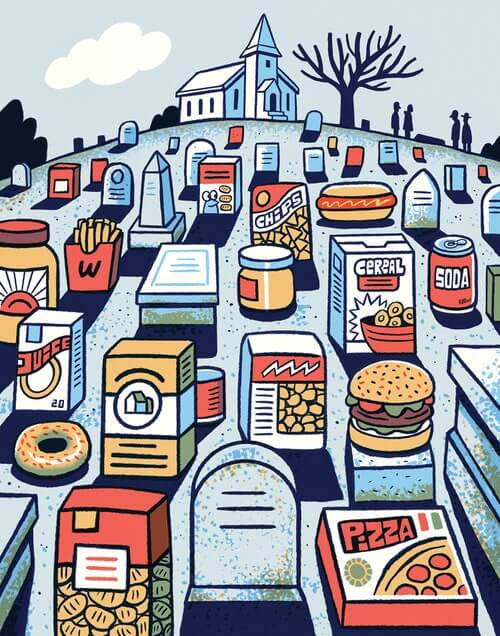
Packaged foods acting as gravestones. Annals of Medicine
Why Is the American Diet So Deadly?

A scientist tried to discredit the theory that ultra-processed foods are killing us. Instead, he overturned his own understanding of obesity.

By Dhruv Khullar
Men laying on the ground The Weekend Essay
What Did Men Do to Deserve This?

Changes in the economy and in the culture seem to have hit them hard. Scott Galloway believes they need an “aspirational vision of masculinity.”

By Jessica Winter

This newsletter was written by Nathan Burstein, with additional research by Nicholas Henriquez.

Illustration of stacked coffee mugs and a person reading a book.

What did you think of today’s newsletter?

Let us know. If you like Classics, browse more New Yorker newsletters.

You’re receiving this e-mail because you signed up for the New Yorker Classics newsletter.

Manage your preferences | View our Privacy Policy | Unsubscribe

The New Yorker may earn a portion of sales from the products and services that are purchased through links in our newsletters as part of our affiliate partnerships with retailers.

Copyright © Condé Nast 2025. One World Trade Center, New York, NY 10007. All rights reserved.