
$10 Million Donation Boosts Treatment Development for Ultra-Rare Disease
The Clayco Foundation gifted Penn Medicine with $10 million to develop a new therapy for the rare disease retinal vasculopathy with cerebral leukoencephalopathy (RVCL). Jonathan Miner, MD, PhD, an associate professor of Rheumatology, is the leading expert on the condition and is developing a small molecule drug that captures and marks faulty proteins that cause the condition to be destroyed.
Penn Medicine News Release • Inside Precision Medicine |
|
|
Remembering Leonard Abramson, Health Care Pioneer and Cancer Research Donor
Prominent Philadelphia philanthropist Leonard Abramson, a longtime friend and supporter of Penn Medicine, died July 4. Abramson and his late wife Madlyn Abramson founded the Abramson Family Cancer Research Institute—culminating with the naming of the Abramson Cancer Center in their honor in 2002. The family’s charitable contributions to the university total more than $150 million.
KYW Newsradio |
|
Durable Remissions After CAR T Cell Therapy for B-Cell Lymphoma
Ten years after receiving a single dose of CD19-targeted CAR T cell therapy, almost a third of patients with aggressive lymphomas remained cancer free. The long-term follow-up results were published in the New England Journal of Medicine by Marco Ruella, MD, an associate professor of Hematology-Oncology and scientific director of the Lymphoma Program, Stephen J. Schuster, MD, the Robert and Margarita Louis-Dreyfus Professor in Chronic Lymphocytic Leukemia and Lymphoma Clinical Care and Research and director of Penn’s Lymphoma Program, and colleagues.
Penn Medicine News Release • The ASCO Post |
|
Genome-Wide Significant Loci Identified for Ménière’s Disease Risk
By analyzing genetic data from nearly 2 million people, Penn genetics researchers have unlocked a new scientific understanding of Ménière’s disease, a chronic and often debilitating inner ear disorder. The study, led by Douglas Epstein, PhD, a professor and vice chair of Genetics, Bogdan Pasaniuc, PhD, a professor of Genetics, and Iain Mathieson, PhD, an associate professor of Genetics, found evidence that the condition may be linked in part to how the inner ear develops early in life—rather than being caused solely by problems that arise in adulthood, as previously thought.
Penn Medicine News Release • HealthDay |
|
Experts Predict the Future of Cutaneous T-cell Lymphoma Treatment
During the 6th World Congress of Cutaneous Lymphoma, Stefan K. Barta, MD, an associate professor of Hematology-Oncology and director of the T-Cell Lymphoma Program at the Abramson Cancer Center, said that advances in targeted therapies and immunotherapies, including CAR T cell therapy, give him hope that he won’t have to describe cutaneous T-cell lymphoma as “a mostly incurable disease” for much longer.
OncLive |
|
Brain Cancer Survivor Is Cycling to Make a Difference
Doylestown native Chris Baccash is a dedicated cyclist and brain cancer survivor who will ride in the Philadelphia Cycling Classic Charity Ride for the American Association for Cancer Research (AACR) in August. Penn Medicine, where Chris was treated, is the Official Charity Partner for the ride. AACR President-Elect Robert Vonderheide, MD, DPhil, director of the Abramson Cancer Center, noted how “AACR has demonstrated that collaboration is one of the most powerful drivers of progress. The Philadelphia Cycling Classic reflects that same commitment to moving forward together.”
Penn Medicine News & Views • AACR |
|
How Clinical Care AI Tools Are Impacting Penn Medicine Staff
UPHS Chief Health Information Officer Srinath Adusumalli, MD, MSHP, MBMI, explained that Penn Medicine is already seeing positive impacts from the implementation of its AI tools across the enterprise. He cited the ambient listening program as a success story, describing that it has been shown to reduce cognitive and time burdens on the clinicians who use it.
Health Leaders Media |
|
Public Health, AI Strategies to Improve HPV Vaccination Need Work
According to findings from a randomized trial of nearly 1,300 parents, public health messaging had a longer-lasting impact on parents’ intent to vaccinate their children against HPV than AI chatbot interactions. “AI chatbots are promising, but they should not be assumed to outperform existing tools simply because they are newer or more interactive,” said lead author Neil K. R. Sehgal, ME, MS, a third-year PhD student and an associate fellow at the Leonard Davis Institute of Health Economics. “Ideally, this work will help shift the conversation from, ‘Can AI persuade people?’ to ‘When does AI add meaningful value, for whom and under what conditions?’”
Healio |
|
Penn Medicine News and Views
|
|
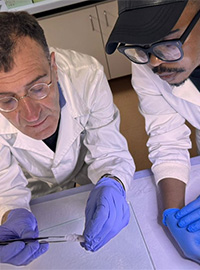
A model global health academic partnership flourishes in Botswana
Beyond its AIDS-crisis origins, the Botswana-UPenn Partnership has achieved an expansive vision of health care, access to innovations, and education.
Read More: Penn Medicine News & Views |
|


