The Computational Social Science Lab is using new technologies to explore division in popular media. –
Keeping you up to date with the most recent news from the University of Pennsylvania


|
March 31, 2026
|
|
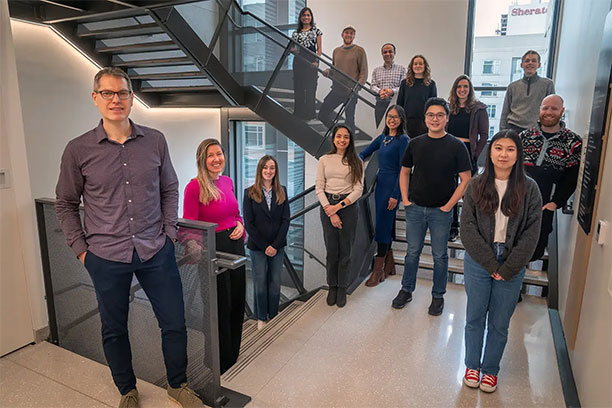
As founder and director of the Computational Social Science Lab, PIK Professor Duncan Watts (far left) and his team are using new technologies to explore how people behave, how media works, how society functions, and how the human mind operates. “We’ve all experienced the divisiveness pervading popular media,” Watts says. “It’s a timely question, and in our particular historical moment, CSSLab has these incredible tools—massive new datasets and large language models, in particular—to find an answer.”
|
|

Iridium oxide is one of the most effective compounds at splitting water to produce hydrogen for hydrogen fuel, but it’s also rare, expensive, and prone to degradation. Now, a new study co-led by computational engineer Aleksandra Vojvodic and collaborators offers a view of the complicated degradation process of a material based on one of the rarest elements, iridium. Their findings, which show how this catalytic agent breaks down at the atomic scale, pave the way for better hydrogen fuel production.
|
|

Dennis Massimo’s life was saved by a decision his sister, nursing professor Lauren Massimo, urged him to make almost a decade earlier: signing up for the Penn Medicine BioBank. A routine research blood sample revealed a gene mutation linked to Lynch syndrome, a hereditary condition that greatly increases cancer risk—leading doctors to find a silent stage III colorectal tumor before it could become deadly.
|
|
|
The Graduate School of Education brought a group of school leaders from eight districts across the country to Montgomery, Alabama, as part of the Equity-Centered Pipeline Initiative. Urban education professor Howard Stevenson led an immersive learning experience at the Legacy Sites with founder Bryan Stevenson, his brother.
Read this story »
|
|
|
|
 Publications may require a subscription. Penn students, faculty, and staff can access some subscriptions through the Penn Libraries.
|
|
THE ASSOCIATED PRESS
“It comes across as if we’re trying to prevent cheating,” says Emily Hammer of the School of Arts & Sciences. “That’s not why we’re doing this. We’re doing this because students are actually losing skills, losing cognitive capacity and creativity.”
Read this story »
|
|
|
|
APRIL 23
Take Our Children to Work Day encourages and inspires youth while introducing them to future workplace possibilities. Numerous Penn schools and centers welcome children to visit and engage, with a range of programs to suit young guests’ varied interests and career goals. Registration opens March 31. Supervisory approval is required for all staff and faculty participants; advance registration for activities is also required.
Explore this event »
|
|
|