Revisit a story that offers insights into the erosive power of raindrops and the sediment clusters they create.
Keeping you up to date with the most recent news from the University of Pennsylvania


|
July 24, 2026
|
|
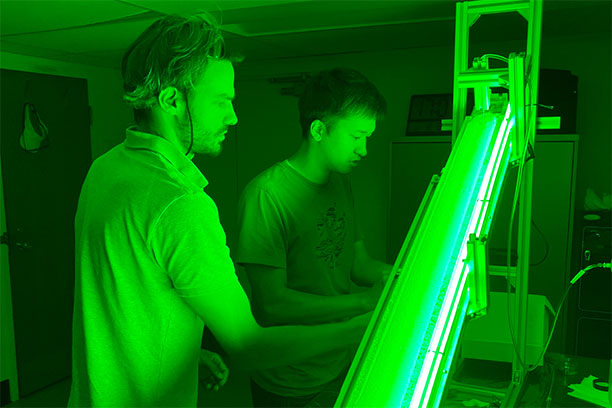
To close out this week’s coverage of summer storms, revisit a story that offers fundamental insights into rain’s effect on landscapes, soil loss, and agriculture. With the help of a custom-built sloped channel, geophysicists Hugo Ulloa, Douglas Jerolmack (neither pictured), and colleagues have identified Earth‑shaping processes driven by snowball‑like sediment clusters they call “sandballs.”
Raindrops that strike dry, sloped soil can gather and grow, causing erosion long after impact by rolling downhill and picking up grains of sand. These form either peanut‑shaped clumps with liquid cores or stable, donut‑shaped structures with airy centers.
By pinning down the physics of these soft, mixed materials, the team hopes to sharpen scientific understanding of how raindrops impact dry surfaces. Their findings will also inform engineered systems that use liquids to bind granular matter, from soil stabilization to manufacturing processes where droplets act as a kind of glue.
|
|
From community-led water testing and hydrogen fuel production to stormwater runoff and the intersection of water and AI, Penn researchers are tackling the challenges of extreme summer storms. Visit the Penn Today website for more stories on climate and water management.
|
|
|
|
NPR
Lindsey Cameron of the Wharton School says courts have been wrestling with the question of liability when it comes to gig and sharing economy companies: “There is not an employer, as one typically thinks of, that you can say, ‘You have responsibility for the products that you are putting out into the world.’”
Read this story »
|
|
|