

|
Weekly Edition
April 27-May 3, 2026
|
|

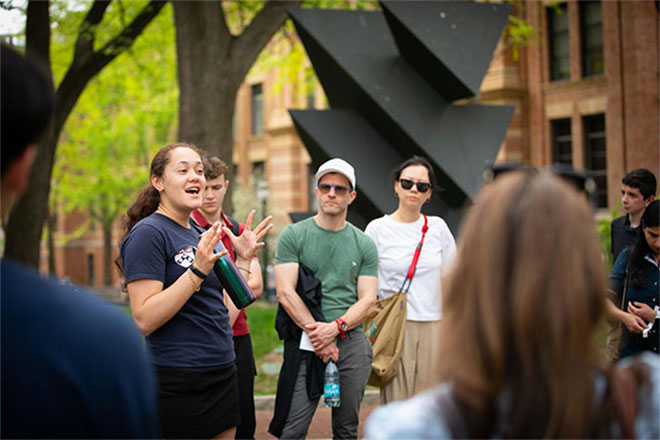
Hundreds of third-year students with red T-shirts, bamboo canes, and mock skimmer hats assembled on April 30 to celebrate Hey Day, a 110-year Penn tradition in which third-years ascend to senior status. The annual occasion featured a mid-morning picnic at High Rise Field, a vibrant procession along Locust Walk to College Green, and the yearly three-question “exam” from President J. Larry Jameson. (Photos)
|
|
Wharton School fourth-year Gabrielle Fine plans to pursue sustainability consulting after graduation. Fine is one of hundreds of undergraduates from middle-income families who have benefited from the Quaker Commitment, which guarantees full tuition for families with typical assets making $200,000 or less. “Without the financial aid, I wouldn’t be here,” says Fine. “I’m very grateful to say that.”
|
|

A partnership between Penn and the Historical Society of Pennsylvania allows students in Emma Hart’s course to explore the lives of Revolutionary-era Philadelphians using diaries, account books, and letters from that time. “You’re going through the archives, finding letters, family trees,” says second-year David Sun (pictured), “and that’s just a really cool experience.”
|
|
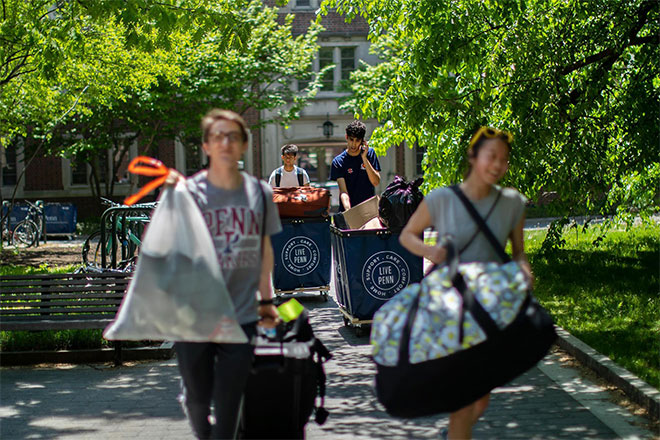
Penn Sustainability, the Office of Social Equity & Community, the Office of Government and Community Affairs, and Business Services are working with community partners to make a clean, green Move-Out experience easier for students. In addition to on-campus donation sites through PennMOVES and additional trash pickup days, an innovative donation program allows off-campus students to schedule pickups of used items.
|
|
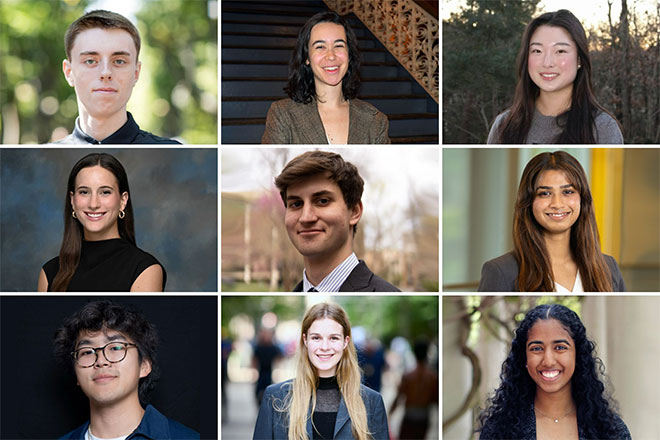
Six Penn fourth-years and three recent graduates have each received a 2026 Thouron Award to pursue graduate studies in the United Kingdom—students Tristen Brisky, Charissa Howard, Jean Kim, Griffin Pitt, Andrew Schmidt, and Sriya Teerdhala (left to right, top two rows) and alumni Jordan Liu, Caroline Magdolen, and Megha Thomas (left to right, bottom row). Thouron Scholars receive tuition for as long as two years, as well as travel and living stipends.
|
|

As the fifth anniversary of Hurricane Ida approaches this summer, researchers from across Penn have shown that the flooding from that storm was not a statistical anomaly but the result of compounding forces—climate change, urbanization, and infrastructure—that are reshaping flood risk. By building a street-level model of the Schuylkill River, the team has identified a critical tipping point at which floods escape containment, offering new insight into how urban rivers behave under extreme conditions.
|
|

Penn computer scientists and cardiologists teamed up to create CAMEL, an AI model that analyzes continuous remote monitoring of patient heart activity to forecast life-threatening heart rhythm irregularities minutes before they start. It’s an early but promising step toward real-time cardiac prediction that could one day extend beyond the ICU to wearable devices.
|
|

Third-year Zach McGrath has received a Harry S. Truman Scholarship, a merit-based award of up to $30,000 for graduate or professional school to prepare for careers in public service. McGrath is among 55 Truman Scholars from 48 U.S. colleges and universities this year.
|
|

In recent decades, Penn has taken major steps to build a stronger, supportive relationship with its neighbors in West Philadelphia and beyond. This third installment in the limited series “Chapters of Change” examines the University’s community engagement efforts amid widespread societal change.
|
|
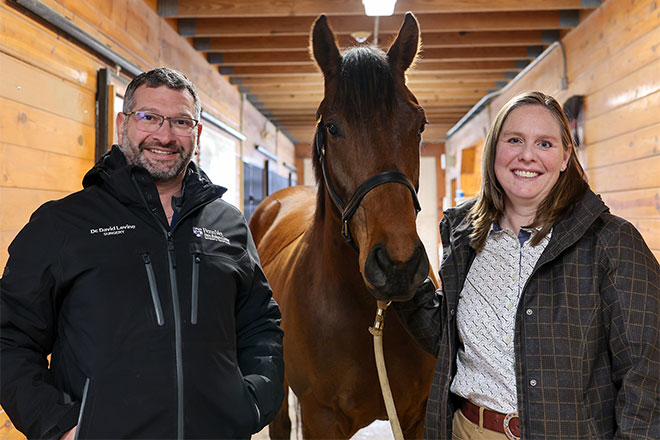
Unethical racing practices can endanger the welfare of horses, whether they’re competing on a Pennsylvania track or participating in last Saturday’s 152nd Kentucky Derby. Veterinarians David Levine and Mary Robinson use biomarkers to monitor equine health, detecting inflammation to address early infections and determining whether racehorses have been doped with harmful substances.
|
|
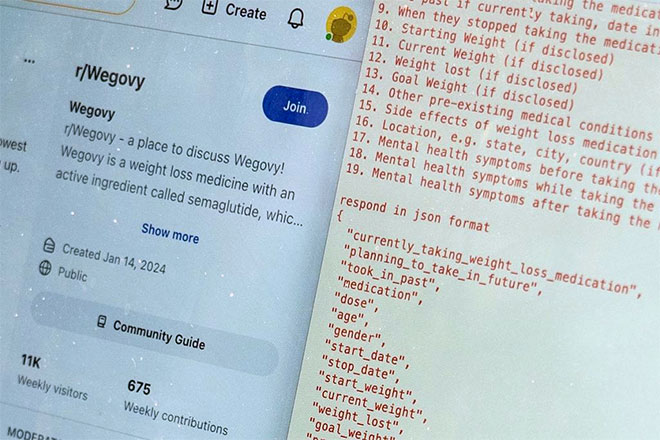
By using AI to analyze more than 400,000 Reddit posts, engineers have identified patient-reported symptoms associated with two popular weight-loss and diabetes medications that may not be fully captured in clinical trials or regulatory documents. “This is not a replacement for trials, but it can move much faster, and that speed matters when a drug goes from niche to mainstream almost overnight,” says computational social scientist Sharath Chandra Guntuku.
|
|
|
Research from obstetrician-gynecologist Courtney Schreiber has changed U.S. and international guidelines for the medical treatment of miscarriage, leading to an entirely new clinical model of care for early pregnancy loss.
Read this story »
|
|
|
|
From archaeological excavations in Turkey to experimental cosmology in Chile, faculty and students from the School of Arts & Sciences are finding new ways to preserve and promote international scholarship.
Read this story »
|

|
|
|
|
The Penn Center for Innovation highlights three investment funds available for early stage startups affiliated with the University: The StartUP Fund, PxB Fund, and Penn Medicine Co-Investment Program.
Read this story »
|
Mortgage modifications during the Great Recession helped distressed borrowers keep their homes and accumulate more capital gains wealth, according to a new study from real estate professor Fernando Ferreira. (Audio)
Read this story »
|
|
|
|
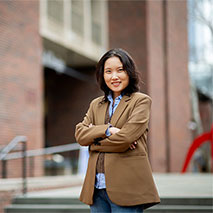
Graduate student Xindi Lyu gained firsthand experience with a creative firm’s workflows and challenges during a week-long externship at a Kansas City office. “Immersing myself in the design process gave me a clearer understanding of the day-to-day work I am most drawn to,” she says.
Read this story »
|
|
|
|
A new Penn Nursing study reveals critical work environment concerns for the Caribbean nursing workforce, with systemic failures pushing more than half of Caribbean-trained nurses to migrate to higher income countries.
Read this story »
|
A new exhibition of hybrid historical paintings by Penn alumna and contemporary artist Allison Zuckerman will be on view at the Annenberg Center for the Performing Arts through March of 2027.
Read this story »
|
|
|
|
 THE NEW YORK TIMES THE NEW YORK TIMES
“I do expect that we’ll see increases in harm, increase in injury, increase in death, because we are taking away these essential supports that have proven beneficial,” says Elinore Kaufman of the Perelman School of Medicine, about funding cuts to violence prevention programs.
Read this story »
|
|
|
Publications may require a subscription. Penn students, faculty, and staff can access some subscriptions through the Penn Libraries.
|
|