

|
Weekly Edition
May 18-24, 2026
|
|
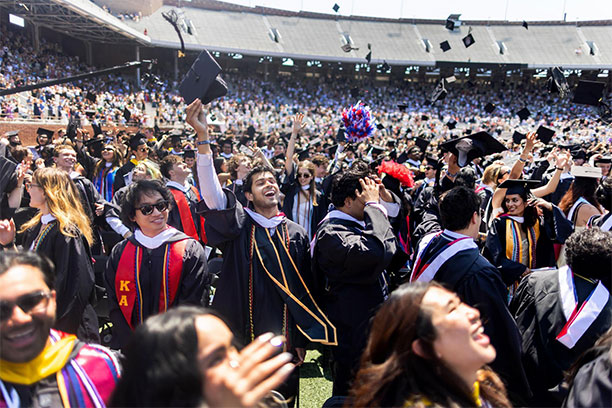
The Class of 2026 celebrated its achievements on May 18 at Commencement, an event that drew on the long history of Penn and the United States. About 6,000 graduates from Penn’s 12 Schools gathered on Franklin Field, cheered on by friends and family, to take part in the University tradition. “I see intrepid learners who left home to explore a defining chapter in their lives. I see bold thinkers who experienced moments of doubt and discovery,” said President J. Larry Jameson. “I see amazing people who will change the world and make it better.”
|
|
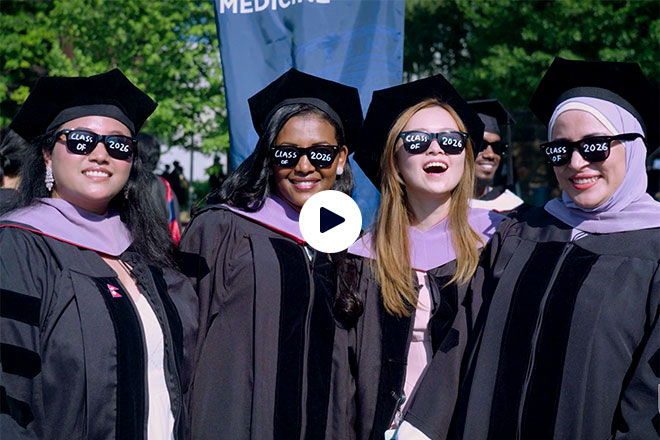
In this video, experience some of the sights and sounds of Commencement, from cap tosses and academic processions to hugs and speeches.
|
|
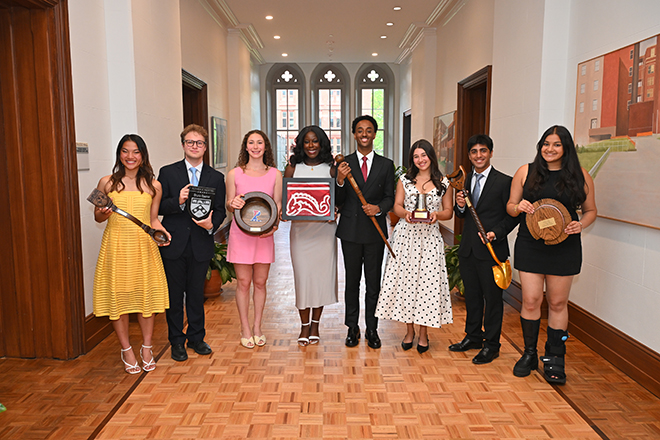
The annual Ivy Day Ceremony—dating to 1873—honored remarkable graduating fourth-years for their leadership and service to the Penn community. One category, the Senior Honor Awards, features prizes rooted in University tradition, such as the Bowl, Spade, Cane, and Spoon.
|
|
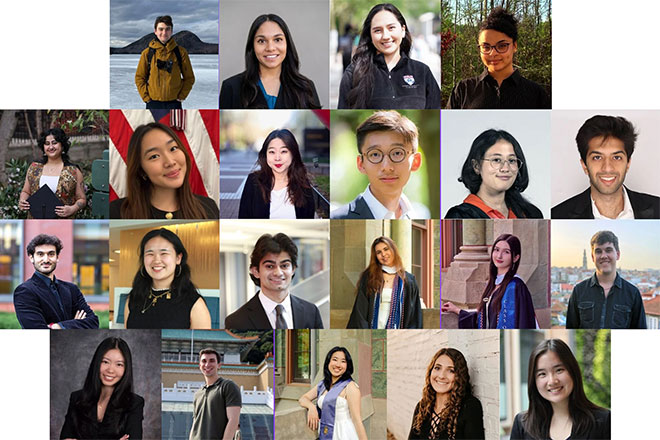
Twenty-eight Penn affiliates have been offered Fulbright awards for the 2026-27 academic year to conduct research, pursue graduate degrees, or teach English overseas. The Fulbright, the U.S. government’s flagship international exchange program, consistently recognizes Penn as a top-producing institution.
|
|
![“Upon the Report of the Examiners, the following candidates approved of as qualified by their standing and proficiency to be admitted to the Degree of Bachelor of Arts, are James Abercrombie, John Leeds Bos[z]man, John Clopton, William Cock[e], Thomas Duncan Smith, William Thomas, and Ralph Wiltshire; and a mandate was ordered to be made out for conferring on them their Degree of Bachelor of Arts on the 10th of June next.” (Image: Trustees of the University of Pennsylvania Minute Books, volume 2, 1768-1779; University Archives)](https://asset.emaillove.com/d13f50c8e9196535fb19646005059568.jpg)
In June 1776, amid rising tensions and calls for independence in Philadelphia, seven graduates of the College—later to be known as the University of Pennsylvania—received their degrees in a private ceremony. Trustees of the College give a glimpse into that moment, describing the “unsettled state of affairs” as decisive in their decision to limit attendance. On June 10, the Provost conferred the Degree of Bachelor of Arts upon the graduates.
|
|
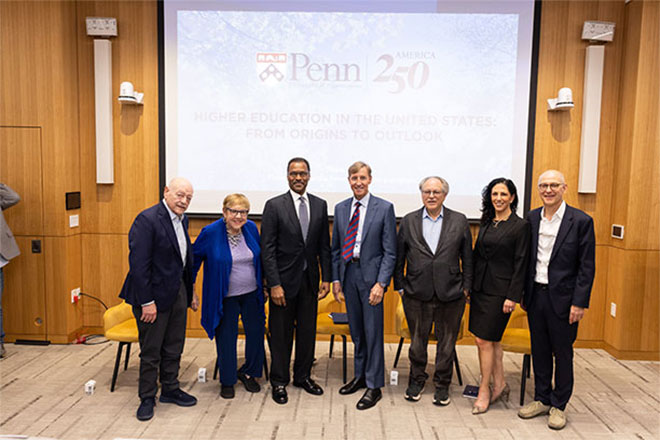
Colleges and universities are one of America’s most “enduring public goods,” President J. Larry Jameson (center) said in launching the conversation led by Graduate School of Education Dean Katharine Strunk (second from right) and a panel of former university presidents and deans. The discussion was the first in a new series of events due to take place this fall which will celebrate America’s 250th anniversary.
|
|
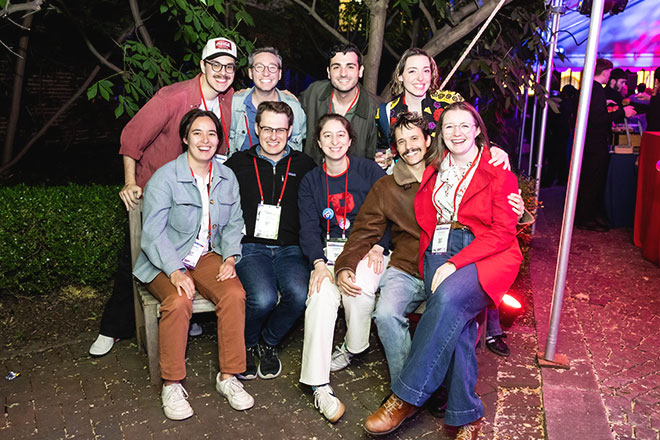
Generations of Penn graduates enjoyed picnics and parades, Franklin Fest, gatherings across campus, a walking tour of Old City, and more during the annual Alumni Weekend.
|
|

At an Alumni Weekend panel event, President J. Larry Jameson brought together researchers César de la Fuente (right) and Hamsa Bastani (center) to discuss how AI is helping to accelerate breakthroughs in biology and personalize learning. De la Fuente described the moment as an opportunity “to think outside the box.”
|
|
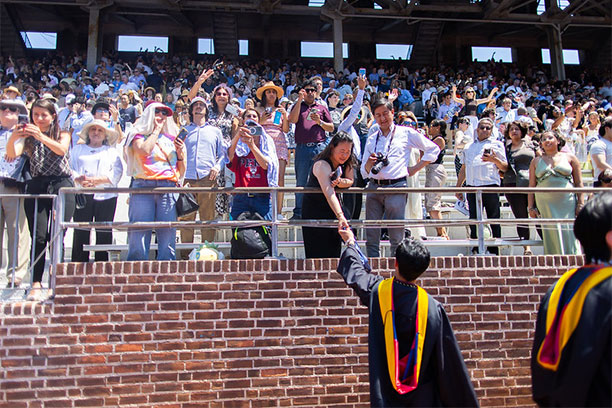
Behind every graduating member of the Class of 2026, there’s a crowd that helped carry them there. This photo essay celebrates that support, capturing the cheers, tears, hugs, and jubilation shared by family and friends at Commencement.
|
|
|
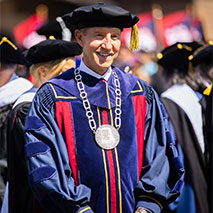
In this LinkedIn post, get a glimpse of the President’s badge, first presented in October 1981. The medallion features the University’s official seal and motto, representing the role of the presidency and the generations of Penn history carried into each Commencement ceremony.
View this post »
|
|
|
|
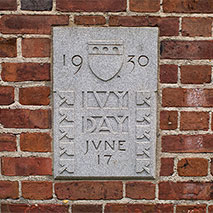
Interested in a scavenger hunt? Enjoy this photo collection of Ivy Stones commemorating the University’s graduating classes. Dating back to the 1800s, Ivy Stones are embedded in brick walls, walkways, and building facades throughout Penn’s campus, some weathered and bearing the signs of history and legacy.
Read this story »
|
|
|
|
Seen on Social
|
Seen on Social
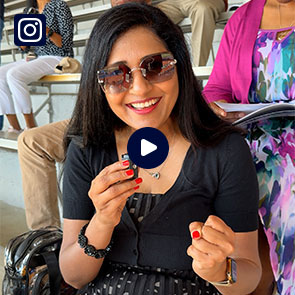
The ceremony may be over, but the moment they’ve been waiting for is just beginning.
We asked family and friends: What’s the first thing you’re going to say to your graduate after Commencement?
|
|
|
|
TODAY
“There’s no doubt that peptides are important, but it's not news. We’ve known about insulin, for example, for 106 years,” says PIK Professor Ezekiel Emanuel of the Perelman School of Medicine and Wharton School.
Read this story »
|
ARTNET
“The results will empower institutions to collect and steward cultural objects responsibly and to build stronger cases for the resources they need,” says Kayla Kane of the Penn Museum.
Read this story »
|
|
|