

|
Weekly Edition
May 25-31, 2026
|
|
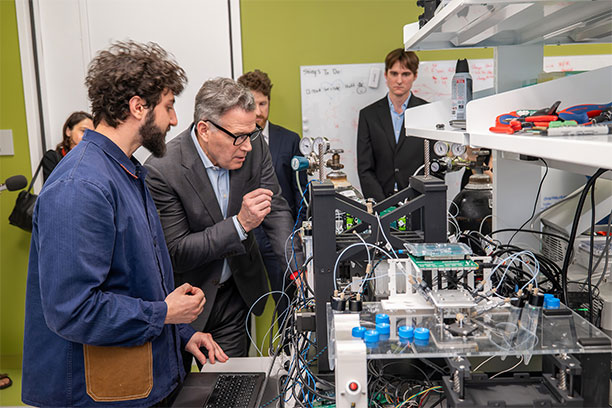
A tour of Penn’s AI-driven RNA BioFoundry gave U.S. Senator Dave McCormick (second from left) a firsthand look at how federal investment in science translates into shared research infrastructure, student training, and regional economic development. “Every time I come to Penn for a visit,” said McCormick, “I just leave inspired by the incredible discoveries and progress.”
|
|
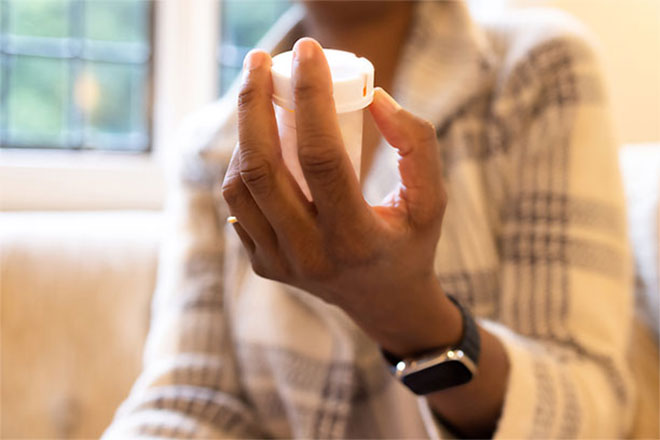
A new book by sociologist Jason Schnittker and Penn Ph.D. graduate Duy Do makes the case that side effects are a product of social, cultural, and institutional forces. “If we want to improve health outcomes in the U.S.—make all our treatments work even better than they do and improve well-being while we’re doing it—we need to take side effects and their origins more seriously,” Schnittker says.
|
|
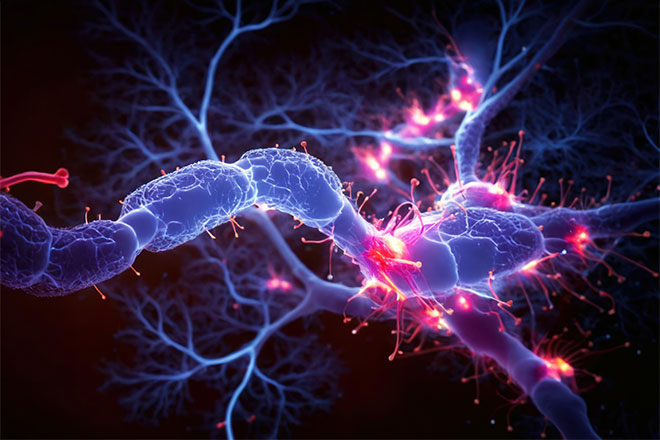
New preclinical Penn Medicine research suggests that blocking a key immune-related protein with antibodies could interrupt the spread of brain cell damage in Parkinson’s disease, slowing its progression at the earliest stages. “These results are encouraging as we continue to work towards a novel treatment,” says neurologist Alice Chen-Plotkin.
|
|
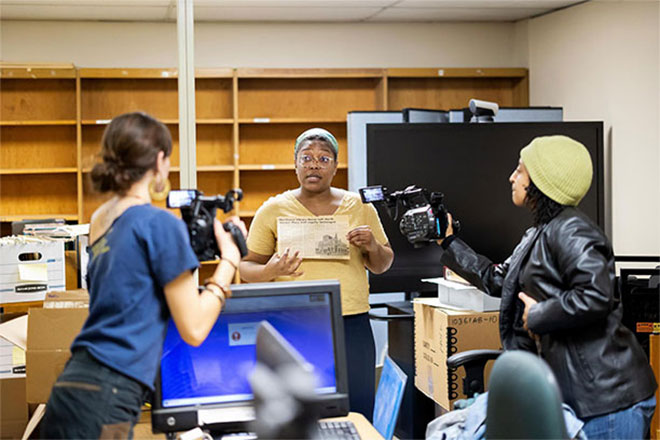
In Penn’s newly reimagined Community Youth Filmmaking class, graduate and undergraduate students worked with local partners to create short films that touch on education, archiving, and grassroots organizing in Germantown, Northeast Philadelphia, and West Philadelphia.
|
|

Which is most likely to influence a buyer’s attitudes about a new car: Saying “I liked the car,” “I bought the car,” or “The car was good, and I bought it”? And does that change if the car costs less? Psychology researchers Dolores Albarracín and Yubo Zhou (not pictured) investigated these questions in a paper that also has implications for health communication and social behavior.
|
|

This spring, Penn students pulled from history, veterinary medicine, biology, and more to examine the American lawn in a nonfiction writing workshop. “From hearing about my classmates’ pieces, everyone has such a different relationship with lawns,” says pre-med graduate Claire Zhang, who built data visualizations to examine urban heat. “Lawns are riddled with nuance, and that’s what makes them such an interesting subject.”
|
|

Students and faculty in the Weitzman School of Design are helping museums deepen connections to their locations, including an expanded Nelson-Atkins Museum of Art in Kansas City, a reimagined La Brea Tar Pits Page Museum in Los Angeles, and a new archaeological museum in Turkey.
|
|

This year marked the 15th anniversary of the Natives at Penn annual powwow, a milestone that celebrated traditions of Native fellowship, community building, and education. “It’s been so special to be part of a legacy of increasing visibility and connecting Native students and community members to one another on campus,” says co-founder Megan Red Shirt-Shaw.
|
|
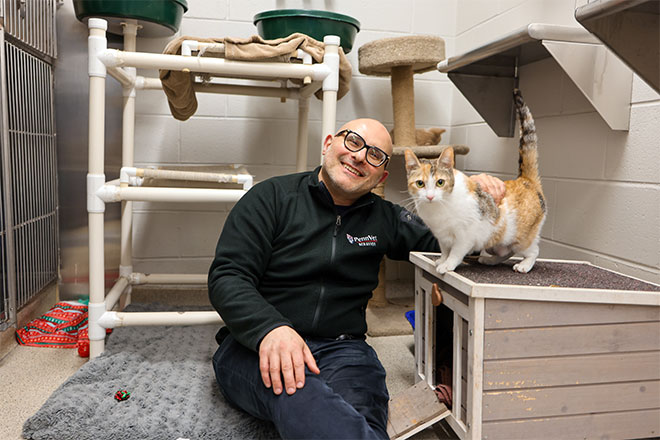
Behavioral changes—such as more nighttime meowing, becoming clingier, or being more reserved—may signal emerging cognitive decline in senior cats. “These are not ‘just old age.’ They’re red flags to share with your vet,” says veterinarian Carlos Siracusa (pictured). “No behavior change is too small to report.”
|
|
|
SmartDJ, an AI-powered system developed by Penn engineers, lets users reshape complex audio environments and design spatially rich soundscapes for VR, gaming, and immersive media.
Read this story »
|

|
|
|
|
A Wharton study finds that women in all-female virtual training groups are more likely to complete training, get certified, and find jobs than those in mixed-gender groups. “Shared gender identity is a key toward building trust,” says management and sociology professor Tiantian Yang.
Read this story »
|
|
|

|
After 2024’s extreme weather events, a study by climate scientist Michael Mann (not pictured) and colleagues measures how much of the year’s record-setting heat came from human-caused warming.
Read this story »
|
|
|
|
For the first time, a nursing program in Vietnam has met the rigorous standards required for U.S. accreditation, thanks to an ongoing global partnership between Penn Nursing and VinUniversity.
Read this story »
|
This spring, Perry World House and Penn Climate hosted medical experts and representatives from the Maldives, France, Germany, and Italy to discuss recommendations for addressing climate change impacts on health.
Read this story »
|
|
|
|
A new Wharton study finds that prompting AI chatbots to take on “expert personas” does little to boost response accuracy. The researchers suggest that AI users may find more value in tailoring how tasks are framed, what inputs are provided, and how responses are checked.
Read this story »
|

|
|
|
|
Scott Kleinman, founder of the Kleinman Center for Energy Policy, returned to Penn for a wide-ranging fireside chat that touched on investing, innovation, and the forces shaping the economy of the future.
Read this story »
|
The curriculum for Wharton’s Artificial Intelligence for Business MBA major and undergraduate concentration combines technical fluency, ethical reasoning, and real-world application.
Read this story »
|
|
|
|
 THE NEW YORK TIMES THE NEW YORK TIMES
Penn Integrates Knowledge Professor Derek Griffith of the School of Nursing and Perelman School of Medicine says men’s health “has not been something that most administrations—any administration—has really seemed to take seriously at any point in the nation’s history.”
Read this story »
|
THE WALL STREET JOURNAL
“Even though [Diet Coke and Coke Zero] are calorically the same thing, there’s a completely different story that’s being told,” says Americus Reed II of the Wharton School.
Read this story »
|
|
|
Publications may require a subscription. Penn students, faculty, and staff can access some subscriptions through the Penn Libraries.
|
|