

|
Weekly Edition
July 6-12, 2026
|
|

One hundred years ago this month, the Delaware River Bridge, now known as the Benjamin Franklin Bridge, opened to traffic and transformed travel and commerce between Philadelphia and Camden. Engineers sought the expertise of faculty at the Weitzman School of Design to bring the project to life, including architecture chair Paul Philippe Cret, who—according to William Whitaker of Weitzman’s Architectural Archives—provided the elegant design.
|
|

Wharton Executive MBA student and retired U.S. Army Major Nicholas Dockery has been awarded the Medal of Honor, the United States’ highest military decoration for valor, for his actions in Afghanistan in 2012. The medal was presented by President Donald J. Trump on behalf of the U.S. Congress during a ceremony at the White House.
|
|
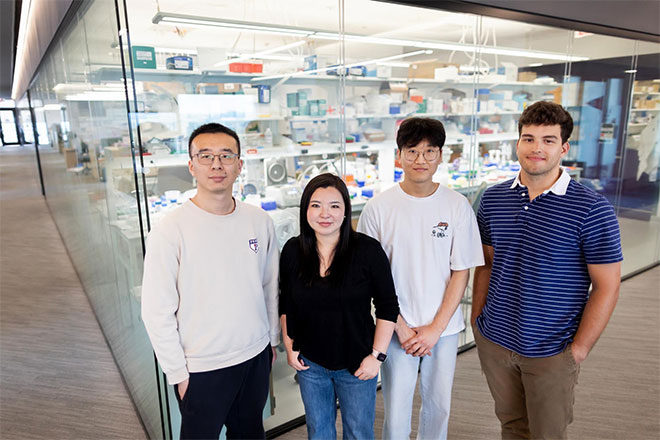
Fungi have given medicine some of its biggest breakthroughs, from penicillin to cholesterol-lowering statins, yet most remain a genetic black box. Now engineers led by Xue “Sherry” Gao (second from left) have built a gene-editing tool specifically for fungi and used it to switch on long-silent drug-producing gene pathways. They identified eight new molecules—three with promising anti-cancer activity in cell lines.
|
|
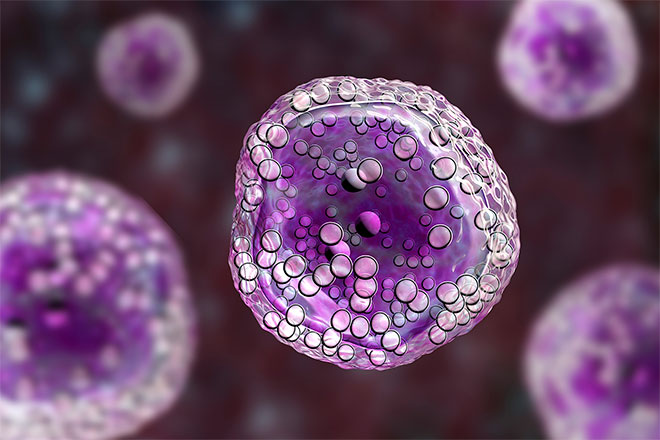
A long-term follow-up shows potential cures in more than one-third of B-cell lymphoma patients treated with the first CAR T cell therapy approved by the FDA. “As oncologists, we use the word ‘cure’ with great care, but I am increasingly confident that CAR T cell therapy has the potential to cure a meaningful number of patients with B-cell lymphomas,” says hematologist Stephen J. Schuster.
|
|

A stroll through a bookstore this time of year may reveal a display table labeled “beach reads,” invariably stocked with at least a few romance novels. Penn Today talked about beach reads with comparative literature Ph.D. candidate Angelina Eimannsberger, whose dissertation focuses on women readers, social media, the romance genre, and bookstores.
|
|

Annenberg scholar Katerina Girginova explains why the FIFA World Cup is such a powerful case study in communications, from the digitization of fandom to sport as a contested space. “Sport events like the World Cup are public and global platforms for attention where, in addition to the athletes, many interests and messages compete,” she says.
|
|
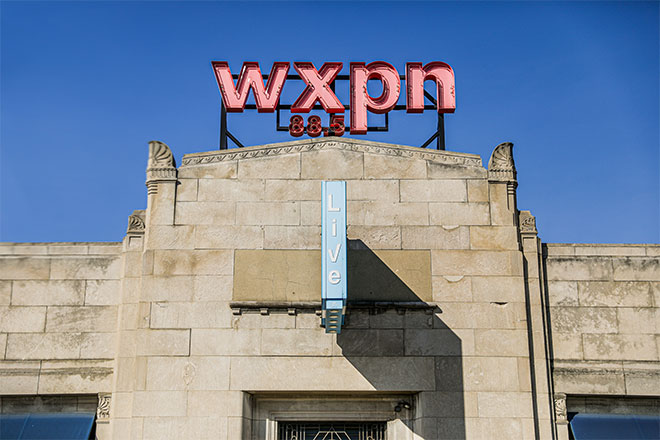
In celebration of the nation’s semiquincentennial, WXPN—Penn’s member-supported public radio service—is rolling out Philly Anthems, a project featuring original, freedom-themed songs crafted by established and rising artists based in Philadelphia.
|
|
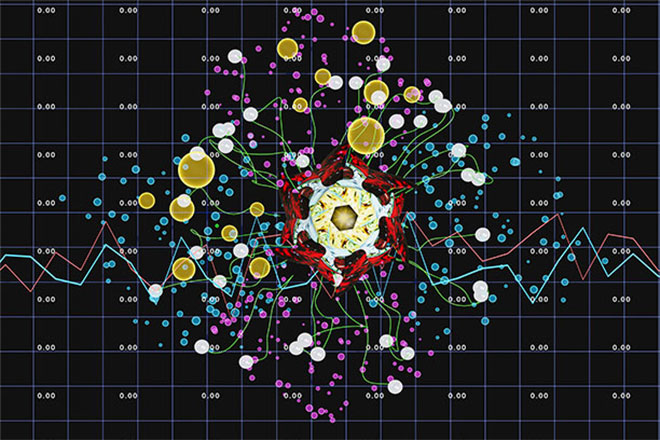
Penn Medicine researchers have developed an AI-powered strategy for identifying CAR T cell therapy targets, which is typically a long and diffcult process. “Human experts excel at going deep, while LLMs are good at looking across a broad range of data,” says lead author Daniel Baker. “We created a framework that combines these strengths to build a systematic way to nominate and prioritize potential targets.”
|
|

Penn Integrates Knowledge Professor Dolores Albarracín is the new director of the Annenberg Public Policy Center, succeeding Kathleen Hall Jamieson, who will continue her work as director emerita. “Dolores is an exceptional scholar whose work on communication, behavior, and public health is especially vital in this moment,” says Dean Sarah Banet-Weiser of the Annenberg School for Communication.
|
|
|
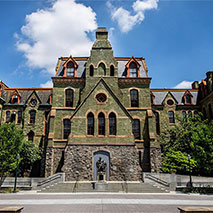
Penn Today celebrates recent honors received by faculty in the School of Arts & Sciences, Penn Carey Law, Graduate School of Education, School of Engineering and Applied Science, and Perelman School of Medicine.
Read this story »
|
|
|
|
Penn Global has awarded dissertation grants to 13 doctoral students to conduct globally-oriented research spanning Africa, Asia, Europe, the Middle East, and the Americas.
Read this story »
|
Penn Washington partnered with PennAITech and Penn Nursing to examine the use of AI tools to support aging and improve quality of life for older adults and their families, including persons with Alzheimer’s disease and related dementias.
Read this story »
|
|
|
|
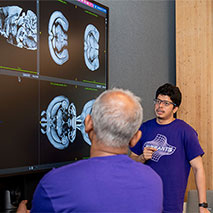
An interdisciplinary Penn team has developed FireANTs, an open-source AI algorithm that quickly and accurately compares complex medical scans to support treatment planning and disease monitoring.
Read this story »
|
|
|
|
|
Penn Climate has announced four new projects funded through the Power Purchase Agreement Renewable Energy Research Program.
Read this story »
|
A number of 1920s periodicals are available at the Penn Libraries, offering artistic critique, gossip, and cultural commentary on Egyptian theater.
Read this story »
|
|
|

Last week, in the wake of the summer solstice and longer twilight hours, Penn Today revisited stories that explore the darkest times of night. From barn owls and lunar missions to restful sleep and insomnia, Penn experts are studying multiple facets of nighttime activity.
|
|
|
|
 THE WALL STREET JOURNAL THE WALL STREET JOURNAL
“People often confuse the homelessness crisis and the behavioral health system crisis because these two crises converge—a dearth of affordable housing and a lack of residential and inpatient treatment options,” writes Dennis Culhane of the School of Social Policy & Practice.
Read this story »
|
THE NEW YORK TIMES
“The responsibility of leaders is not to mold the world to their needs,” writes Adam Grant of the Wharton School in a co-authored piece. “It’s to adapt themselves to the world’s needs, even if it means learning to live without the thrill of a live audience.”
Read this story »
|
|
|
Publications may require a subscription. Penn students, faculty, and staff can access some subscriptions through the Penn Libraries.
|
|