

|
Weekly Edition
April 6-12, 2026
|
|
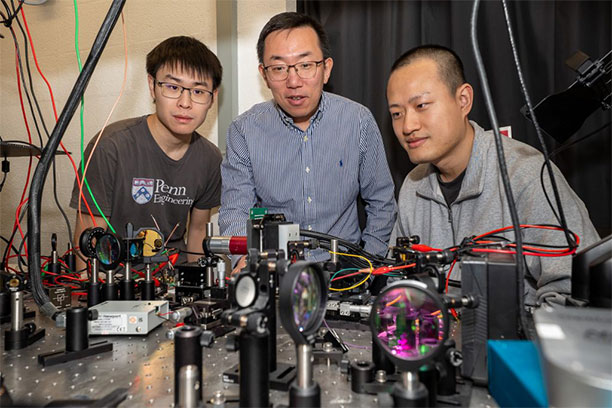
Engineers led by Liang Feng (center) have demonstrated a new way to route beams of light through chip-based networks using topology, a special branch of geometry. The team’s device overcomes a long-standing limitation by allowing multiple signals to travel simultaneously along the same pathway, enabling more robust and reliable light-speed communications and computing technology.
|
|
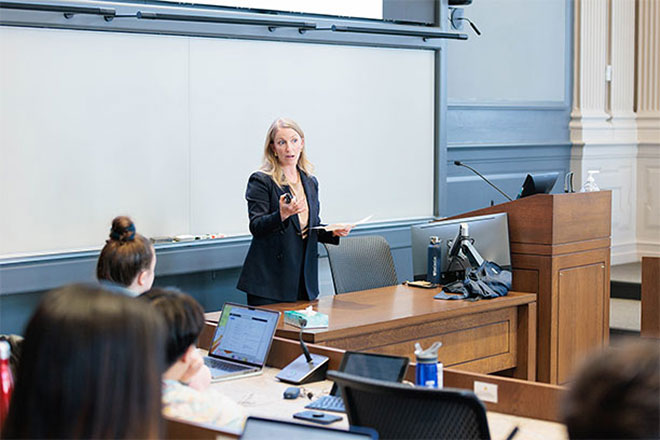
Ahead of an April 21 panel showcasing six Penn faculty members’ examples of AI use in class assignments and activities, Catherine Turner of the Center for Excellence in Teaching, Learning, and Innovation offers three guiding questions instructors can ask themselves before incorporating AI. Turner says the discussion, which includes law professor Sarah Pierce (pictured), is “a useful way for people to think about what AI can do for their classes and where to avoid AI.”
|
|

In recognition of Take Back the Night, a global event condemning sexual assault, President J. Larry Jameson asks the Penn community to support one another in building a network of awareness, accountability, and allyship. “I aspire for Penn to become a national model for eliminating sexual harassment and violence—not merely in policy, but in culture,” he writes. “That aspiration begins with each of us.”
|
|
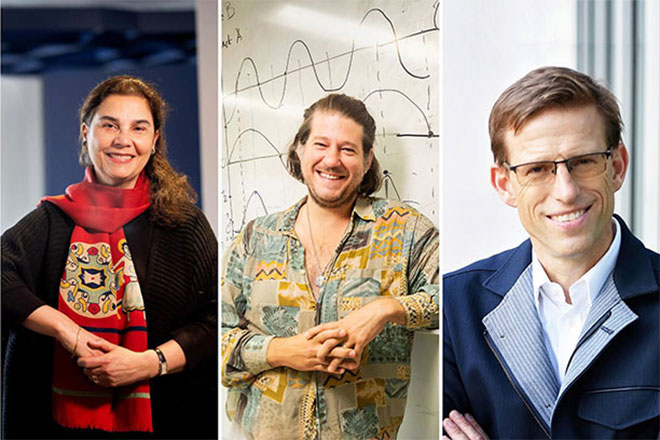
Linguist Marlyse Baptista, neuroscientist Nacho Sanguinetti, and humanities scholar Fritz Breithaupt have different approaches to studying cognitive processes—exploring Creole language emergence, animal intelligence and behavior, and the interplay between narratives and empathy, respectively. Yet all were recruited under the theme of “interconnected minds,” united by a focus on how individual cognition shapes, and is shaped by, group behavior.
|
|

From connecting with her Andean roots to helping patients access medical records at a North Philadelphia clinic, fourth-year nursing student Melanie Contreras is breaking down barriers to care. She hopes to become a family nurse practitioner, with a focus on supporting underserved and culturally diverse communities.
|
|
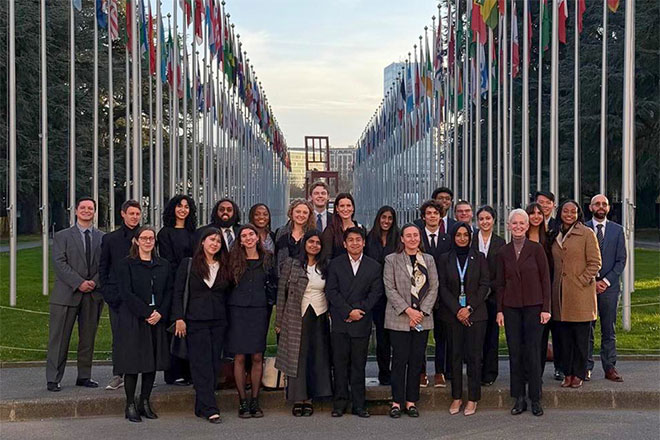
On a recent capstone trip to Geneva, Switzerland, Perry World House student fellows met with diplomats, advocates, and experts from the United Nations to discuss international systems and foreign affairs. “What struck me most was how interconnected the issues are: security, development, trade, technology, and humanitarian work are all deeply linked,” says fourth-year Griffin Pitt.
|
|
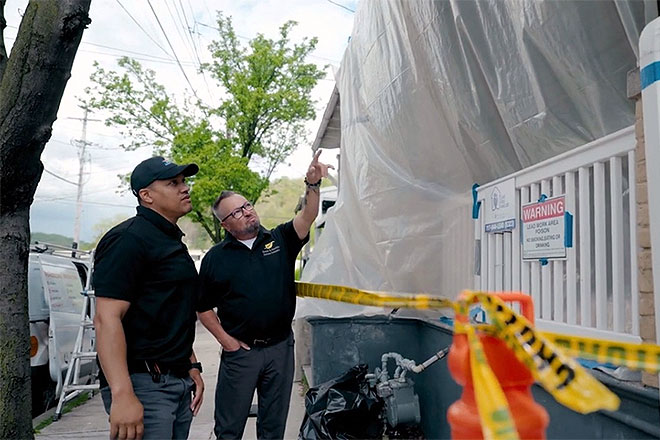
Lead poisoning is almost completely preventable, but it can result in lifelong health and developmental issues for young children. Penn Medicine Lancaster General Health’s Lead-Free Families initiative, now five years old, is the first lead-abatement program in the U.S. to be funded and led by a health system.
|
|

A highly contagious and lethal hemorrhagic disease, RHDV-2 threatens both wild and domestic rabbits and hares. In preparation for potential outbreaks, Penn Vet’s Wildlife Futures Program has embarked on a genetics study of Eastern cottontails focused on how the virus spreads. “This research is intended to help wildlife management agencies develop a plan to be able to respond very quickly,” says postdoc Sarah Tomke.
|
|

|
Shujie Yang’s lab uses precisely controlled ultrasound waves to develop microscale tools that can manipulate cells, viruses, and soft materials without physical contact.
Read this story »
|
|
|
|
New research led by pharmacologist Elizabeth Heller reveals how estrogen levels in the brain influence vulnerability to stress-related memory problems, helping explain sex differences in post-traumatic stress disorder risk.
Read this story »
|

|
|
|
|
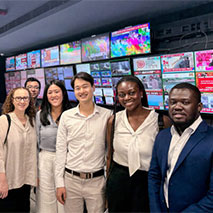
Through the Lauder Intercultural Ventures program, five groups of Lauder Institute students visited Botswana, Bulgaria, South Korea, India, and the Dominican Republic to examine how history, policy, and economic forces shape conditions on the ground.
Read this story »
|
|
|
|
McNeil Center Fellow Clifton E. Sorrell III pieces together the world that shaped how people of African descent experienced slavery and freedom in the early Caribbean.
Read this story »
|

|
|
|
|
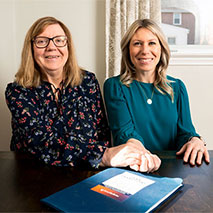
Six months after donating a kidney to her mother through Penn Medicine’s Center for Living Donation, Jen Brady (right) ran her third Boston Marathon. As benefits director, Brady champions that balance of compassion and self-care for all Penn Medicine employees.
Read this story »
|
|
|
|
Penn Carey Law held two joint problem-solving workshops to help students develop essential leadership skills for navigating conflict and strengthening civil discourse.
Read this story »
|
The School of Social Policy & Practice has partnered with the Hospital of the University of Pennsylvania and Children’s Hospital of Philadelphia to launch a first-of-its-kind social work affiliate program.
Read this story »
|
|
|
|
Graduate student Nature Hu in the School of Social Policy & Practice studies how qualitative insight coupled with strong data analysis can effectively shape policy and resource allocations.
Read this story »
|

|
|
|
|
The Penn Medicine CAREs grant program has announced more than $54,000 across 26 projects this quarter to expand science education, support early literacy, and strengthen volunteer-led service efforts.
Read this story »
|
|
|
|
 THE PHILADELPHIA INQUIRER THE PHILADELPHIA INQUIRER
“Philadelphia is home to America’s first hospital, its first medical school, and the country’s first academic health center,” says Dean Jonathan Epstein of the Perelman School of Medicine.
Read this story »
|
|
|
Publications may require a subscription. Penn students, faculty, and staff can access some subscriptions through the Penn Libraries.
|
|