

|
Weekly Edition
April 13-19, 2026
|
|

Eight fourth-years representing four teams have won the 2026 President’s Engagement, Innovation, and Sustainability Prizes, which will advance their work in robotics, energy efficiency, vision care, and childhood development. “This year’s recipients of the President’s Prizes exemplify the creative rigor and civic commitment that define Penn at its best,” said President J. Larry Jameson. “Through projects such as HAVEN, Shared Vision, Serpent Robotics, and Fluid Silicon, our students are translating bold ideas into real-world impact.”
|
|

In a Q&A, President J. Larry Jameson discusses how Penn Forward’s initial nine priority initiatives aim to build trust with the people Penn serves, enable bold discovery, and extend Penn’s reach geographically and across a lifetime. “Penn Forward empowers us to proactively shape our future and restore trust in the value we bring to society,” says Jameson.
|
|
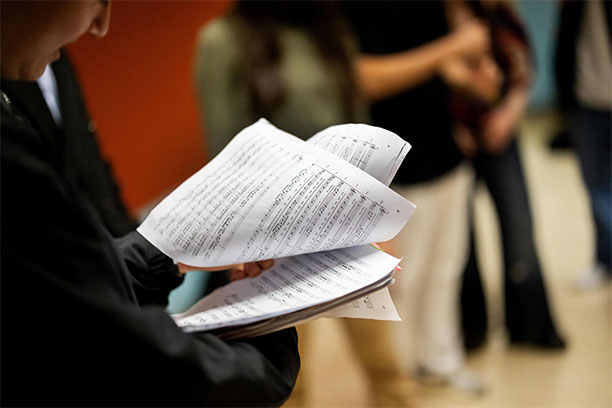
This photo collection showcases Penn’s vivid world of more than 70 student performing arts groups, from dance, vocal, and instrumental music to comedy, theater, and spoken word. “Involvement in the performing arts deepens how students think, feel, and engage with the world around them,” says Vice Provost for the Arts Timothy Rommen.
|
|
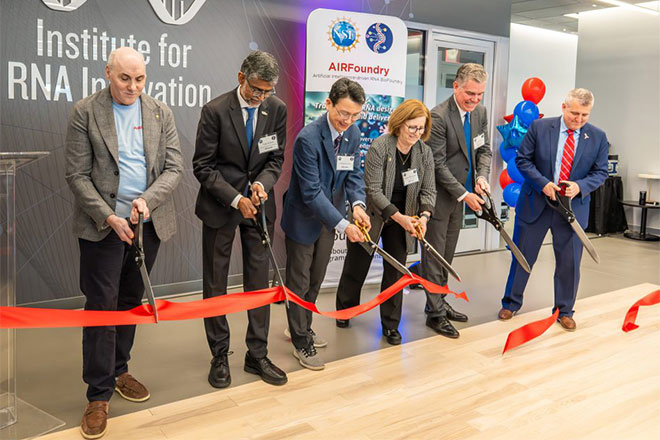
Penn’s NSF AIRFoundry is leveraging artificial intelligence to make the future of RNA science faster, smarter, and far more scalable. The $18 million center brings together researchers from across Penn and partner institutions to improve how RNA is designed, manufactured, and delivered, with potential applications spanning medicine, agriculture, animal health, and environmental sustainability.
|
|
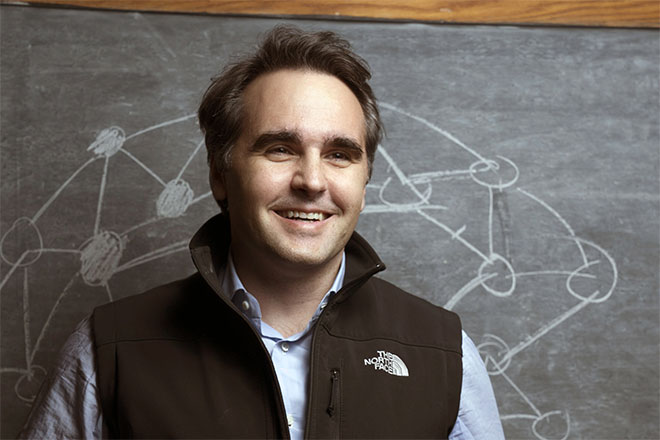
Damon Centola, the Elihu Katz Professor of Communication, Sociology, and Engineering, is among 223 people working across 55 disciplines chosen for the 101st class of Guggenheim Fellows. Centola is one of just three awardees to receive the Fellowship in the category of sociology.
|
|
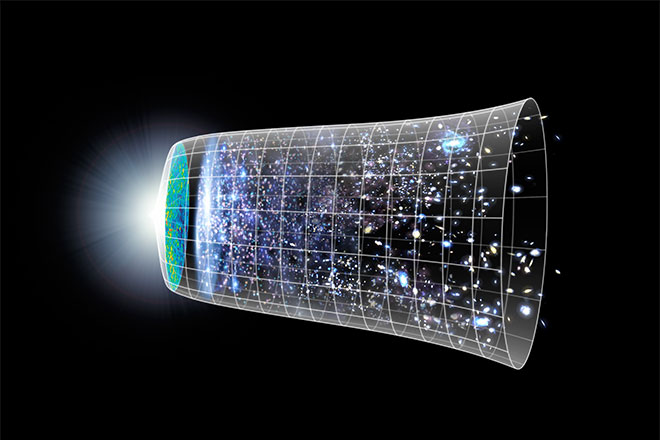
Physicist Patricio Gallardo and collaborators tracked the speeds of distant galaxy clusters to test the strength of gravity across hundreds of millions of light-years. The verdict? Gravity neatly matches the classic equations written by Isaac Newton and Albert Einstein. By proving the fundamental laws of physics span these massive cosmic scales, the results leave little doubt that invisible dark matter exists.
|
|
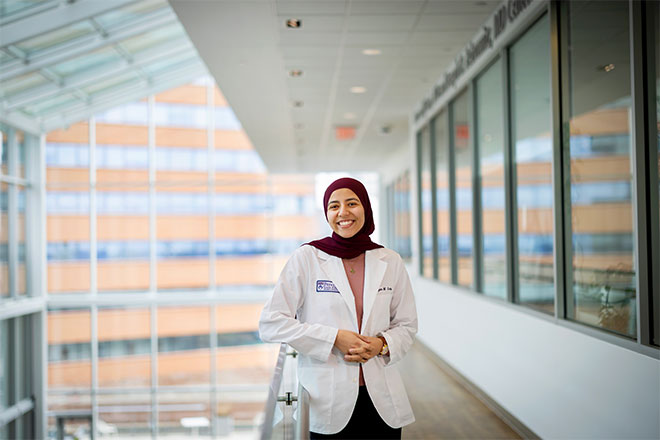
Second-year medical student Bayan Galal has received a Paul & Daisy Soros Fellowship for New Americans, a merit-based program that awards graduate school funding for immigrants and children of immigrants to the United States. She is among 30 Fellows chosen from more than 3,000 applicants this year.
|
|

Fourth-year Hemza Tarawneh has been chosen for a Kathryn Wasserman Davis Projects for Peace grant to help refugees in Jordan find protection from the heat and sun. The project will install UV-protective, durable shade structures that can withstand desert winds, intense sun exposure, and extreme heat.
|
|
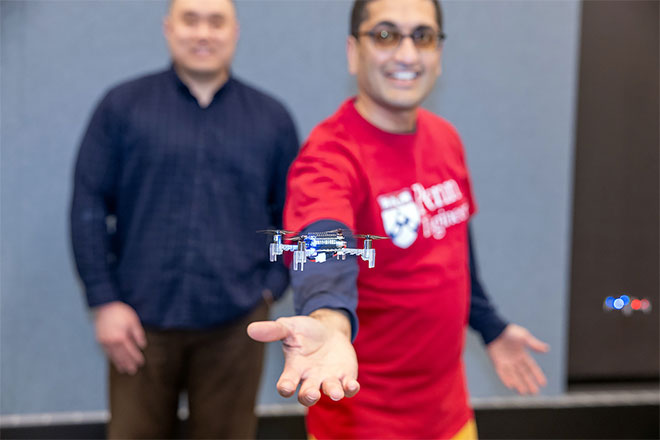
What happens when AI moves from chat windows into the physical world? A new international collaboration of engineers led by Rahul Mangharam (right) is developing swarm AI systems that can coordinate, compete, and make real-time decisions while operating under the constraints of physics. “For us, safety can’t be an afterthought,” Mangharam says. “It has to be built in from the start.”
|
|
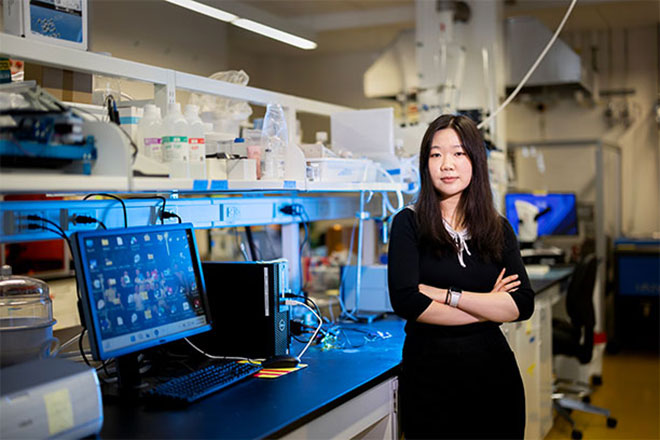
Fourth-year Caitlyn Chen plans to pursue an M.D.-Ph.D. and develop medical devices that can make diagnostics for rare diseases more affordable, especially in migrant communities. The Roy & Diana Vagelos Program in the Molecular Life Sciences gave Chen the foundational knowledge and tools “to do something good in the future. That’s how I got interested in coming to Penn in the first place.”
|
|
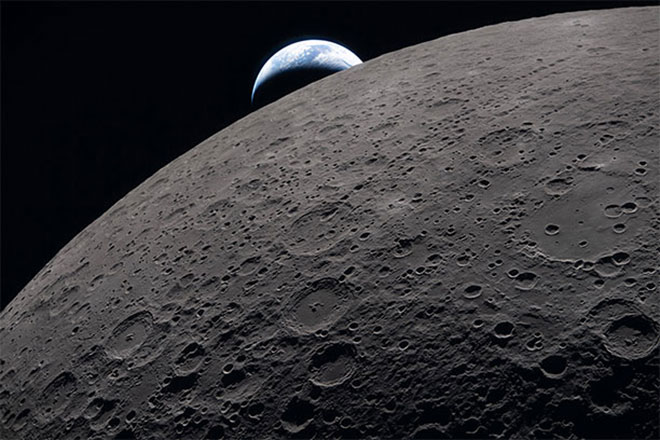
For the first time since 1972, NASA sent humans back to lunar orbit, launching four crew members on a 10-day journey around the moon and returning them safely back to Earth. Penn Today spoke with three Penn experts about the Artemis II crew’s use of social media during the mission, how space images are more than just pretty pictures, and why space continues to fascinate.
|
|
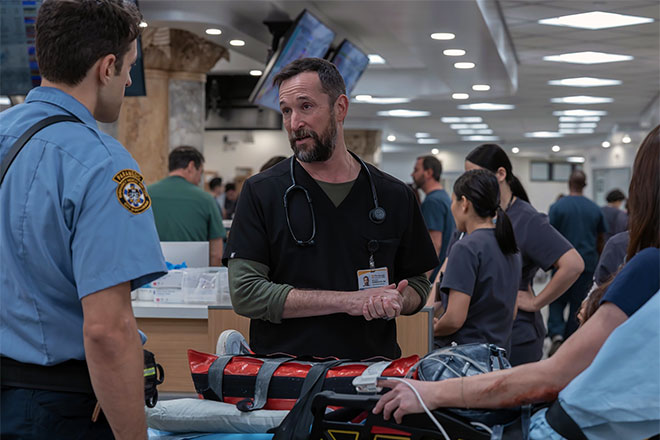
As “The Pitt” closes out its second season, Bobbie Poller shares how the hit medical drama compares to his experience as a nurse in Penn Presbyterian Medical Center’s emergency department. The show has tackled subjects like nurse representation, a wide variety of medical cases, and language barriers between caregivers and patients.
|
|
|
How does crafting crayons fit into a doctoral dissertation? McNeil Center Fellow Megan Baker learned to make them during her exploration of a historical boom in North American pastel portraiture, including how artists adapted to changing 18th-century politics.
Read this story »
|
|
|
|
|
In his Technology, Ethics & the Legal Landscape course, Justin “Gus” Hurwitz helps students carefully weigh the trade-offs between technical choices, legal obligation, and moral responsibility to better inform AI innovation. “Engineering is never just technical,” Hurwitz says. “It’s about the systems we build and the society we build around them.”
Read this story »
|
|
|
|
The winners of the 2026 Christian R. and Mary F. Lindback Foundation Awards for Distinguished Teaching, the Provost’s Award for Teaching Excellence by Non-Standing Faculty, and the Provost’s Award for Distinguished Ph.D. Teaching and Mentoring will be celebrated on April 23.
Read this story »
|
Penn’s Peer Wellness Coaching program provides students with a space to share what’s on their mind and find a sense of belonging. “I think it has helped me to love myself more and be more confident in myself,” one student says. “I am more self-aware.”
Read this story »
|
|
|
|
 THE WASHINGTON POST THE WASHINGTON POST
“While this reform may seem small and technical, for the people impacted, it is anything but,” says Tricia Rojo Bushnell of Penn Carey Law.
Read this story »
|
THE NEW YORK TIMES
“It’s not 100 percent clear that the way that we’re diagnosing men is accurately identifying the men who are in need,” says PIK Professor Derek Griffith of the School of Nursing and Perelman School of Medicine.
Read this story »
|
|
|
Publications may require a subscription. Penn students, faculty, and staff can access some subscriptions through the Penn Libraries.
|
|