

|
Weekly Edition
April 20-26, 2026
|
|
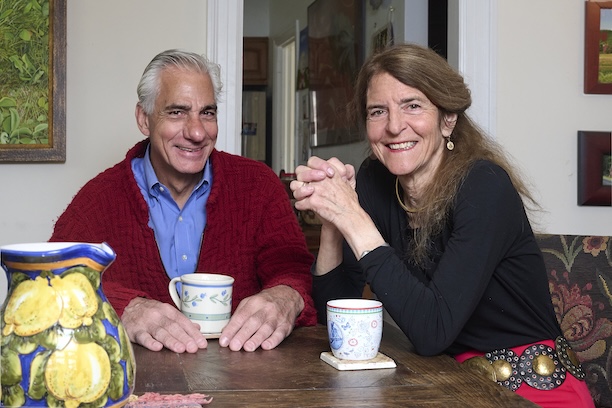
Physician-scientists Jean Bennett and Albert Maguire (right to left, pictured in their home), and Katherine High received the 2026 Breakthrough Prize in Life Sciences for their trailblazing work on the first FDA-approved gene therapy for an inherited condition, which dramatically improves sight in people with a form of blindness called Leber congenital amaurosis. Theoretical cosmologist Mathew Madhavacheril also received recognition at this year’s ceremony, winning the New Horizons in Physics award, given to early-career researchers.
|
|
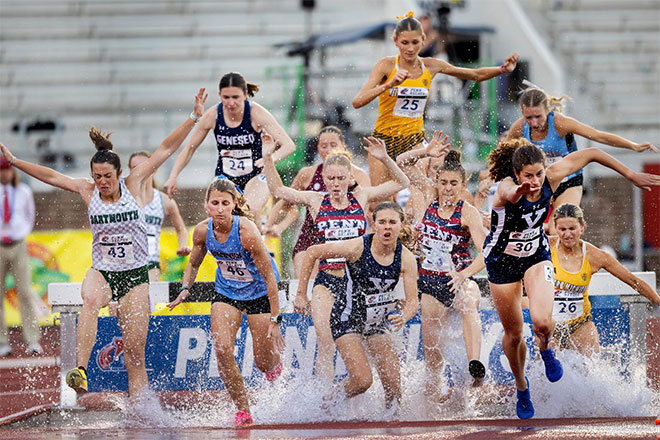
The 130th annual Penn Relays featured track and field athletes of all levels competing at Franklin Field from Thursday through Saturday, April 23-25. Penn athletes marked numerous milestones during the world-famous meet, including victories in the men’s high jump, women’s shot put, and men’s pole vault. (Photos/Video)
|
|
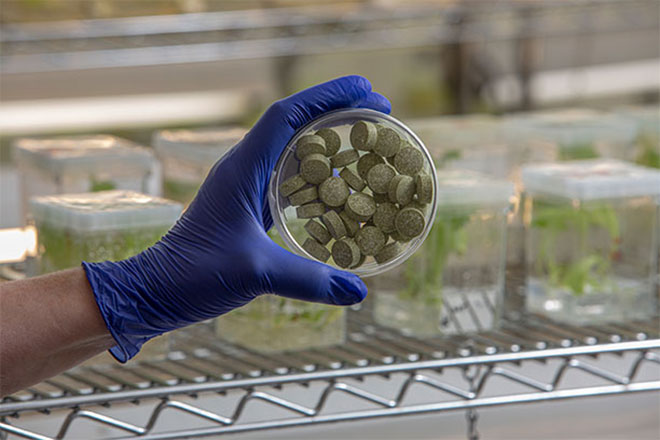
A common throat and mouth cancer, head and neck squamous cell carcinoma, can be aggressive and often has poor outcomes, especially when diagnosed at advanced stages. But new research led by Henry Daniell of the School of Dental Medicine shows that antiviral and antibacterial chewing gums reduce the levels of three microbes linked to worse outcomes in oral cancers, paving the way for more effective and affordable therapies.
|
|
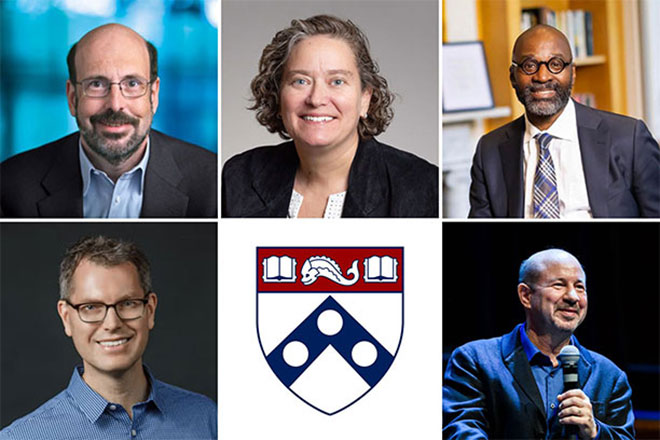
Mark G. Allen, Sara Cherry, Provost John L. Jackson, Jr., Michael E. Mann, and Duncan Watts (pictured, clockwise from top left) have been elected to the American Academy of Arts & Sciences, an honorary society and independent research center. Recognized for their contributions to applied, biological, social, natural, physical, and behavioral sciences, they are among 252 leaders elected in 2026.
|
|

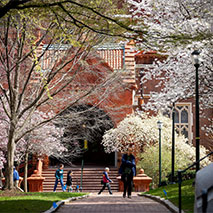
A fresh medley of photos shows Penn’s tree-lined campus in bloom this spring. Students are taking advantage of the warmest days on High Rise Field and along Locust Walk, whether quietly studying or playing boisterous games on the grass.
|
|

With artificial intelligence pushing today’s hardware to process, move, and cool more, Penn physicists led by Bo Zhen are looking to the electron’s massless counterpart, the photon, to shoulder more of the load. In a new study, the team has created hybrid light-matter particles that interact strongly enough to compute, pointing toward ultrafast, low-energy optical AI hardware.
|
|
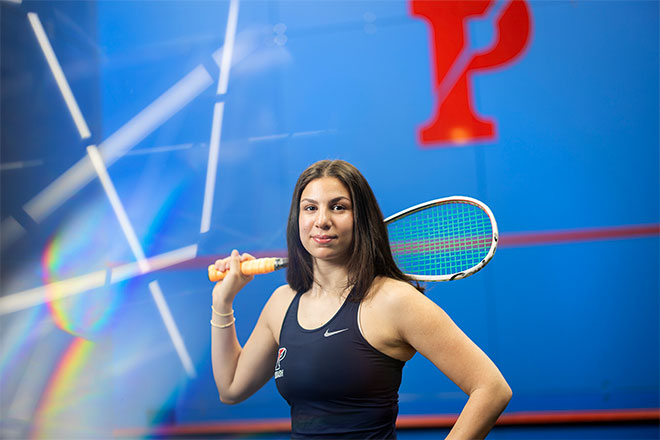
Jana Dweek, a fourth-year on the women’s squash team, discusses the team’s national championship-winning season. Dweek cliched the national title for the Quakers by winning the decisive match in straight sets. The victory marked the women’s squash team’s first national title in 26 years.
|
|
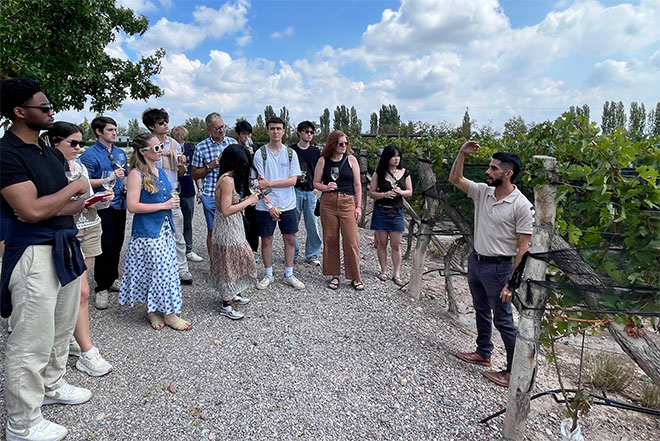
In The Biochemical Engineering of Wine course, Talid Sinno and Bomyi Lim teach students about the scientific principles behind the processes involved with making wine. This year’s course, which was offered as a Penn Global Seminar, included a weeklong study of Argentina’s viticulture. “Winemaking hits so many areas of chemical engineering,” says Sinno, who has been teaching the course for nearly a decade.
|
|
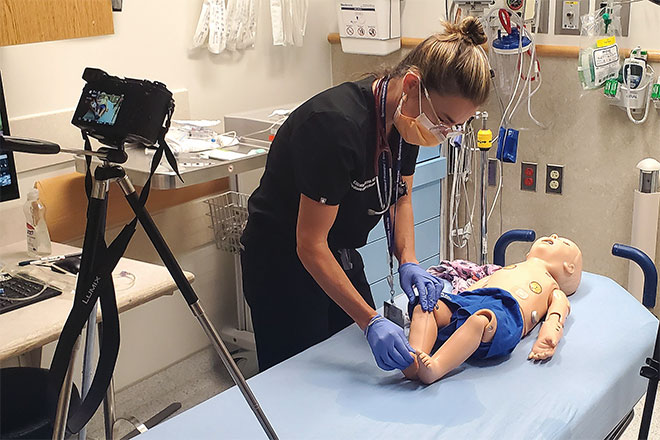
Technologist Kyle Cassidy and pediatrician Elizabeth Sanseau (pictured filming with a manikin) created Annenberg Hotkeys, a free training platform with interactive and customizable videos. After using it to train health care providers in Ghana on sepsis detection and treatment, pediatrician Vanessa Denny and colleagues found that the child mortality rate from sepsis dropped from 36% to 10%.
|
|
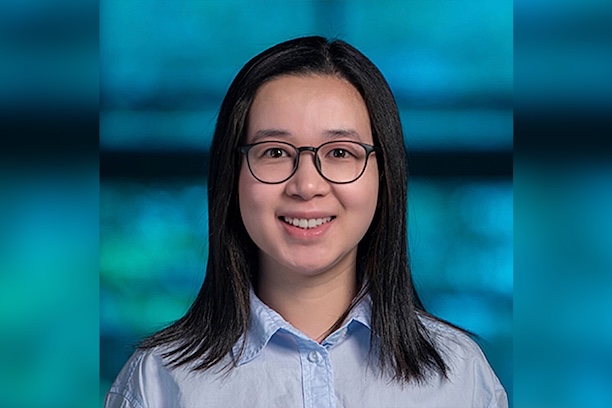
Computer scientist Lingjie Liu uses AI both as a subject of research and as a method to build new 3D visual computing systems and create realistic 3D characters. “I am interested in how AI can help us move from pixels to structured 3D understanding: recovering geometry, appearance, motion, and dynamics in ways that are not only visually compelling, but also controllable and useful for downstream applications,” says Liu.
|
|
|
Penn Today celebrates recent honors received by several faculty members and one student in the School of Arts & Sciences, School of Dental Medicine, School of Engineering and Applied Science, School of Nursing, Wharton School, and Penn Carey Law.
Read this story »
|
|
|
|
International experts gathered at a Perry World House workshop to tackle a $175 billion annual investment gap in ocean resilience for developing island states and coastal communities. Policymakers, practitioners, and academics designed a range of proposals to safeguard economies that depend on marine tourism, fishing, and offshore energy.
Read this story »
|
|
|
|
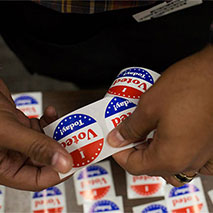
Studies have shown that some types of civic engagement, such as volunteering, are associated with lower rates of cardiovascular disease and better mental health. A new study co-authored by social policy researcher Femida Handy shows that voting is associated with a reduced mortality risk in older adults.
Read this story »
|
|
|
|
|
For 17 consecutive years, Penn has earned Tree Campus Higher Education recognition for its commitment to tree health and conservation. This award-winning care stems from strategic planning, decades of maintenance, and a focus on renewal and balance in an urban landscape.
Read this story »
|
|
|
|
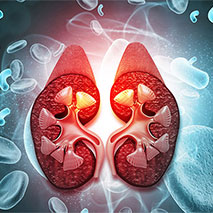
A new Penn Medicine blood test can identify which people of African ancestry carrying high-risk gene variants are most likely to develop kidney failure, years before clinical disease becomes apparent.
Read this story »
|
|
|
|
The Weitzman School of Design and Penn Institute for Urban Research have teamed with former Philadelphia Mayor Michael A. Nutter to launch the Public Service and Policy Initiative.
Read this story »
|
Penn Vet has launched the Pathway to Rural Veterinary Practice, designed to expand the pipeline of veterinarians able to serve rural communities and strengthen Pennsylvania’s agricultural economy.
Read this story »
|
|
|
|
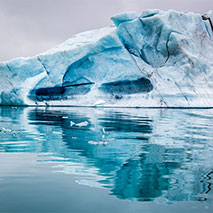
With ice balls, lasers, and cameras, geophysicist Hugo Ulloa and collaborators recreated thawing icebergs in the lab on a small scale. Their work revealed that icebergs don’t sit passively while melting but instead release dense, cold water and jet across the ocean’s surface, churning and mixing everything in their paths.
Read this story »
|
|
|
|
|
Former Obama administration advisor and Penn Integrates Knowledge Professor Ezekiel Emanuel and Trump policy architect Brian Blase discussed affordability in the U.S. health care system at a March event in Washington, D.C.
Read this story »
|
|
|
|
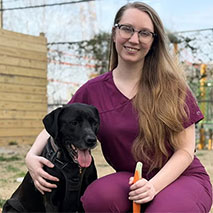
When veterinary student Alison Kowalski noticed her dog Kona showing signs of heatstroke after a walk, she relied on her first aid training to act fast, bringing Kona’s dangerously high temperature down before it could cause serious harm.
Read this story »
|
|
|
|
USA TODAY
“When you do a Google search, you’re not searching the internet. Google makes a copy of the first couple of pages,” says Penn Integrates Knowledge Professor Herbert Hovenkamp of Penn Carey Law and the Wharton School.
Read this story »
|
 THE NEW YORK TIMES THE NEW YORK TIMES
Indira Gurubhagavatula of the Perelman School of Medicine says that people in her lab who have caffeine in their system have brain wave activity that reveals “it’s not normal, healthy, deep sleep.”
Read this story »
|
|
|
Publications may require a subscription. Penn students, faculty, and staff can access some subscriptions through the Penn Libraries.
|
|