Happy Canadian Grand Prix weekend. While the modern Formula 1 circus rolls into Montreal today we found ourselves doing what we always do when race weekend hits, Falling down a rabbit hole of motorsport history that reminded us just how wild this sport used to be. We looked at the Le Mans Classic through the eyes of a photographer who described it less as an event and more as a pilgrimage.
A place where drivers race for nothing but the legend itself. We revisited the Koenig 962 which started life as a genuine Group C racer tearing around Spa and Monza before someone decided it should also be street legal with 650 turbocharged horsepower and zero apologies.
We spent time with Ferrari's 330 P4 chassis 0856 the most celebrated of the three P4s ever built and the only one still wearing its original body and the war record to match. And then we went deep on the Can-Am series. A championship so gloriously unrestricted that engineers showed up with blank sheets of paper and left with 1580 horsepower monsters that eventually became too fast for their own good. Some eras of motorsport you simply cannot recreate. This week we found four of them.
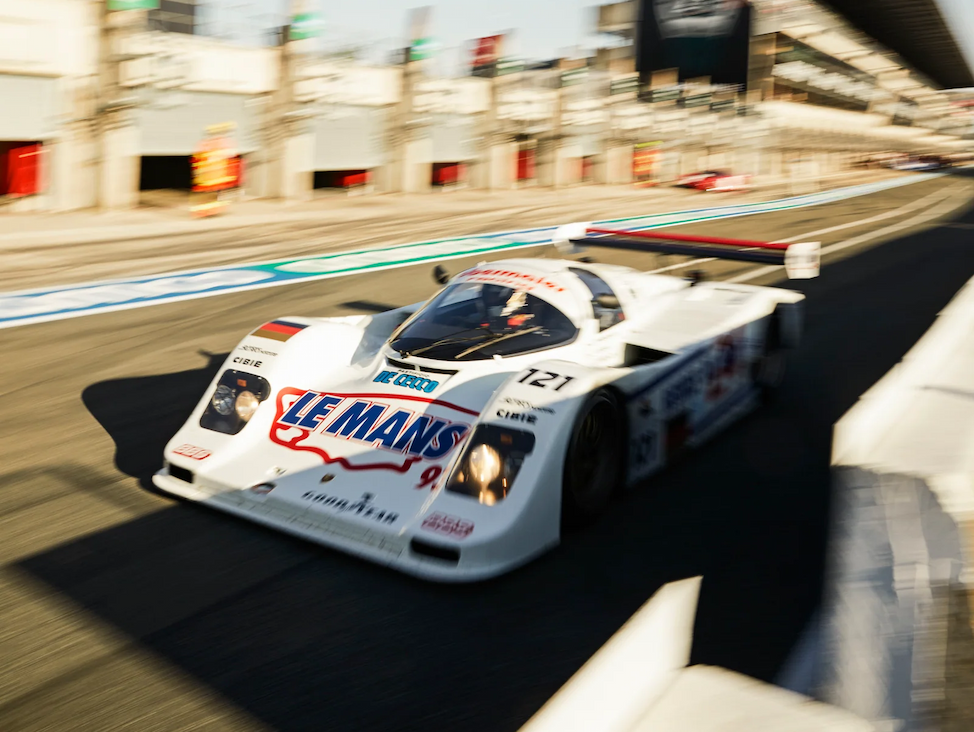
The Day Le Mans Stood Still
I remember standing at the Circuit de la Sarthe and feeling the sound before I heard it. Cars thundering past so close you could feel the heat rolling off them. Mechanics swarming under open hoods. Trailers loaded with giant slicks being dragged across the grounds. Everything was moving at once and I just stood there trying to take it all in.
But what stayed with me was not the racing. It was everything beyond the guardrail. I wandered into the village and found hundreds of car clubs gathered together including the most stunning collection of rare Honda NSX models I had ever seen in one place. Exhibitions around every corner. Stories everywhere you looked.
Then the crowd roared and I turned to see Julien Dupont and Christophe Bruand launching off vintage trials bikes like gravity meant nothing to them. People were cheering so loud it drowned out the cars for a moment.
By the end my feet were aching and my mind was full. But what I kept coming back to was this. Nobody out there was racing for a trophy. They were racing to keep something alive. A legend. A feeling.
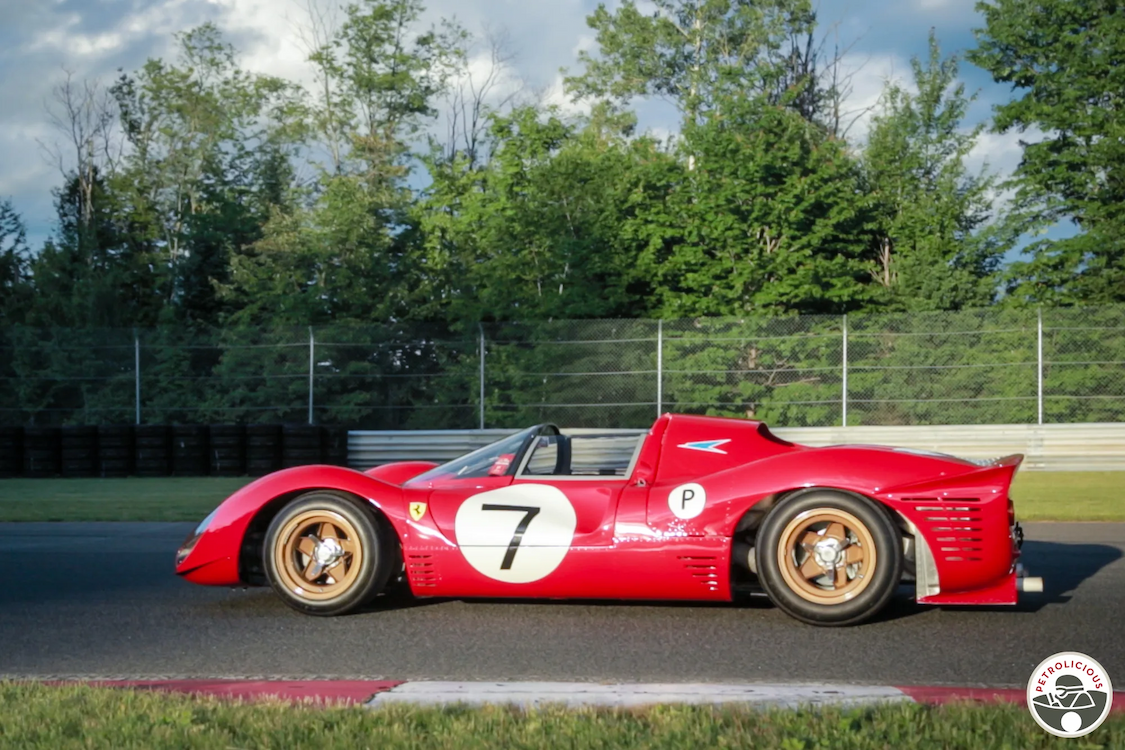
Ferrari produced just three 330 P4s and of all of them chassis 0856 is the only one that still exists in its original unmodified state. While its siblings were converted into spyders and later stripped for Can-Am duty this one survived intact. A miracle of preservation wrapped in the most beautiful bodywork ever bolted to a race car.
The 1967 season was a statement. At Daytona Ferrari lined up first second and third at the finish line. Enzo's revenge against Ford was complete and total. He kept a photograph of that final lap on his desk until the day he died. The P4 also conquered Monza before heading to Le Mans where only Ford's brutal seven litre Mk IV had the measure of it. On almost any other circuit in any other year this car was untouchable.
Today it sits in the collection of Lawrence Stroll. The sole surviving P4 in original configuration. The only one that can still tell the full unedited story of what Ferrari unleashed on the world in 1967.
There has never been anything like it. There probably never will be again.
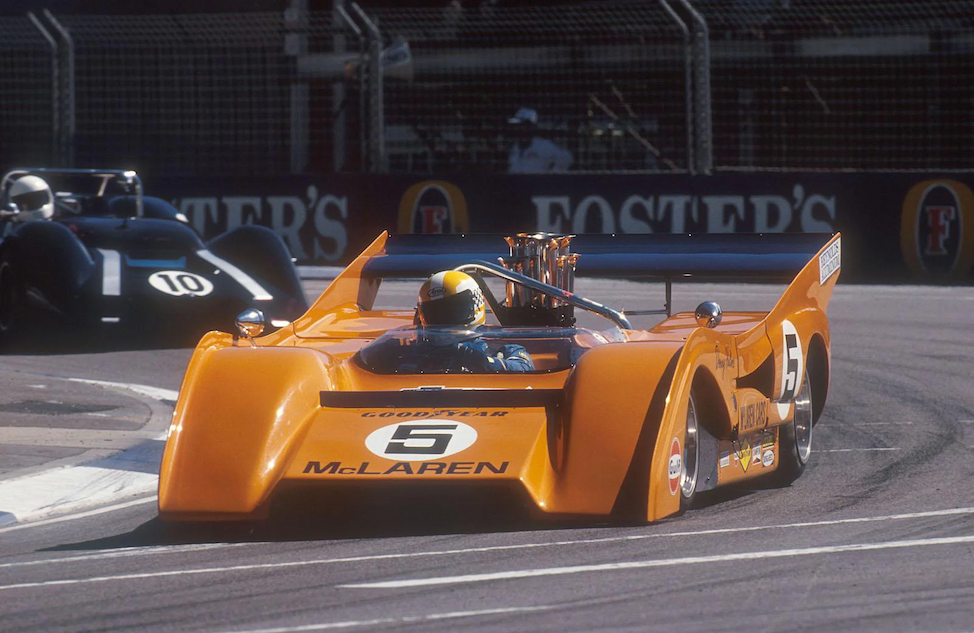
The Canadian-American Challenge Cup was once a global series carrying enormous prestige. It attracted the finest drivers on earth and produced some of the most revolutionary racing machines ever seen. Then on November 1st 1987 it raced for the final time and died a quiet forgettable death completely unworthy of what it had once been.
What made it so extraordinary was the freedom. Unlimited engine sizes. Unlimited power output. Any aerodynamic package you could dream up. Turbos. Superchargers. The only real requirements were two seats bodywork enclosing the wheels and basic safety measures. Engineers were essentially handed a blank sheet of paper and told to go racing.
The prize money drew the greatest drivers of the era. Surtees. Graham Hill. Dan Gurney. Bruce McLaren. All of them showed up for that very first 1966 season alone.
But freedom eventually became its downfall. The Porsche 917/30 developed by Penske and Donohue produced 1580 horsepower in qualifying trim in a car weighing under 850 kilograms. Nothing could touch it. And when nothing can touch you the racing dies.
The most exciting series ever conceived. Killed by its own brilliance.
Other cars earn their legend on the track. This one earned it twice.
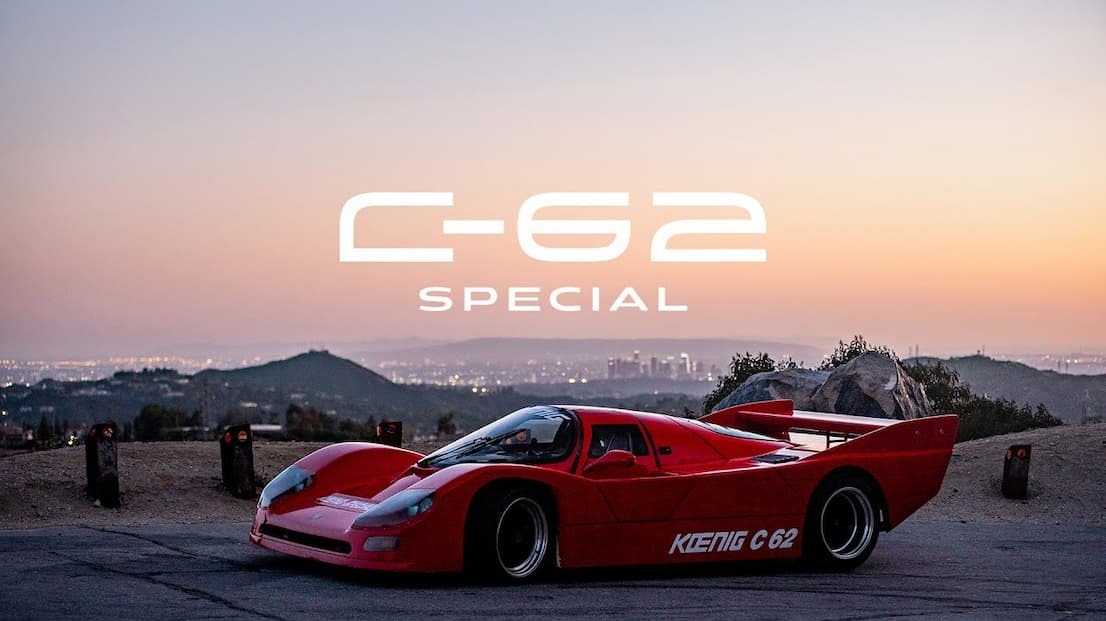
The Koenig 962 started life as a genuine Group C racer. Chassis CK6 02 is believed to have competed at Spa Silverstone Monza and the Nurburgring before vanishing from the paddock and reappearing improbably with license plates.
Koenig added just enough to make it street legal. A new nose with pop-up headlights. A basic interior with seats and vents. A custom immobilizer and a fuel pump that needed thirty seconds to prime before the car would even think about starting.
Under the bodywork sits a heavily modified twin-turbo engine pushing 650 horsepower to the crank in a car weighing just 2400 pounds. The turbo lag is violent. The boost hits like a freight train.
Koenig only built three. Two survive. One lives with owner Gen Shibayama in Japan. The other sits hidden in a European collection. The third is simply lost.
This is a race car that broke the racing rulebook and then broke the road car rulebook too. Completely unapologetic. Completely alive.