|
Context Window, May 14, 2026 The best of AI & product management, curated and contextualized so you can spend less time scrolling and more time building. ICYMI
- OpenAI Deployment Company launches. OpenAI is now competing for the implementation work that sits between API access and a working product. For PMs, that blurs the line between AI vendor and integrator, so integration risk, SLAs, and who owns “last mile” delivery belong in the same conversation as model choice.
- Recursive raises $650M to build self-improving AI. Recursive is building models that can improve through use without a human retraining loop for every behavioral shift. If outputs can drift between deployments, versioning, regression coverage, and release discipline stop being hygiene and become hard gates.
- OpenAI adds real-time voice models + Trusted Contact. OpenAI shipped new real-time voice models in the API and introduced Trusted Contact, a pattern that bakes human accountability into high-stakes voice flows. Voice is now a credible customer-facing roadmap item, and Trusted Contact is a useful reference for where consent, escalation, and audit trails belong in AI UX.
- Amazon Bedrock agents can now spend money. AgentCore Payments (with Coinbase and Stripe) lets agents move from assistant to economic actor. Once money can move through an agent, authorization, audit trails, dispute handling, and customer-facing trust messaging belong on the same pre-ship list as model behavior, not in a legal footnote for later.
- Claude Opus 4.7 Fast Mode hits research preview. Windsurf reports ~2.5× faster output with full Opus 4.7 intelligence in research preview. If you own internal assistants or customer-facing agents on Opus-class models, vendor tiers, latency expectations, and what still counts as “interactive” are about to get a quiet reset.
Fix delivery first There’s a pitch product orgs have been buying for years. Better discovery, clearer OKRs, more outcome thinking. Ant Murphy has watched companies buy it all and still stay stuck. His diagnosis is simple. They’re optimizing the wrong thing. The actual constraint in most struggling orgs is delivery. Slow, fragile release cycles make everything downstream useless. Discovery insights expire before anything ships. OKRs become checkbox theater. And now AI is about to make the same mistake at speed, because if you accelerate the wrong bottleneck, you don’t get outcomes, you get prettier chaos. Murphy’s framing draws on the Theory of Constraints. Every system has one bottleneck, and until you find it, every other improvement is a vanity exercise. What he’s observing in practice is that the teams getting the most out of AI already had the foundation, frequent shipping, clean documentation, clear direction. For everyone else, AI doesn’t fix the bottleneck. It amplifies it. Read Fix Delivery First → Chris Ebert’s Code with Claude SF recap Chris Ebert did the heavy lifting recapping Code with Claude in San Francisco (May 6). His keynote recap centers on two threads. First, more headroom on subscriptions and API limits after Anthropic’s SpaceX compute partnership (layered on the existing AWS capacity story). Second, Claude Managed Agents, in public beta since April 8, with three named additions Ebert highlights: multi-agent orchestration (scaling a fleet of agents to break down complex work), Outcomes (define success criteria so an agent can iterate and improve against them), and Dreaming (Anthropic’s wording is recalling previous sessions and building on past work, the continuity bet so long-running work does not reset to a blank tab every time). The on-stage beat that stuck for systems-minded folks was a lunar drone landing coordinated by three named agents, Commander, Detector, and Navigator, less “one hero prompt” and more handoffs, contracts, and failure modes. Ebert keeps circling a useful tension for PMs. The keynote leaned into “context windows that feel infinite,” but sessions he attended still treat context like a fixed box, argue for cache hit rate as a blunt performance lever, and describe the bottleneck moving from typing code to verification, documentation, and coordination. That collision is worth reading even if you are not shipping agents yet. Read Notes from Code with Claude 2026 → Why AI velocity is product management’s newest problem You can ship the wrong thing faster now, and that’s the uncomfortable part. It’s less about “models got smarter” and more about where discovery quietly slips, like leaning on internal opinions before evidence, locking a solution while the problem is still fuzzy, and treating specs like paperwork instead of the record of intent. When the builder isn’t carrying your org’s context in their head, those habits stop being a slow annoyance and start showing up as shipped work that never earned its roadmap slot. Read the piece from Business Reporter and Productboard → FROM THE FEED Roman Pichler shares his perspective on what happens when strategy and execution stay strangers: teams stay busy, output climbs, and value doesn’t. His updated chain from vision through backlog is less “install a framework” and more “find where your own link breaks.” See the thread → Tim Herbig makes the argument to stop wasting time trying to prove your strategy is correct (you can’t, not yet) and start testing whether it’s coherent. Coherence is something you can evaluate now, whether market, pricing, distribution, and differentiation assumptions fit together without contradicting each other. Try the coherence lens → Scott Belsky keeps it short and sweet on why code and build cycles aren’t the bottleneck anymore, but taste, discernment, alignment, strategy, and customer empathy are. Worth the scroll → In SF on May 28? Come build with us. 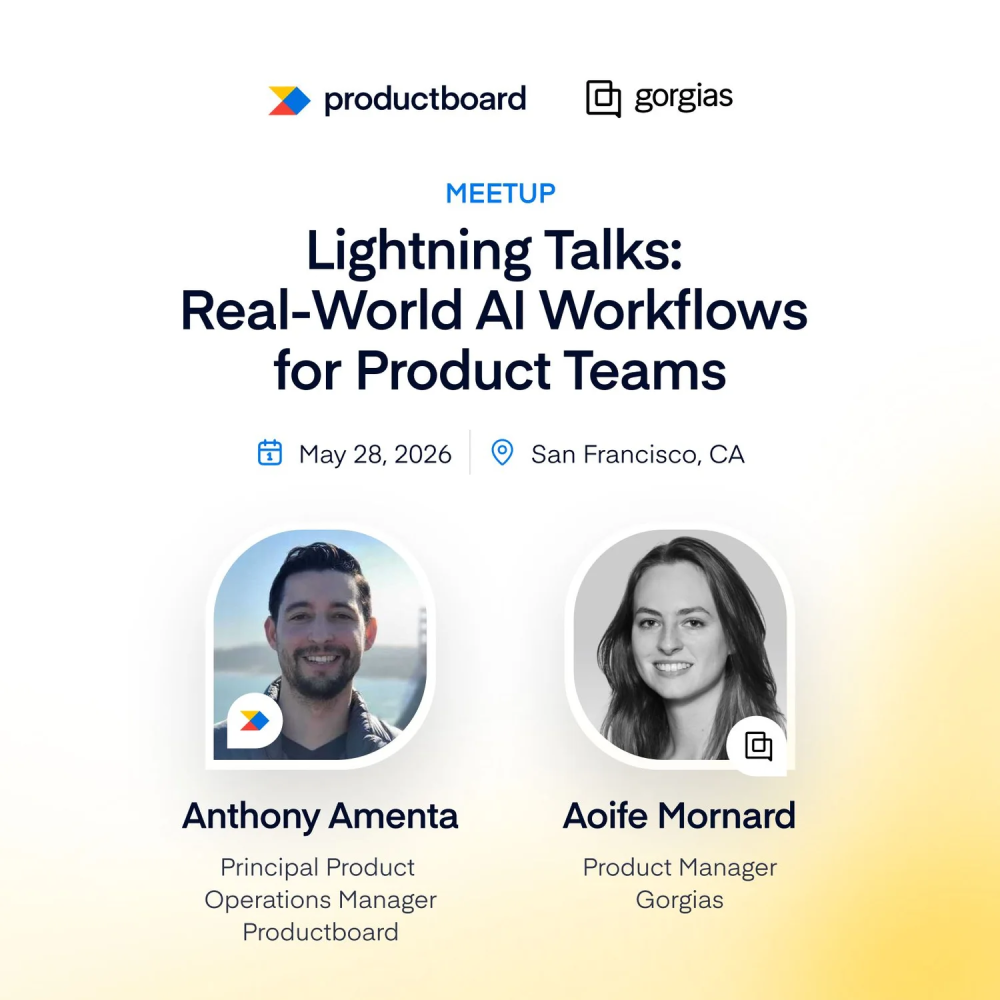
Lightning talks for PMs building with AI (Anthony Amenta, Aoife Mornard, and more), networking, and a raffle. Register on Luma → Make confident roadmap decisions faster with AI built for PMs. 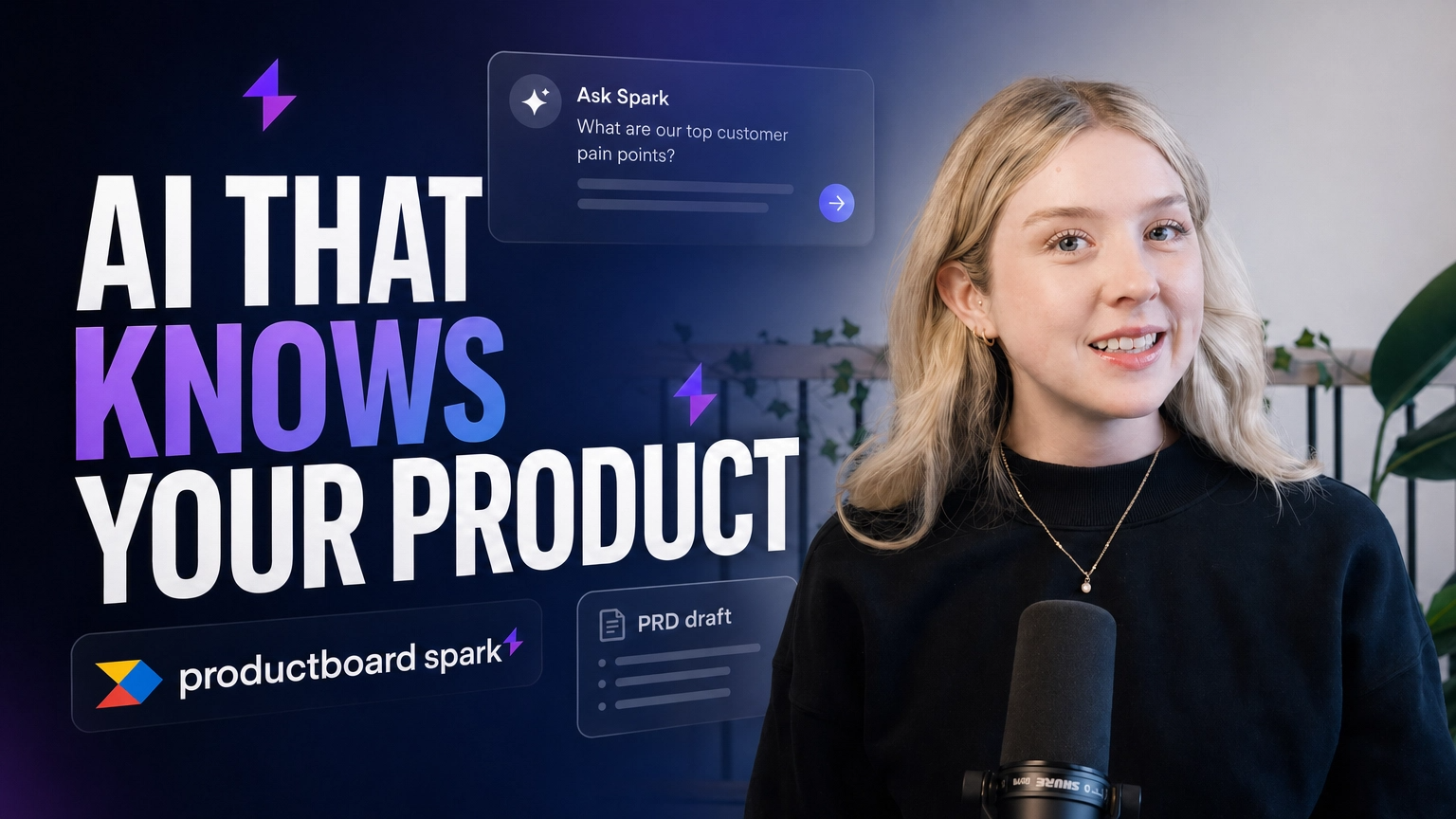
Spark turns messy customer signal into clearer direction. Explore the four latest updates (text references in docs, edit tracking, Spark reading your Productboard workspace, and a Prompt Library for the blank-prompt moment). Try Spark for free →
© 2026, Productboard | 333 Bush St, San Francisco, CA 94104 This email was sent to [email protected]. If you no longer wish to receive these emails you may unsubscribe at any time. |