͏ ‌    ͏ ‌    ͏ ‌    ͏ ‌    ͏ ‌    ͏ ‌    ͏ ‌    ͏ ‌    ͏ ‌    ͏ ‌    ͏ ‌    ͏ ‌    ͏ ‌    ͏ ‌    ͏ ‌    ͏ ‌    ͏ ‌    ͏ ‌    ͏ ‌    ͏ ‌    ͏ ‌    ͏ ‌    ͏ ‌    ͏ ‌    ͏ ‌    ͏ ‌    ͏ ‌    ͏ ‌    ͏ ‌    ͏ ‌    ͏ ‌    ͏ ‌    ͏ ‌    ͏ ‌    ͏ ‌    ͏ ‌    ͏ ‌    ͏ ‌    ͏ ‌    ͏ ‌    ͏ ‌    ͏ ‌    ͏ ‌    ͏ ‌    ͏ ‌    ͏ ‌    ͏ ‌    ͏ ‌    ͏ ‌    ͏ ‌    ͏ ‌    ͏ ‌    ͏ ‌    ͏ ‌    ͏ ‌    ͏ ‌    ͏ ‌    ͏ ‌    ͏ ‌    ͏ ‌    ͏ ‌    ͏ ‌    ͏ ‌    ͏ ‌    ͏ ‌    ͏ ‌    ͏ ‌    ͏ ‌    ͏ ‌    ͏ ‌    ͏ ‌    ͏ ‌    ͏ ‌    ͏ ‌    ͏ ‌    ͏ ‌    ͏ ‌    ͏ ‌    ͏ ‌   

The best of product management, curated and contextualized so you can spend less time scrolling and more time building.

ICYMI

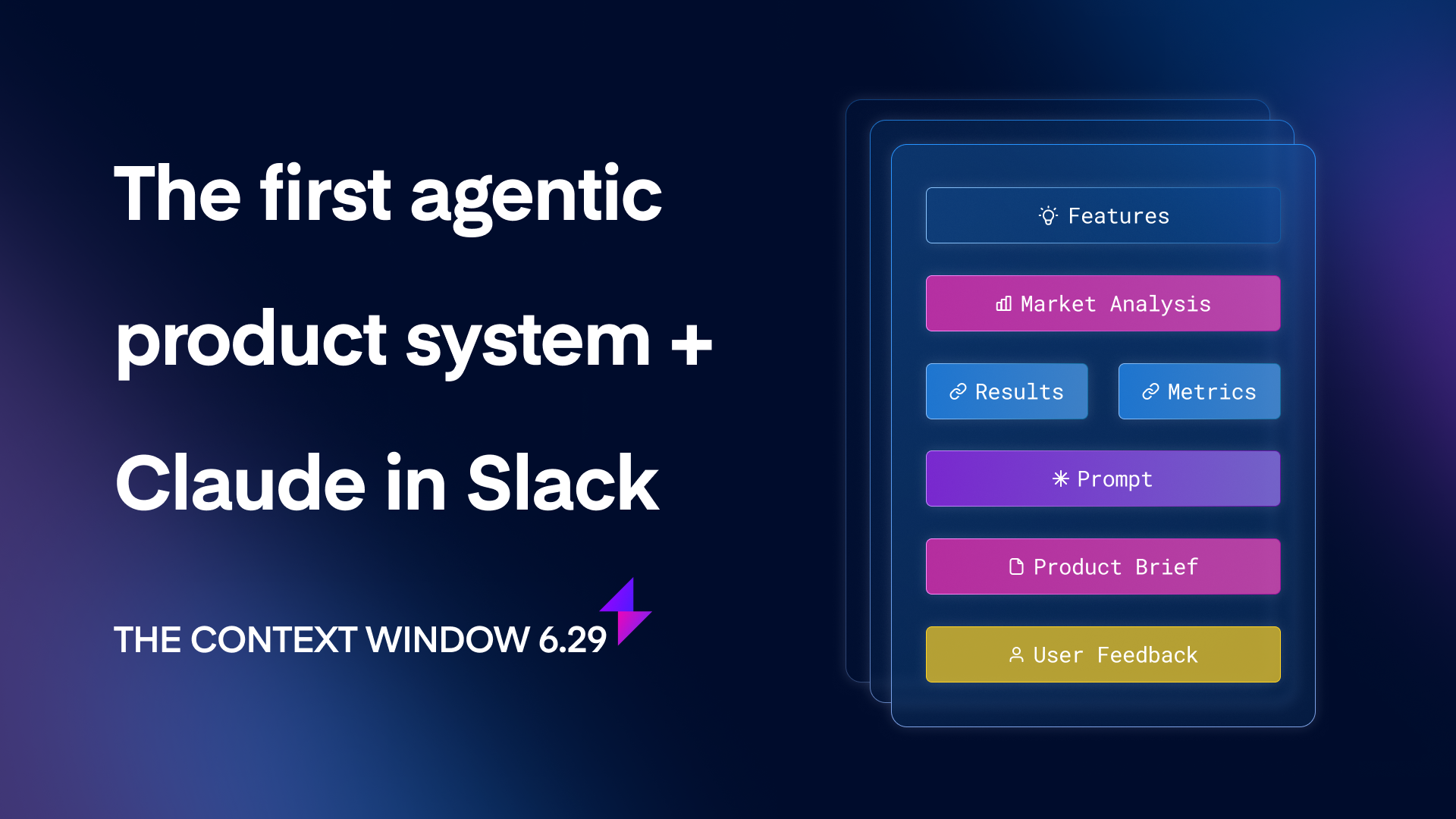
  • Productboard launches Spark, the first agentic product system. We rebuilt Productboard around specialized agents for voice-of-customer analysis, spec-writing, and codebase-grounded delivery, with every output traceable to a real customer signal. It's our take on the shift this whole issue traces: let agents carry the busywork so product teams spend their hours on judgment.
  • OpenAI pushes its IPO toward 2027. OpenAI is leaning toward waiting until 2027 to go public, with Sam Altman holding firm on a $1 trillion valuation after SpaceX's post-IPO slump spooked bankers. Watch the funding clock on whichever lab you build on: a longer private runway keeps OpenAI's pricing and roadmap answerable to private backers, not public-market quarters.
  • Google puts computer use inside Gemini 3.5 Flash. Google baked computer use into its cheap Flash model, letting agents see, click, and control browsers, mobile apps, and desktop software without a separate model call. When any cheap model can drive a screen, the next user clicking through your product might be an agent, not a person.
  • Anthropic puts Claude inside Slack as a "coworker." Anthropic shipped Claude Tag, an always-on teammate running on Claude Opus 4.8 that anyone can @-assign work to in Slack and that monitors channels to act on its own. An agent that takes assignments where the work already happens resets what users expect from any product with a collaboration surface, yours included.

Output is not the same as value, and AI widened the gap

Juan Cruz Martinez, who writes The Long Commit for engineering leaders, argues that the metrics most teams celebrate, like pull request counts, cycle time, and shipped features, measure motion rather than whether customers got better software. He leans on Harness's 2026 engineering survey, where 81% of leaders report longer code reviews since adopting AI and 94% say technical debt, validation time, and burnout are missing from their current metrics, while cautioning that any single vendor number deserves skepticism.

For product leaders, the warning lands close to home. A roadmap judged on features shipped or tickets closed rewards volume over outcomes, and AI only widens that gap. The more useful question is where work turns into customer value or into debt, and it is far easier to agree on that metric before the next planning cycle than after the dashboard has trained everyone to chase the wrong one.

The work was never the artefact

David Pereira, who writes Untrapping Product Teams, keeps coming back to a line from Miro's CEO Andrey Khusid: "AI amplifies misalignment." His worry is that everyone is busy 10x-ing their individual output — strategies in seven minutes, roadmaps in five — while nobody is 10x-ing their organization, and all that solo speed pulls teams in more directions at once. His reframe is the keeper: AI is an amplifier, making bad things worse faster and good things better sooner.

For product leaders, that lands as a caution. A strategy an agent generated in minutes is worthless if no one can say how it came to be, because you can't rally a team behind a decision you never actually made. As AI absorbs the execution, Pereira argues, the PM's job tilts toward the slow part it can't do for you: making the calls, and getting people behind them.

FROM THE FEED

When execution gets cheap, judgment is the job

  • John Cutler pushes back on the "engineering is no longer the bottleneck" meme: if coding ever really was your one constraint, you were competing on speed over insight, and once AI hands that speed to everyone, your edge is gone. (Read his take).
  • Jordan Nolff built a "Hubert bot" in Spark that drops his CEO's inline feedback on a spec before the real Hubert sees it, so waiting on exec review stops being the bottleneck. (Watch the walkthrough).
  • Hubert Palan marked Spark's launch by naming the gap that's bugged him for years — the real product work always happened outside the tool meant to track it — and argues a system of record should drive the work, not just store it. (Read his post).

From Productboard

The First Agentic Product System: Productboard Spark

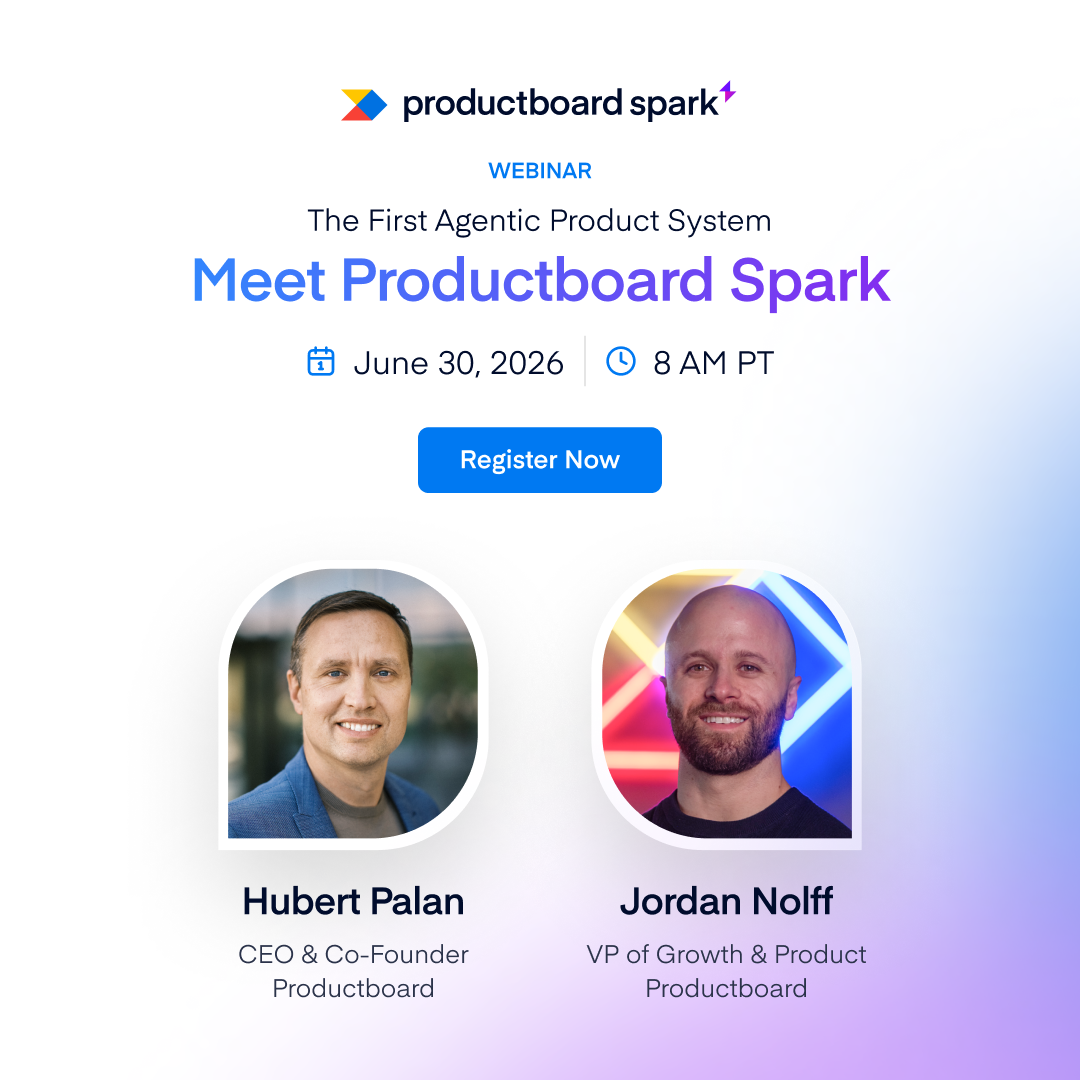
June 30, 2026 · 8 AM PT. Hubert Palan and Jordan Nolff run a full product development cycle inside a live Productboard workspace: voice-of-customer reports traced to source, a delivery-ready spec built in one conversation and grounded in your codebase, and a direct push to Claude Code, Codex, or Cursor. Plus a surprise for customers who join live.

 
Blog Frame 15.png Feature timeline (2) 1 (1).png
 
X
 
Instagram
 
Facebook
 
LinkedIn
 

© 2026, Productboard  |  333 Bush St, San Francisco, CA 94104

This email was sent to [email protected]. If you no longer wish to receive these emails you may unsubscribe at any time.