 | Tuesday, April 14, 2026 | | Revenue tripled. The Pentagon lost in court. Not bad for a supply-chain risk. |  | David Paul Morris/Bloomberg via Getty Images | When the Pentagon declared Anthropic a supply-chain risk earlier this year, the designation was meant to hurt. The label, typically reserved for adversarial foreign companies, was a pointed message from Defense Secretary Pete Hegseth after Anthropic refused to let the military use its AI models for autonomous weapons or domestic surveillance. Anthropic called the move "legally unsound" and
sued.
The legal fight has temporarily produced a split decision — one court blocked the government from enforcing a ban on Claude, while a federal appeals court allowed the Pentagon's blacklisting to stand while litigation plays out.
And
last week, Anthropic unveiled Project Glasswing, a sweeping cybersecurity initiative that brought in partners including AWS, Apple, Microsoft, Google, and Cisco to test a new, unreleased model called Claude Mythos — described in leaked
internal materials as "by far the most powerful AI model we've ever developed."
For a company that spent years in OpenAI's shadow, it has been a remarkable few months. | | SPONSORED | 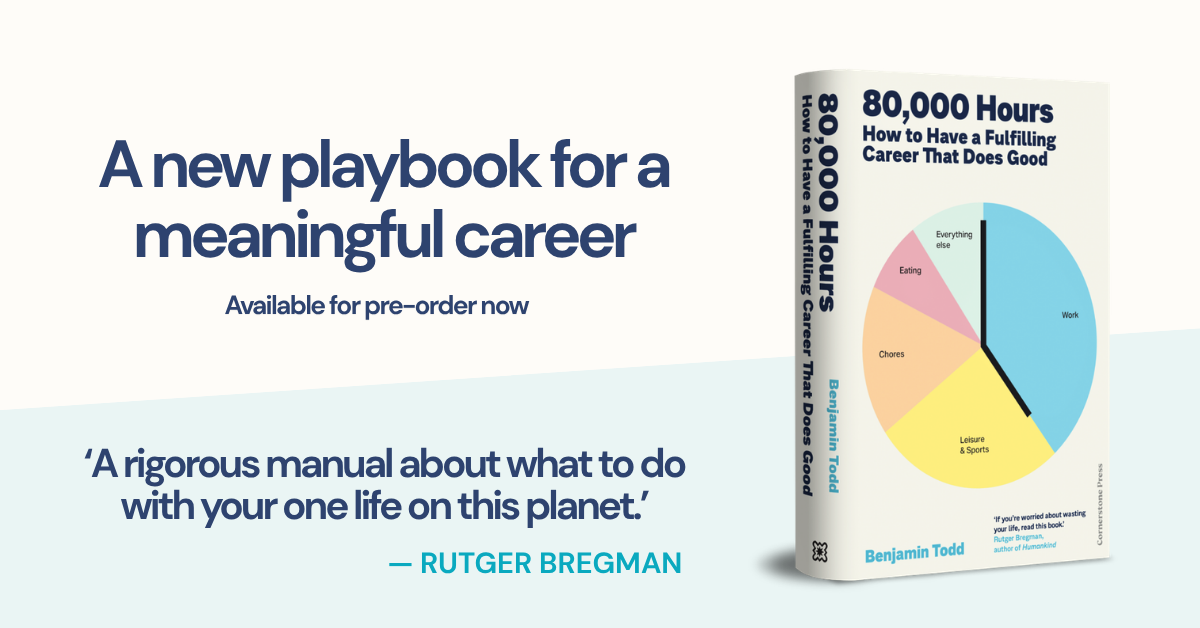 | Traditional career advice wasn't written for the age of AI | Ten years ago, "learn to code" was the career advice of the decade. Today, AI models can already outperform most human experts on real-world coding tasks. The skill that was supposed to future-proof careers is rapidly becoming obsolete.
Most career advice
hasn't caught up. It's still pushing traditional paths and platitudes like "follow your passion" — with no research behind any of it.
So what should you do?
"80,000 Hours: how to find a fulfilling career that does good" has the answer. Based on over ten years
of research, Benjamin Todd introduces a tried-and-tested toolkit framework that has already led thousands of people to change their path. It covers:
- What really makes for a dream job
- Which global problems are most pressing
- How to ensure your role isn't among those automated away
| | |
| The feud that became a marketing campaignThe Pentagon dispute gave Anthropic something that money rarely buys for an AI company: a clear moral identity. While OpenAI was partnering with the Defense Department, Anthropic was suing it. The contrast was stark, and consumers noticed. When OpenAI announced its own deal with the Pentagon, ChatGPT uninstalls jumped 295% day-over-day, according to market intelligence firm Sensor Tower. Claude downloads rose 51% over the same weekend.
An analysis of credit card data from roughly 28 million U.S. consumers found
that new paid subscribers surged sharply during the weeks between initial reports of the standoff and CEO Dario Amodei's public statement about it in late February. Previous users returned to the platform
in record numbers that same month.
The revenue growth, though, is mostly an enterprise story. The number of clients spending at least $1 million a year has more than doubled since February, crossing 1,000 customers, according to Anthropic. Claude Code, the company's developer tool
released in January, has been a major driver, adding subscribers quickly and helping push the run rate past milestones that took other software companies decades to reach.
A model too powerful to releaseProject Glasswing arrived
as a kind of capstone to the streak. The initiative is structured around Claude Mythos Preview, a model Anthropic says can find and exploit hidden software flaws at a level that surpasses nearly any human security expert.
The company has committed $100 million to let partners use it for defensive security work, and says it has no plans to release it to the public. That is a notable stance for a company whose business depends on people using its models. The implication is that Mythos is simply too capable to hand over freely.
The announcement had a dual function. It demonstrated that Anthropic's safety-first positioning is more than
rhetoric, and it showcased a model that the company has explicitly positioned as too dangerous for broad deployment. That framing has drawn some skepticism. Talking up a model's risks is a well-worn move in the AI industry, and the timing, coinciding with reported IPO
discussions for later this year, was not lost on observers.
Still, the partners involved are not small names. Microsoft, Google, CrowdStrike, and JPMorganChase have all said they're using Mythos Preview in their own security operations. The credibility that comes with those endorsements is harder to manufacture than a press release.
The Pentagon, for its part, has not let up. The appeals court ruling means Anthropic remains locked out of Defense Department contracts for now, even as it can continue working with other government agencies. Defense Under Secretary Emil Michael has continued to publicly attack Amodei, and the legal fight remains unresolved. But Anthropic keeps growing.
Meanwhile, OpenAI is taking some hits. A recent New Yorker profile of CEO Sam Altman drew on accounts from former colleagues describing him as, at best, slippery. The piece arrived as OpenAI was also reported to be navigating internal friction with its CFO ahead of its own planned
IPO. And in March, The Wall Street Journal reported that top executives were finalizing plans to pull back on “side quests,” including its Sora video tool, to refocus on coding and enterprise customers, the
exact ground Anthropic has spent the past year consolidating.
None of that is Anthropic's doing. But the contrast with Amodei's public positioning has been hard to miss.
—Jackie Snow, Contributing Editor | | Recommended Reading | Tired of boring business news?
The Hustle is your answer. We deliver
snappy, unconventional business news for people who hate business news, plus free guides on making money with AI, starting side hustles, and more. Join 1.5M entrepreneurs and aspiring founders who read us every day.
|
| | |  |
|
|