|
|  |  | Tuesday, October 28, 2025 | |  | | Thomas Fuller/SOPA Images | Good morning, Quartz readers! It’s Shannon Carroll with the Daily Brief. Today, earnings week sounds like a utilities roll call, traders price in a Trump–Xi handshake before it happens, the East Wing’s rubble finds new turf, and Elon Musk tests the limits of both loyalty and gravity. | | HERE'S WHAT YOU NEED TO KNOW | Productivity has a class problem. Billionaire Ray Dalio recently warned that the U.S. economy now runs on its top 1%, while the bottom 60% struggle to keep the lights on in an AI-powered meritocracy. | The government is closed, but the bills are still due. A month in, the shutdown is bleeding $30 billion a week from the economy while paychecks stall, confidence dips, and recession risk starts writing its own timeline. | Nvidia just got a security clearance. The company’s first Washington GTC summit is less about specs and more about selling: a
federal-friendly translation of AI factories, quantum pipelines, and the art of persuasion. | The world’s richest man wants a raise. Tesla
board chair Robyn Denholm told shareholders that rejecting Elon Musk’s $1 trillion pay plan could tank the stock — because without him, there’s no valuation, only gravity. | | | Sponsored | 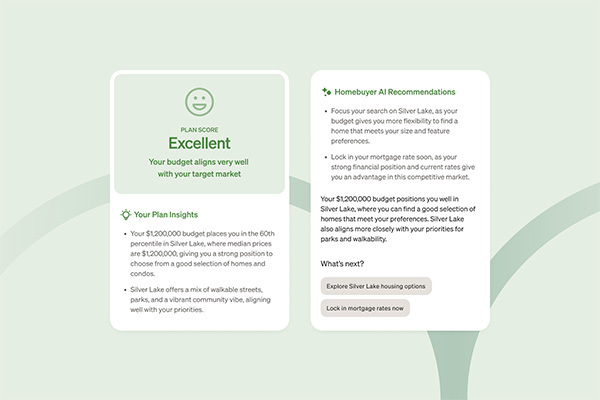 | Buy a home with confidence, not
guesswork | Buying a home is one of the biggest decisions you’ll make — and it shouldn’t feel like a leap in the dark. Further gives you a personalized plan that brings clarity to every step. Our AI-powered assistant helps you understand what you can afford,
weigh tradeoffs, and map your path forward. Whether it’s your first home or your next one, you’ll feel ready to make decisions with confidence instead of uncertainty. | | |
| | WIRED FOR PROFIT | Big Tech’s quarterly confessionals are starting to sound like earnings calls from power companies. Microsoft, Alphabet,
Meta, Amazon, and Apple are all set to report this week, and the story threading them together isn’t software anymore; it’s substation voltage. They’ve poured hundreds of billions into data centers, grid hookups, and silicon stockpiles, betting that AI’s promise will be worth the power surge. The question hanging over Wall Street is whether the spending binge still reads as visionary — or just expensive. The AI boom that once lived in the cloud now hums in the ground. Transformers, copper, and
cooling towers have become the real engines of growth, and every CEO on deck this week will have to prove that infrastructure can still masquerade as innovation. Microsoft is spending like a sovereign fund to expand Azure; Alphabet is overbuilding for demand that “continues to exceed supply”; Meta’s AI ambitions look more like a public-works project than a social network. Even Apple — the least eager member of the power guild — is nudging its capital budget higher as it tiptoes into on-device AI.
The spending is all adding up to what analysts are calling a “capex supercycle,” but it’s starting to look more like a utility arms race. Investors are still buying the story that you can’t spend too much if you’re building the future — until someone misses a delivery window or blows a transformer. This week, the market’s biggest believers will have to turn wattage into earnings and reassure Wall Street that the grid isn’t the next bottleneck. The revolution is still online, but the patience powering it is getting
pricier by the quarter. Quartz’s Shannon Carroll has more on the trillion-dollar race to keep the lights — and margins —
on. | | SOY IT GOES | Markets opened this week on a familiar script: rumor first, rally second. The S&P 500 jumped nearly 1% Monday morning after President Donald Trump said the U.S. and China were “poised to make a deal,” reviving the
world’s favorite geopolitical soap opera. Treasury Secretary Scott Bessent told Sunday talk shows that the administration’s 100% tariff threat was “effectively off the table,” replaced by what he called a “substantial framework.” Investors heard that as détente; everyone else heard the faint sound of déjà vu.
Talks on the sidelines of the ASEAN summit in Malaysia produced agreements on fentanyl, rare earths, and shipping fees — plus what Bessent
described as a “final deal” on TikTok’s U.S. business. Beijing’s lead negotiator, Li Chenggang, confirmed a “preliminary consensus,” which might be diplomatic code for: “We’ll see.” Trump, en route between Malaysia and Japan, said he’ll meet President Xi Jinping in South Korea later this week, though China hasn’t confirmed the date. For now, the handshake is theoretical, the optimism is very real, and the market is perfectly content to trade on hope.
U.S. soybean farmers may be the
first to feel the thaw. After months of turning to South America, China is reportedly preparing to restart large-scale American purchases — a $12 billion market suddenly back in play. “They’ll feel very good,” Bessent promised, which is the kind of assurance that pairs best with government subsidies. The trade truce, for all its ceremony, still amounts to a peace built on soybeans, TikTok, and trust that this season’s plot twist ends differently than the last one. Quartz’s Alex Daniel has more on the markets’ addiction to “constructive talks.” | | | Sponsored | | Buy a home with confidence, not
guesswork | Buying a home is one of the biggest decisions you’ll make — and it shouldn’t feel like a leap in the dark. Further gives you a personalized plan that brings clarity to every step. Our AI-powered assistant helps you understand what you can afford,
weigh tradeoffs, and map your path forward. Whether it’s your first home or your next one, you’ll feel ready to make decisions with confidence instead of uncertainty. | | |
| | MORE FROM QUARTZ | | | | | | | | Our best wishes on a safe start to the day. Send any news, comments, and more to [email protected]. | |  | | © 2025 QUARTZ MEDIA NETWORK (US), INC. ALL RIGHTS RESERVED. | 848 N. Rainbow Blvd. 3017 Las Vegas, NV 89107 United States |
| |
|
|


