|
|  |  | Tuesday, January 6, 2025 | | 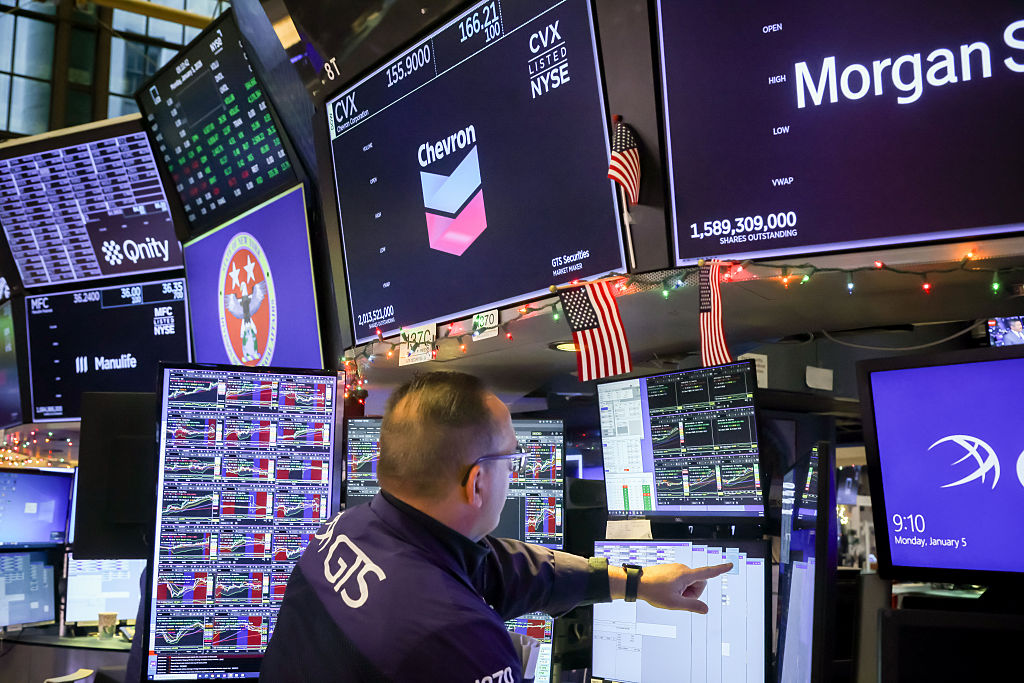 | | Michael Nagle/Bloomberg via Getty Images | Good morning, Quartz readers! It’s Shannon Carroll with the Daily Brief. Today, Big Oil is tip-toeing around Venezuela, investors are shopping the few oil stocks that actually make sense, household budgets are bracing for a pricier 2026, and AI has officially followed us into the bathroom. | | HERE'S WHAT YOU NEED TO KNOW | Stocks cheered the Venezuela news; gold priced the
unease. Oil-linked names climbed on the idea of stronger U.S. leverage, while precious metals also spiked — investors buying upside while still paying for protection. | Nvidia brought robots — and a tollbooth. At CES, the company pitched physical AI as the moment agents enter the real world, as it also
bundled chips, racks, and networking so the stack runs through Nvidia. | Nvidia is bringing its AI stack to the street. Its DRIVE AV software is debuting in the new Mercedes-Benz CLA with an enhanced Level 2 point-to-point driver-assistance system — autonomy, packaged for scale. | Your 2026 budget will likely feel smaller. ACA marketplace premiums jump as pandemic-era subsidies expire, utilities push electricity bills higher, and food costs rise again — with coffee still acting like a luxury good. | | | SPONSORED |  | Do you want employees who try
harder and stay with you longer? | Few leaders get taught how to activate employee commitment in today’s
workplace. That’s why Boss Hero School exists. Over 3 immersive days, we teach you the conditions that build a culture of engaged employees, so you never lose a great employee again. Join us in Pittsburgh, PA on April 8-10, 2026. | | | |
| | DRILL, MAYBE, DRILL | President Donald Trump is already casting Big Oil as the cleanup crew for Venezuela’s post-Nicolás Maduro era — after the U.S. captured him in a weekend military raid. On Sunday, Trump told reporters aboard Air
Force One that oil majors are eager to jump in. “They want to go in, and they’re going to do a great job,” he said, adding that “we’re going to have big investments by the oil companies... and the big oil companies are ready to go.” Small catch: So far, the public posture from the industry reads like caution, not conquest — careful statements, careful language, and a whole lot of monitoring. Chevron is emphasizing safety and legal compliance. ConocoPhillips is signaling that the “ready to go” storyline is getting ahead of the paperwork, the
politics, and the price of admission.
And the price of admission isn’t cheap. Energy experts say reviving Venezuela’s ailing oil industry would take many years and at least tens of billions of dollars, after U.S. sanctions, mismanagement, and corruption hollowed out the sector’s technical expertise. Venezuela’s daily output hovers around 900,000 barrels per day, under half of its pre-Maduro highs of around two million barrels per day. Oil is cheap enough to make hero narratives
harder to finance, and Venezuela is still a small piece of the current global market. Add in an unstable environment, an oil glut, still-in-place sanctions, and the prospect of hostile terrain, and the corporate mood starts making sense.
Chevron is the sole U.S. oil company with a foothold, and it’s responsible for about a quarter of Venezuela’s daily production. It’s keeping its head down: “We continue to operate in full compliance with all relevant
laws and regulations,” spokesperson Bill Turenne said. ExxonMobil and ConocoPhillips left the country after Hugo Chávez partly nationalized the industry in 2007, and both have sought to reclaim expropriated assets with little success. Meanwhile, Venezuela’s “new” government looks a lot like the old one. The Supreme Court recognized Delcy Rodríguez, an ex-oil minister, as acting president, and within 24 hours, she hit two notes: to “not be anyone’s colony,” then a call for a “cooperation agenda” with the U.S. That’s a country speaking in two
registers at once, and oil companies are listening to the subtext. With sanctions staying in place, nobody’s rushing to build a multibillion-dollar bet on a moving target — “ready,” or not. Quartz’s Joseph Zeballos-Roig has more on how a weekend attack became a multiyear capex question. | | | RECOMMENDED READING | The future of tech, decoded.
Semafor Technology unpacks the ideas, innovations, and power shifts redefining the global tech landscape. From AI and machine learning to the startups and policies shaping the industry, each briefing delivers clarity and depth on the tech transforming our world
|
| | | A CRUDE AWAKENING | Venezuela has some of the world’s biggest proven oil reserves, and an oil sector that’s been treated like a piggy bank and a punching bag. Years of sanctions, underinvestment, and government mismanagement have
hollowed out what looks, on paper, like an energy superpower. Now, President Nicolás Maduro has been forced out of his country, and markets are already trying to price a Venezuela rebound like it’s a switch they can flip. The story’s hook is simple: 303 billion barrels of proven reserves — about 17% of the world’s total — sitting in a newly U.S.-controlled oil narrative. By midday on Monday, the news had helped lift the Dow by 750 points, with crude up 1.4% Wall Street loves a clean before-and-after. And Venezuela rarely supplies
one.
Still, analysts are waving the “slow down” flag, telling investors to think long-term, with experts and the UN questioning the raid’s legality and the physical work looking slow, expensive, and politically fragile. Rebuilding Venezuela’s oil sector won’t happen at the market’s speed. “It will take tens of billions of dollars in investment and at least a decade of Western oil majors committing to the country,” wrote Peter McNally, global head of sector analysts at Third Bridge.
The market wants a supply rebound; the oil patch sees capex, crews, equipment, and politics — plus a sanctions regime that doesn’t vanish just because a headline landed. The trade is easy. The drilling is the hard part.
If you’re looking at oil stocks through this lens, you’re really asking a different question: Who’s already positioned for a long, expensive, politically complicated project? Chevron is the obvious beneficiary because it’s the only big-name U.S. oil company operating
in Venezuela; shares were up 5.1% in Monday trading. Valero is the downstream play, built for heavy, sour crude and already importing about 70,000 barrels to the U.S. in 2025. ConocoPhillips, up as high as 6% Monday (and 2.6 at the end of the day), is the legal-history trade, lifted by a ruling tied to Chávez-era expropriation and an $8.7 billion award (plus interest). But if stock-picking feels like too much geopolitics per share, the story points to USO and UCO — because the market may be trading the comeback today, but the industry is
pricing it by the decade. Quartz’s Brian O’Connell has more on the tickers to watch when the headlines cool. | | | SPONSORED | | Do you want employees who try
harder and stay with you longer? | Few leaders get taught how to activate employee commitment in today’s
workplace. That’s why Boss Hero School exists. Over 3 immersive days, we teach you the conditions that build a culture of engaged employees, so you never lose a great employee again. Join us in Pittsburgh, PA on April 8-10, 2026. | | | |
| | MORE FROM QUARTZ | | | | | | | Our best wishes on a safe start to the
day. Send any news, comments, and more to [email protected]. | |  | | © 2025 QUARTZ MEDIA NETWORK (US), INC. ALL RIGHTS RESERVED. | 848 N. Rainbow Blvd. 3017 Las Vegas, NV 89107 United States |
| |
|
|


