|
From time to time journalists at The Economist shift their gaze away from staple topics such as finance and geopolitics, and focus instead on more intimate ones, such as relations between the sexes. We’ve written about the
growing political gulf
between young men and women, for example, and the
stunning decline
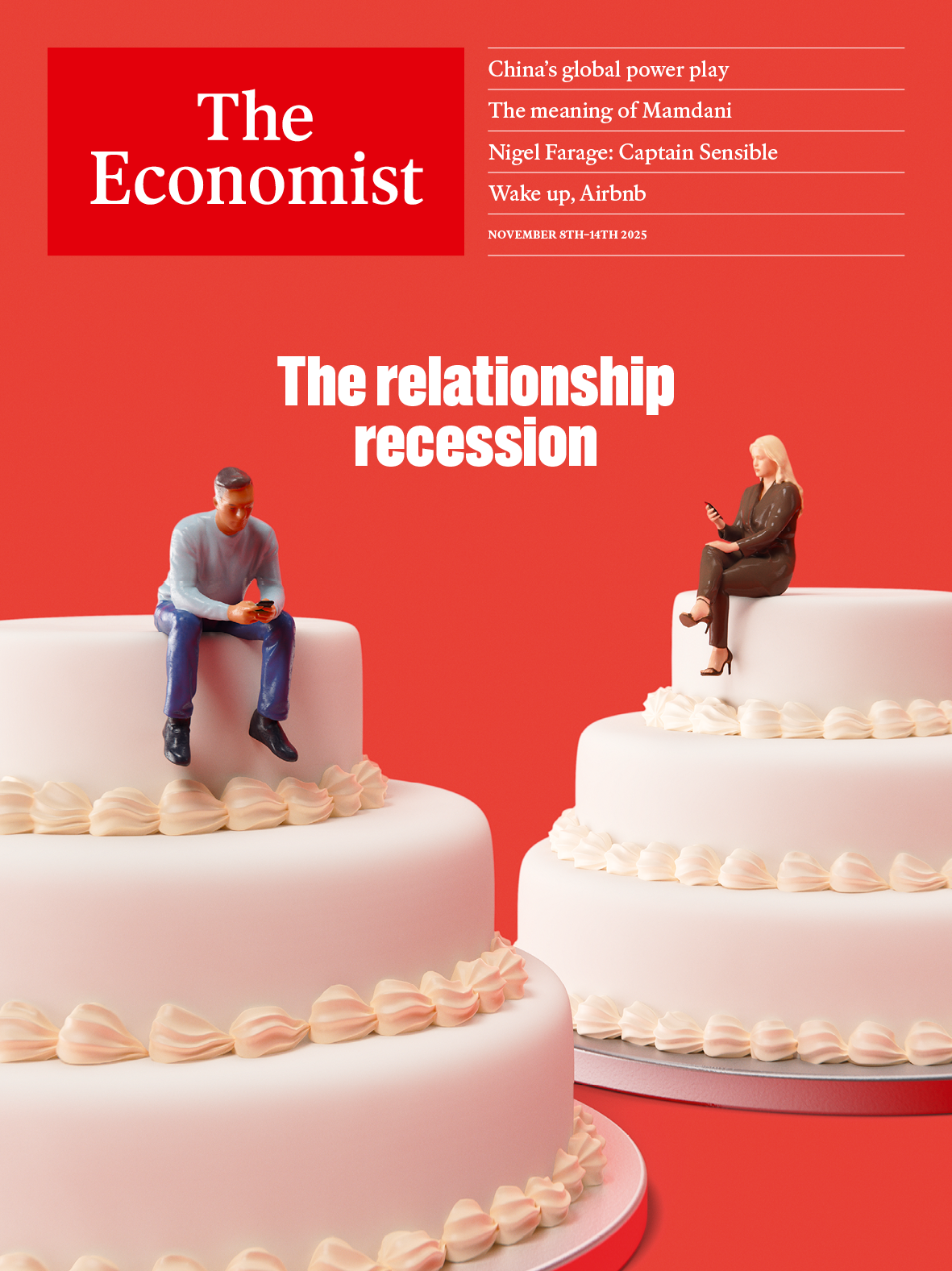
in the preference for boy babies around the world. This week our cover in most of the world tackles the great relationship recession.
Across the rich world, more and more people are coupling up later in life or not at all. The share of 25-34-year-olds in America who are single has doubled in the past five decades. In 26 out of 30 OECD countries more people are living alone than in the past. For some
conservative pro-natalists,
the failure of young people to settle down and procreate threatens to end Western civilisation.
We offer a more nuanced take.
The rise of singlehood is largely the result of something good. As barriers to women supporting themselves have fallen, they find it easier to walk out of bad relationships, or to refuse to enter them in the first place. Yet something is amiss in the relationship market. Though many people are happy to fly solo, a hefty majority are not. We analyse the
triumphs and troubles
of Generation Single.
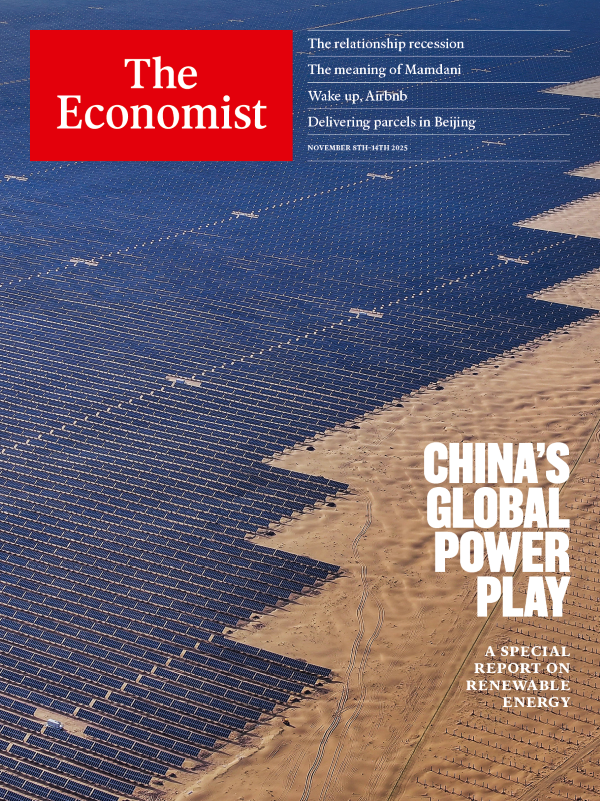
Our cover in Asia argues that China’s
clean-energy revolution
will reshape markets and geopolitics far beyond its own borders. As our
special report
explains, China’s lead in global manufacturing is bigger than ever thanks in part to the astonishing growth of renewable-energy industries such as solar panels and electric vehicles. There are problems, of course, from overcapacity to cutthroat competition. But the world’s biggest manufacturer now has an interest in the world decarbonising. That makes China a new type of superpower: one that deploys clean electricity on a planetary scale.
Finally, tune in to the
latest edition of The Insider,
which takes a look at Europe’s populist right. How would Nigel Farage or Jordan Bardella govern if they were to take power? Our editors discuss the causes of Europe’s malaise, what the populists are promising and how they could reshape Europe. |