So we decided to do something fun this year and write up our 2026 predictions together with every single SaaStr speaker and AI post of the year!
How? Every single SaaStr AI session, interview and speaker was ingested into Claude so we worked the Top 10 for 2026 up … together.
Our Top 10 Predictions for B2B + AI for 2026:
#1. 50%+ of B2B Sales Teams Will Be Smaller Than They Were in 2025
The Prediction: AI-native B2B companies will run sales teams that are 50% smaller than their predecessors while maintaining or increasing revenue.
The Evidence: At SaaStr, we’re already seeing this play out. We deployed an AI BDR that created 25% of our new pipeline in just 90 days. One leading AI dev tools company just closed a $4M+ annual deal where the Sales Engineer ran the entire relationship—the sales team’s only contribution was helping price the deal.
What the data shows:
- AI-native companies have 50% higher close rates than traditional companies (ICONIQ 2025 GTM Study)
- Vercel runs nearly all of outbound with one human and AI agents
- Companies using AI in sales see 50% increase in leads and appointments
The shift: The traditional “WFH mid-pack inside sales rep” faces extinction. The survivors will be:
- “Cracked” reps earning $600K+ handling complex enterprise deals
- Field sales leveraging AI coaching
- AI-powered reps handling transactional deals end-to-end
|
|
|
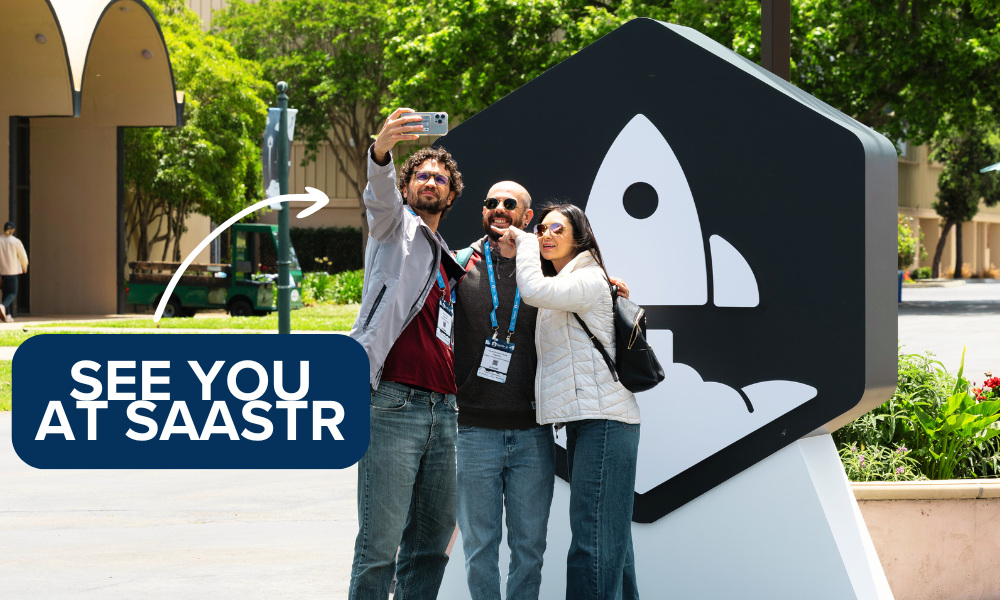
SF Bay Area, May 12-14, 2026 |
The Biggest SaaS + AI Event of the Year.
|
|
|
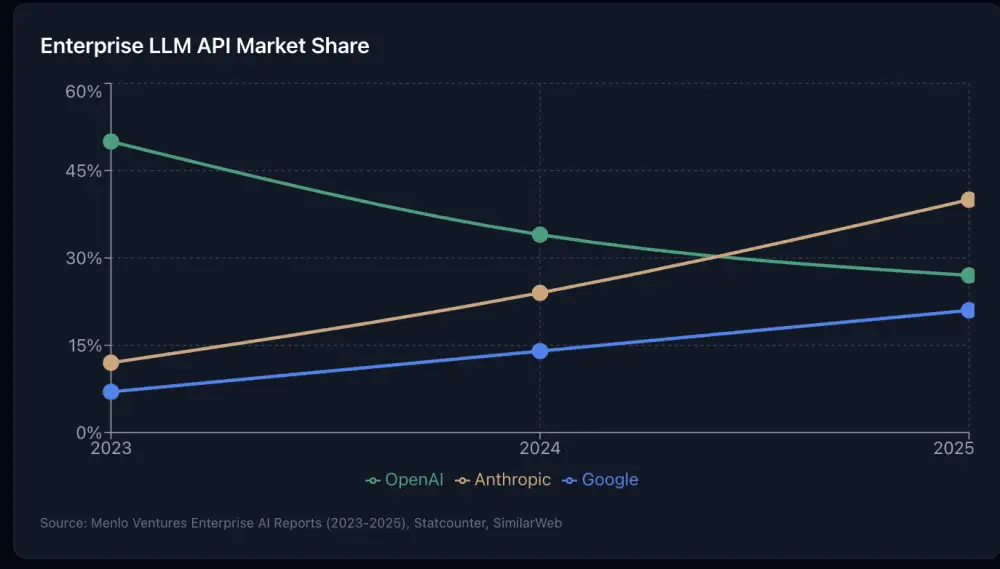
Here’s the question no one wants to ask as we head into planning season: Did you actually gain or lose market share this year?
Not revenue. Not ARR. Not growth rate.
Market share.
Because here’s the uncomfortable truth: If you grew 30% last year but your #1 competitor grew 60%, you didn’t win. You lost. You’re actually losing market share, and that means you’re falling out of product-market fit — even if your board deck looks green.
The Downturn Excuse is Dead
In 2022, you could blame the markets. In 2023, you could blame “macro” impacts. In 2024, you could still claim we were in a “downturn.”
Now? In the Age of AI? When overall software spend is accelerating at a record pace? You’ve run out of excuses.
The downturn is over in SaaS and B2B. It’s over — if there was one at all in your category. And if you haven’t recovered from it, it’s time to be honest. It’s you.
Here’s what’s actually happening:
- Venture capital is back. It’s flowing into AI and growth as fast and furious as 2021.
- Hypergrowth is back. Yes, it’s often AI-fueled leaders. But so what? Why isn’t that you?
- Software spend is accelerating. Per Gartner, enterprise software spend will grow a stunning 15.2% to $1.43 trillion. It’s the largest and fastest-growing segment of the entire $6 trillion enterprise IT market.
- Public B2B companies are growing faster again. For many, the recent quarters marked a turning point.
- And the next generation like Databricks, Cursor, Anthropic, et al are growing at a pace like we’ve never ever seen before. It’s jaw dropping.
But here’s what you need to understand about that 15.2% growth: roughly 9% is just price increases on existing software (CIOs are budgeting for it). Most of the rest is going to AI. If your software doesn’t have AI features or can’t demonstrate clear ROI, you’re in the “low ROI software getting cut” bucket as buyers reallocate budget.
The pie is getting bigger. The question is: Are you grabbing a bigger slice, or watching everyone else eat your lunch?
|
|
|
This edition of the SaaStr Daily is sponsored in part by Seamless.AI
|
|
|
Just a few observations from bootstrapped B2B companies I’ve had some involvement with:
- It probably will take 1–4 years longer to get to $10m ARR or so. I don’t fully have the data to support it, but usually, bootstrapped startups take longer. Atlassian and Qualtrics took longer to get to $10m ARR. UiPath took 10 years to get to $1m ARR! But after that, they grow just as quickly. In the Age of AI, some things take off immediately. But almost always, bootstrapping takes long at the beginning.
- You or your co-founder will freak out about how expensive (and for the best ones, highly compensated) salespeople are. Once you have a few reps that are doing a good job closing, you may get mad / frustrated that they are making far more than anyone else in the company. Even if you don’t get mad, one of your co-founders might. Bootstrapped SaaS companies seem to have trouble making the transition to the fact that your best sales reps should be making real money.
- You may have a harder time seeing it. Related to point 1, but a bootstrapped SaaS company that took 4–5 years to get to $2m-$3m in ARR often can’t “see” the $100m+ future / vision anymore. It’s still there. They just worked so hard, for so long, to get to 2–3% of that vision … that they can’t see it anymore.
- Eventually, most startups “de-bootstrap” if they go big. Just an interesting observation that 95%+ of SaaS leaders, even if they boostrapped at first, didn’t bootstrap forever.
|
|
|
This edition of the SaaStr Daily is sponsored in part by Wistia
|
Your audience's time is scarce, and keeping them engaged takes intention. This series will teach you how to craft webinar experiences that capitalize on every minute.
Learn techniques from an expert so you can capture attention, influence decision makers, move deals faster, and reinforce your brand's authority.
|
|
|
A few that basically always work in sales … but that so many don’t do actually do:
- Being a product expert. 95% of the sales execs I talk to in software don’t know the product much at all. A huge miss as half the reason you talk to sales is to get your product questions answered.
- Being great at the product demo. Truly great. Not being able to demo your product like an expert just leads to a mediocre sales process, at best.
- Mapping out and contacting all the stakeholders. Too many in sales just talk to whomever inbounds. But especially in bigger deals, there are often 3–4 stakeholders you really need to convince.
- Showing up in person. If you show up in person for the bigger deals, and the competition just shows up in Zoom … the odds you win the deal go up. A lot, really.
- Focusing on solving the customer’s problem. Sell second, solve their problem first. If they’ve given you up the time to talk about a problem, there likely is budget to solve it. If you can solve it.
- Followng up regularly. Too many just … don’t. The right time to buy just might be 3, 4, 9 months from today.
- Just doing the darn pilot. Too many reps don’t want to do pilots because it’s work. They fight it. Because you have to basically resell the deal again at the end of the pilot. But as a start-up, just do them. They reduce perceived risk.
- Being there as CEO. It sends a message when the CEO shows up in person. It doesn’t always yield a win. But it shows the customer / prospect matters. You can’t be in every deal as CEO. But be in as many of those that matter as you can be.
|
|
|
In SaaS at least, I’ll give you one metric that is fairly reliable:
How many dedicated sales and GTM professional do they have, just 100% selling the competitive product?
If it’s none yet, it’s an experiment. If they’ve just made a “Head of” hire, it’s an experiment, but one that is getting budget.
If you can find > 20 or so sales reps selling it on LinkedIn, then your BigCo is taking it Seriously.
If not, and it’s a sales-driven space … they aren’t.
Building a 1.0 competitor is not that big of a deal for a BigCo.
Dedicated some engineers to it even isn’t that big of a deal. You usually have a lot of those as an SVP in a BigCo. There are always a few good engineers in every departments at Big Tech Cos there to build 1.0 versions of new products.
And just throwing another product to sell to existing reps that sell the ‘main’ products isn’t a big deal, either. This doesn’t work well, but doing it isn’t a big deal. Again, just an experiment.
But hiring 20, 50, 100+ dedicated sales reps, reporting to a dedicated VP of Sales just for that product? That’s more unusual at a BigCo, especially one with many products.
That’s real extra expense, extra complications, and real changes to the org chart. It will impact fiefdoms and budgets and annual planning. Especially because as that sales team grows, it’s going to consume even more budget next year.
BigCos. only do this once they are at least semi-serious about winning in a space.
Always take the competition seriously. But take the BigCo clone more seriously once they’ve really started to build out a true dedicated sales team to sell it.
|
|
|
© SaaStr 2025
644 Emerson St. Suite 200, Palo Alto, CA, 94301
If you'd like to stop receiving the SaaStr Daily, click here
|
|
|
|