In this edition: This month, we go deep on how Salesforce makes stuff — from the Customer Zero philosophy that turns 75,000 employees into a stress-test army, to a new vision for agents that never stop improving, to cultivating (and learning from) the next generation of builders.
| |
|
How We Cut Inference Spend by Right-Sizing Our Models | |
By Jayesh Govindarajan, EVP, Software Engineering, Salesforce AI
The not-very-secret secret of enterprise AI deployment is that the token bill can spin out of control. Eighteen months ago, Agentforce ran on a single rented frontier model, and costs grew in lockstep with usage. That’s fine for a prototype. It’s an existential problem at scale. (As GitHub demonstrated, unchecked inference spend can turn customers against you almost overnight.)
At Salesforce, our answer wasn’t to pass those costs along to customers. It was to use the right model for the right job. The insight, laid out by EVP Jayesh Govindarajan, is simple enough: a frontier model is extraordinarily good at multi-step reasoning, but it’s grotesquely overqualified for doing things like classifying intent, screening for prompt injection, or ranking retrieval results. Those tasks don’t need a genius — they need something fast, focused, and efficient. So we built a suite of precision models to handle those jobs, reserving the frontier model for the reasoning work only it can do.
A few examples:
-
HyperClassifier classifies a request and routes it to the right subagent in roughly 26 milliseconds, compared to about 1,446 milliseconds for a general frontier model. That’s about 55 times faster, and better yet, safety topic accuracy climbed from 95% to 99%.
-
The Prompt Injection Defense model, now rolling out to GA, was trained on six distinct real-world attack vectors and embedded directly into the reasoning engine as a second detection layer.
-
TextEval checks every response for grounding and instruction adherence before it reaches the customer. It’s not an optional add-on; it’s baked into the runtime.
Frontier models are extraordinary. Today, a frontier model handles the core reasoning in our stack, and the architecture lets customers plug in the frontier model of their choice. But raw intelligence was never the thing standing between an enterprise and a resolved case.
More intelligence doesn’t close that gap, but knowing how enterprise companies actually work does. Those patterns took us decades to learn, and 18 months to build into our agentic infrastructure, including our harness, models, and agentic apps. The result isn’t a smaller stack, or a cheaper one. It’s a precise one: the right intelligence for each job, and no more. Precision over power: that’s the real frontier.
Read the full story on the Salesforce Newsroom. | |
 |
|
|
|
Meet the Next Generation of Builders: How They Work and What They’re Making |
Salesforce’s Futureforce program, a global university recruiting engine with an emphasis on paid internships, new-graduate programs, and entry-level roles, has placed more than 10,000 emerging professionals since 2014 — and the newest cohort is arriving with a builder’s mindset and keen AI instincts. They don’t wait to be handed a task. They prototype before they ask permission, treat AI as a native collaborator rather than a shortcut, and tend to question why things are done the way they’re done.
The learning goes both ways. As one new hire put it: “If I can do something like this, then so can my senior colleagues. Go out there and learn it yourself. Be curious.”
Read the full story to meet these early-career standouts. |
|
| | |
 |
 |
|
|
|
Aligned, Accurate, and Agile: How Slackbot Powers the Salesforce Legal Team |
|
Historically risk averse, legal departments are supposed to be the last to change. It doesn’t have to be that way, writes Salesforce Chief Legal Officer Sabastian Niles. In this piece, he walks through how the Legal and Corporate Affairs team turned itself into a Customer Zero test bed for Slackbot and agentic workflows — using AI to handle contract lookups, document synthesis, and intake routing, while freeing attorneys to focus on the work only humans can do. To execute this rollout, LCA created an entirely new role, the “Agent Manager,” to sit at the intersection of legal expertise and agentic risk. It’s a proof of concept that doubles as a playbook.
Read the full story. |
|
| | | | |
|
|
|
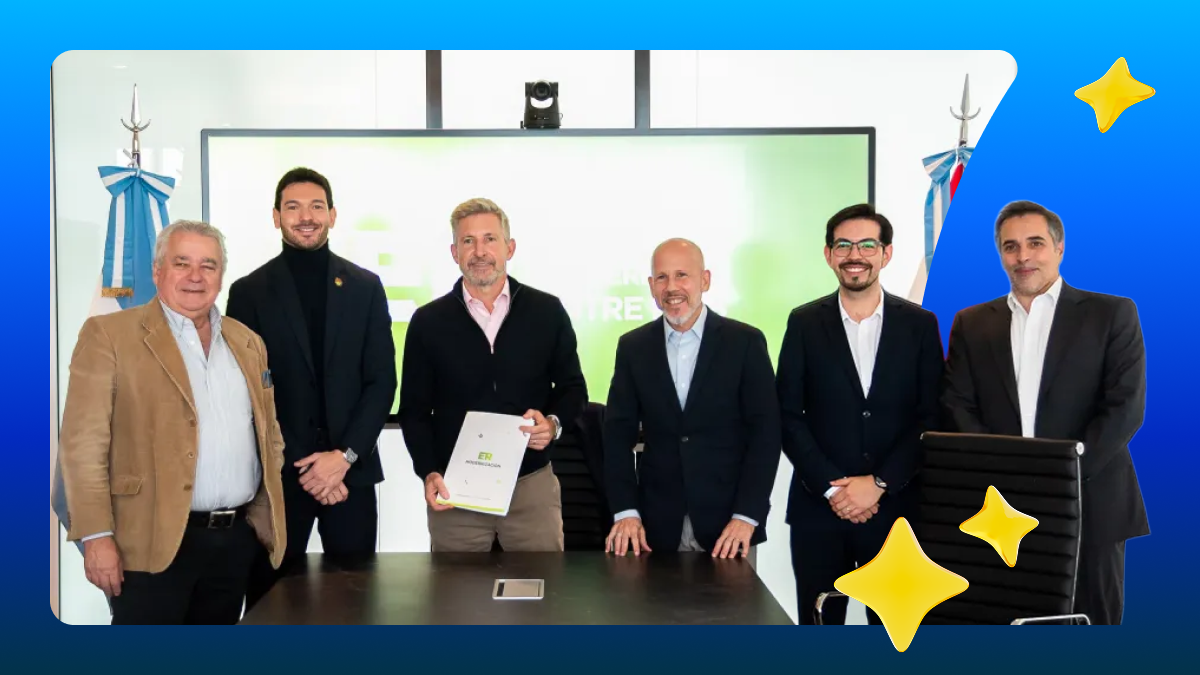
Salesforce and Entre Ríos Sign Argentina's First Provincial Collaboration Agreement to Advance AI Initiatives for Government, SMEs, and Citizens |
“People will be able to access a platform to receive training in artificial intelligence. The local companies will have access to tools that are currently only available to the world’s big corporations. Entre Ríos is the first province to reach this agreement. This is just the beginning.” — Rogelio Frigerio, Governor, Province of Entre Ríos
Read the full release. |
|
| | | | |
|
|
|
Honda Sales Operations Japan Adopts Agentforce to Accelerate Customer Experience Innovation and Sales Efficiency |
“As the environment surrounding cars rapidly changes, our key theme has been how to accurately capture customer needs, respond in a timely manner, and build relationships of trust, even in the digital space … With the introduction of Agentforce, we have created an environment where customers can easily consult us at any time, and dealership staff are becoming better equipped to focus on proposals that support each individual customer.” — Keiichi Morimoto, Manager, Digital Marketing Section, Technology & Innovation Company, Honda Sales Operations Japan
Read the full release. |
|
| | | | |
|
|
|
|
|
|
|
|
|
|