| | Washington downplays its concessions to Iran, oil prices drop as Hormuz reopens, Fed expected to hol͏ ͏ ͏ ͏ ͏ ͏ |
| |  | Flagship |  |
| |
|
The World Today | 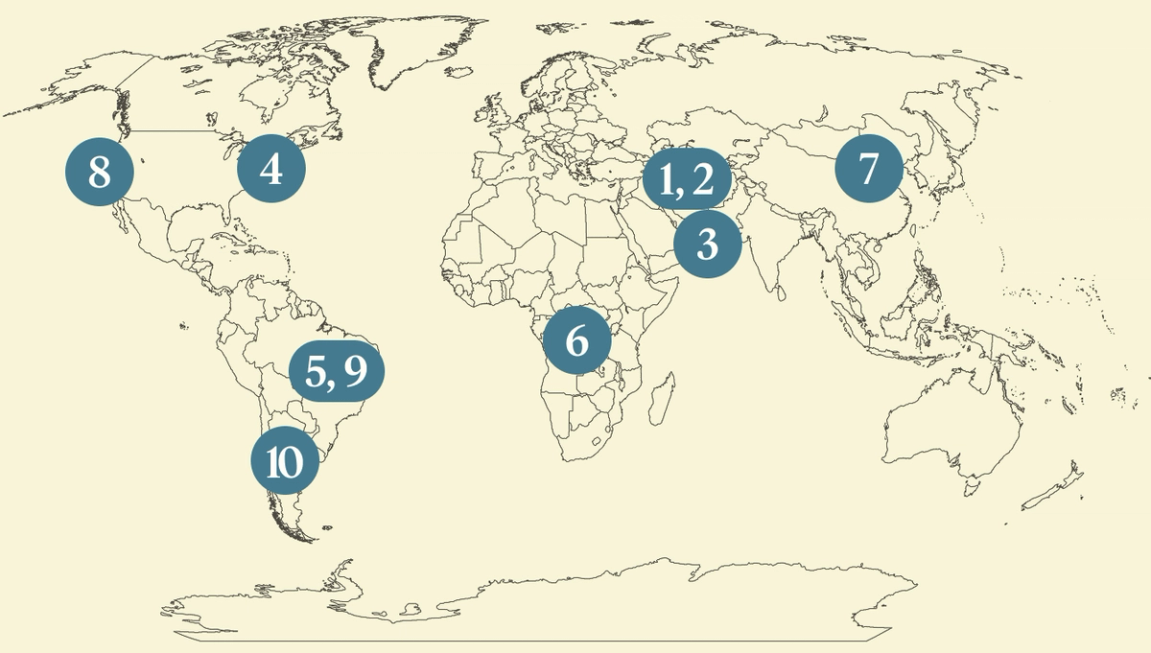 - US plays down Iran details
- Deal cements Gulf shift
- Oil plummets on draft text
- Warsh’s first Fed rate call
- Bolsonaro’s son jailed
- Ebola fears intensify
- Chinese slam EU levy
- Trump’s growing AI role
- Tech risks in triage
- Messi scores hat trick
 A ‘superbly diverting’ book about Shakespeare in translation. |
|
US downplays Iran concessions |
|
War highlights fragile order |
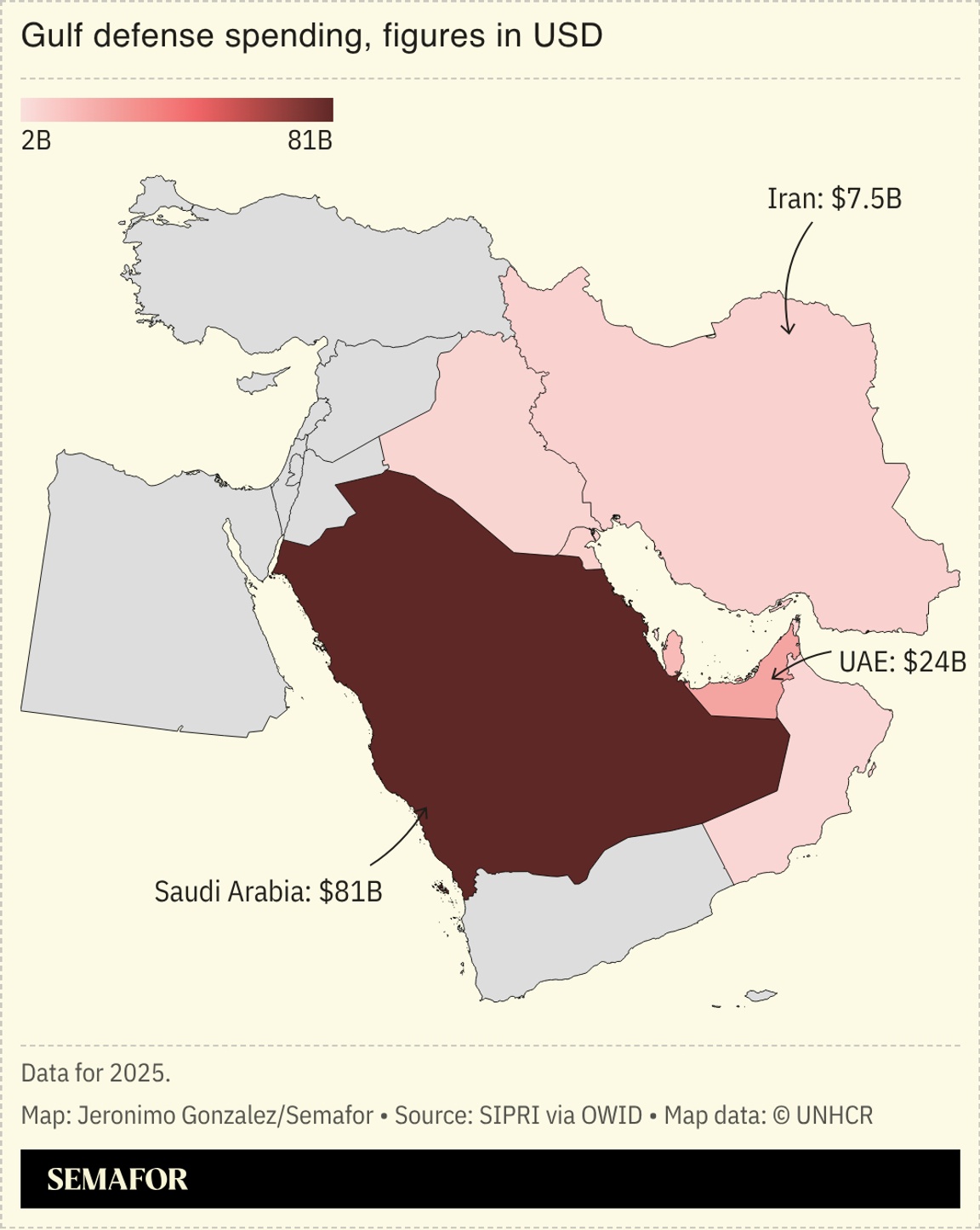 The Iran war has accelerated the fragmentation of the Middle East, analysts wrote. With a provisional agreement due to be signed Friday that cements a truce between Washington and Tehran, countries across the region are picking up the pieces from the conflict. Far from imposing a new balance of power, a Center for Strategic and International Studies scholar wrote in Foreign Policy, the war showed the Middle East is “a region in which every actor can impose costs, but none can impose order.” Meanwhile, it “compromised the United States’ status as the Middle East’s main security guarantor,” a Biden-era official argued in Foreign Affairs. |
|
Oil falls as Hormuz opens |
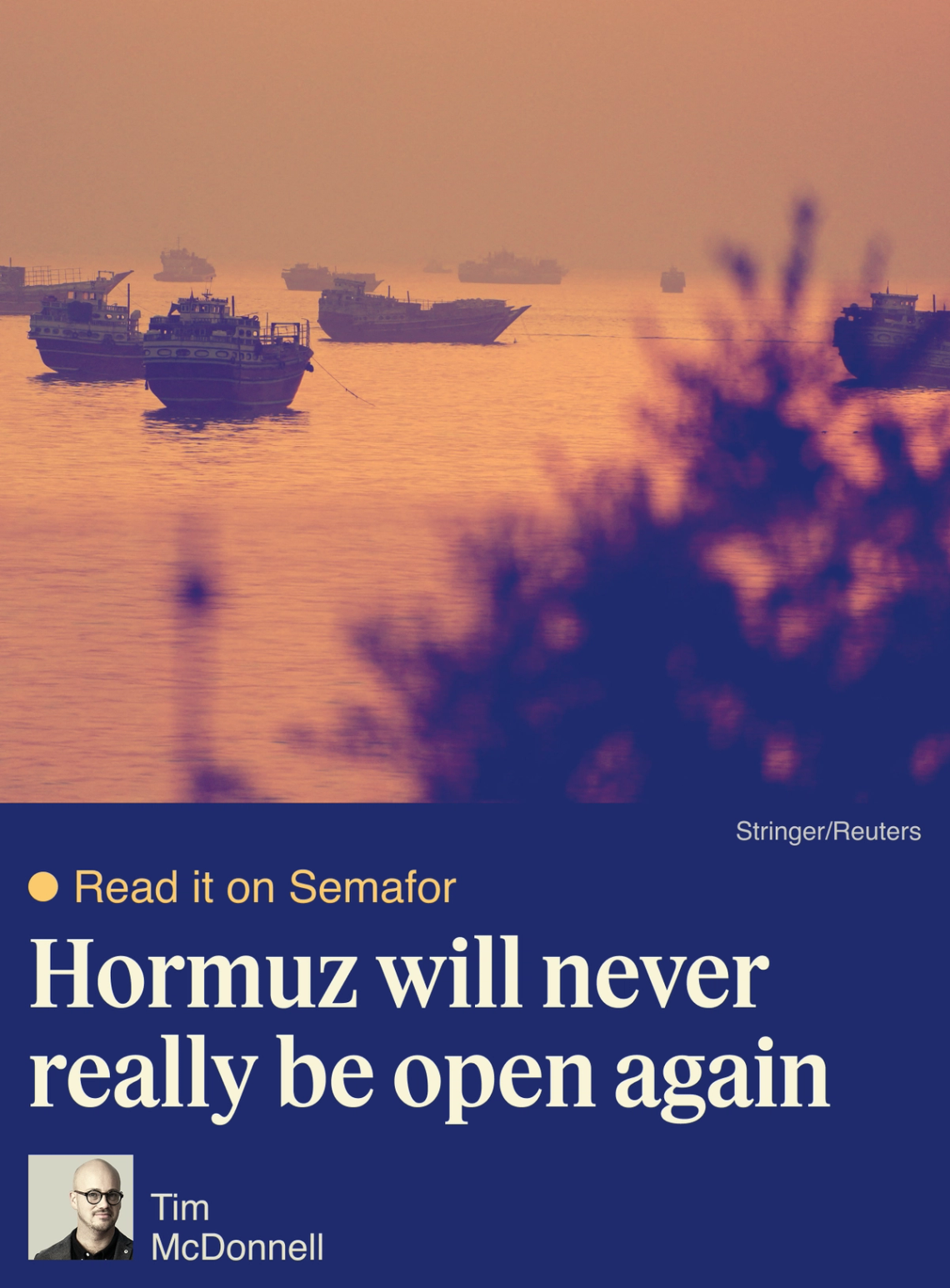
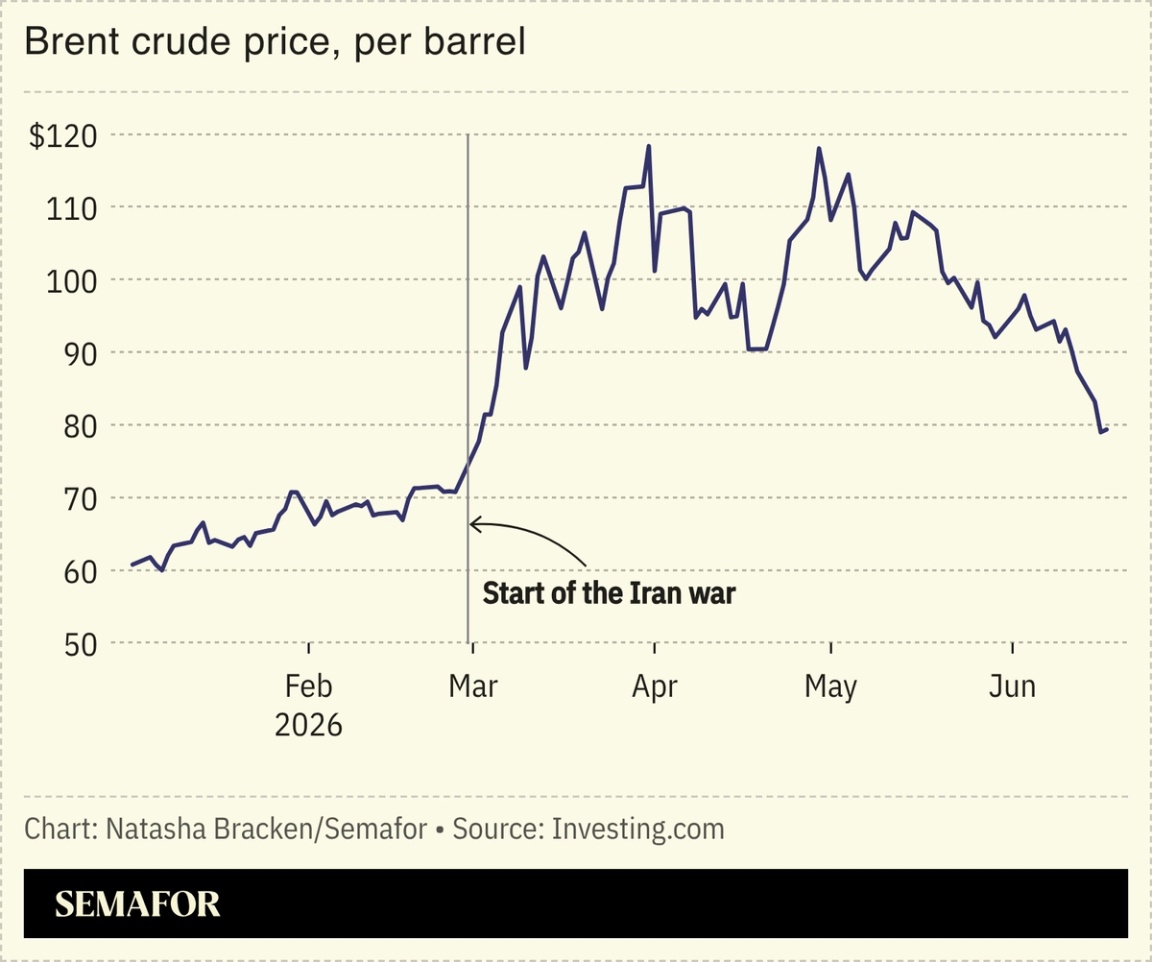 Oil and gas prices fell as the US-Iran truce pointed towards the freer flow of fossil fuels through the Strait of Hormuz. Several tankers passed through the waterway, which has in effect been closed for months. Multiple outlets reported that the US would allow Tehran to sell its oil freely, sending crude prices to below the symbolically important $80 mark. European gas prices also fell sharply, giving the continent a chance to restock ahead of winter, Goldman Sachs economists noted. However, the longer-term consequences could be more profound and bifurcated, a Reuters columnist argued, with governments increasing their support for electrification and renewables, as well as ramping up purchases of coal to reduce reliance on Middle East transit routes. |
|
Fed expected to hold rates |
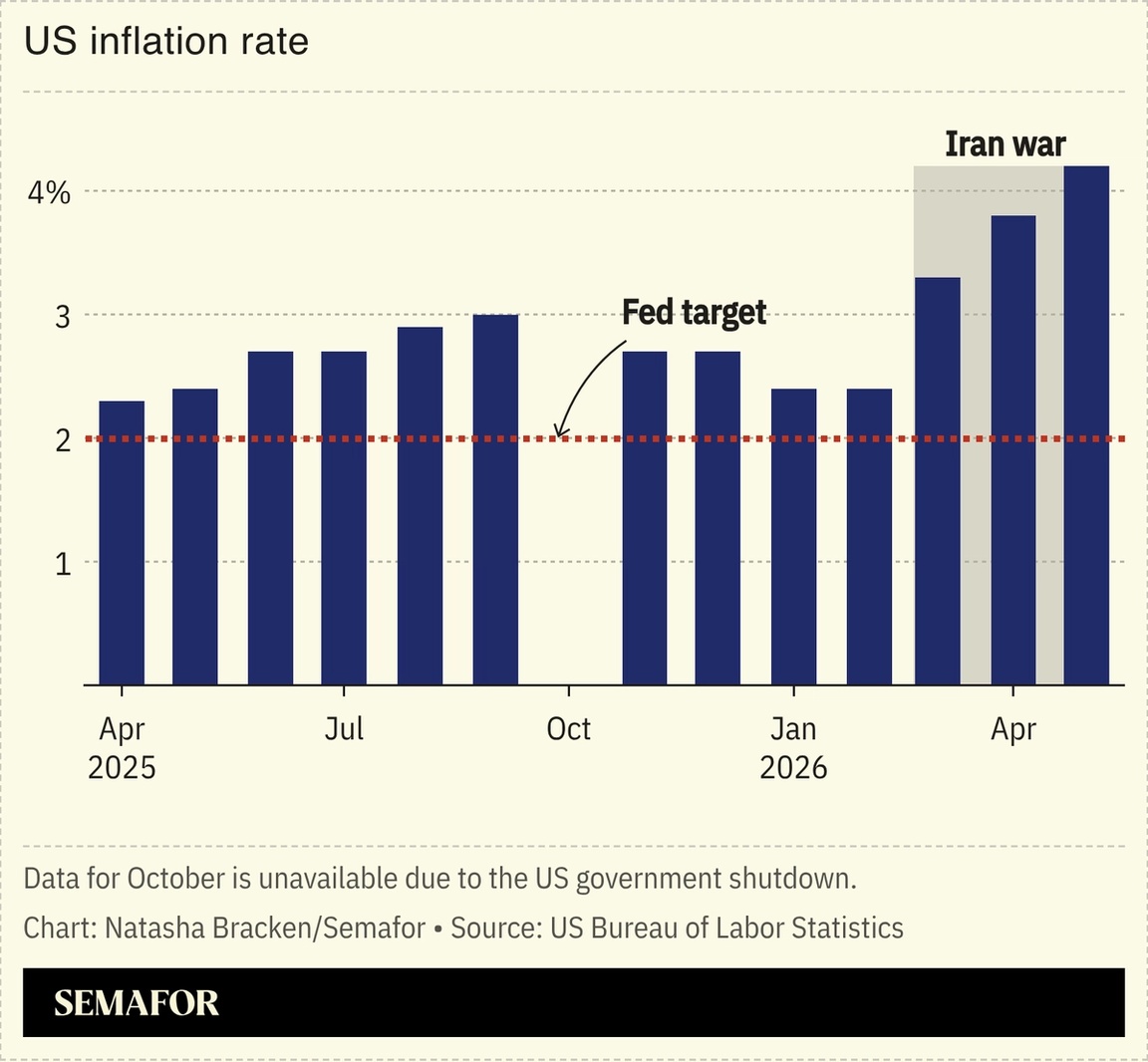 The US Federal Reserve is expected to keep interest rates steady today, in an early test for new chair Kevin Warsh, who faces pressure from President Donald Trump to ease borrowing costs. Trump has persistently called for the Fed to cut rates, but the Iran war has upended energy markets, with gasoline prices surging and electricity costs in the US expected to reach a record this summer, pushing inflation to a three-year high. May’s better-than-expected jobs report has added to calls for rate hikes, with betting markets predicting a rise soon. Though increasing rates is “the prudent thing to do,” Warsh will likely try to buy time, an expert told the Financial Times. |
|
Jair Bolsonaro’s son jailed |
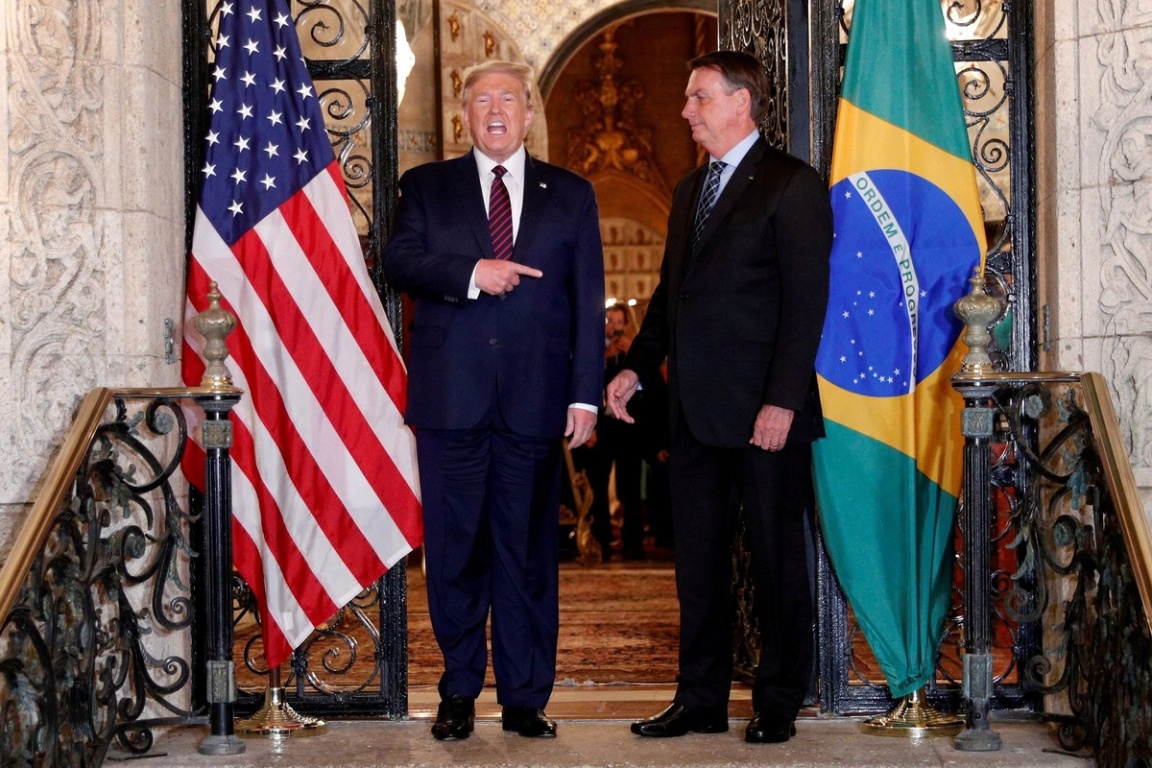 Trump and Jair Bolsonaro. Tom Brenner/File photo/Reuters Trump and Jair Bolsonaro. Tom Brenner/File photo/Reuters
Brazil’s Supreme Court sentenced the son of former President Jair Bolsonaro to four years in prison for calling on US President Donald Trump to interfere in his father’s coup plot trial last year. Trump previously alleged Bolsonaro was the victim of a “witch hunt,” threatening tariffs against Brazil in response. Leaders in parts of Latin America have condemned Trump for meddling in their politics, with some moving to protect their electoral systems. However, experts say they may also be using Trump as a cover to erode democratic norms: Mexico recently approved a law that authorizes the government to cancel elections over alleged foreign interference, a mechanism one critic said “allows those in power to stay in power.” |
|
Fears for record Ebola outbreak |
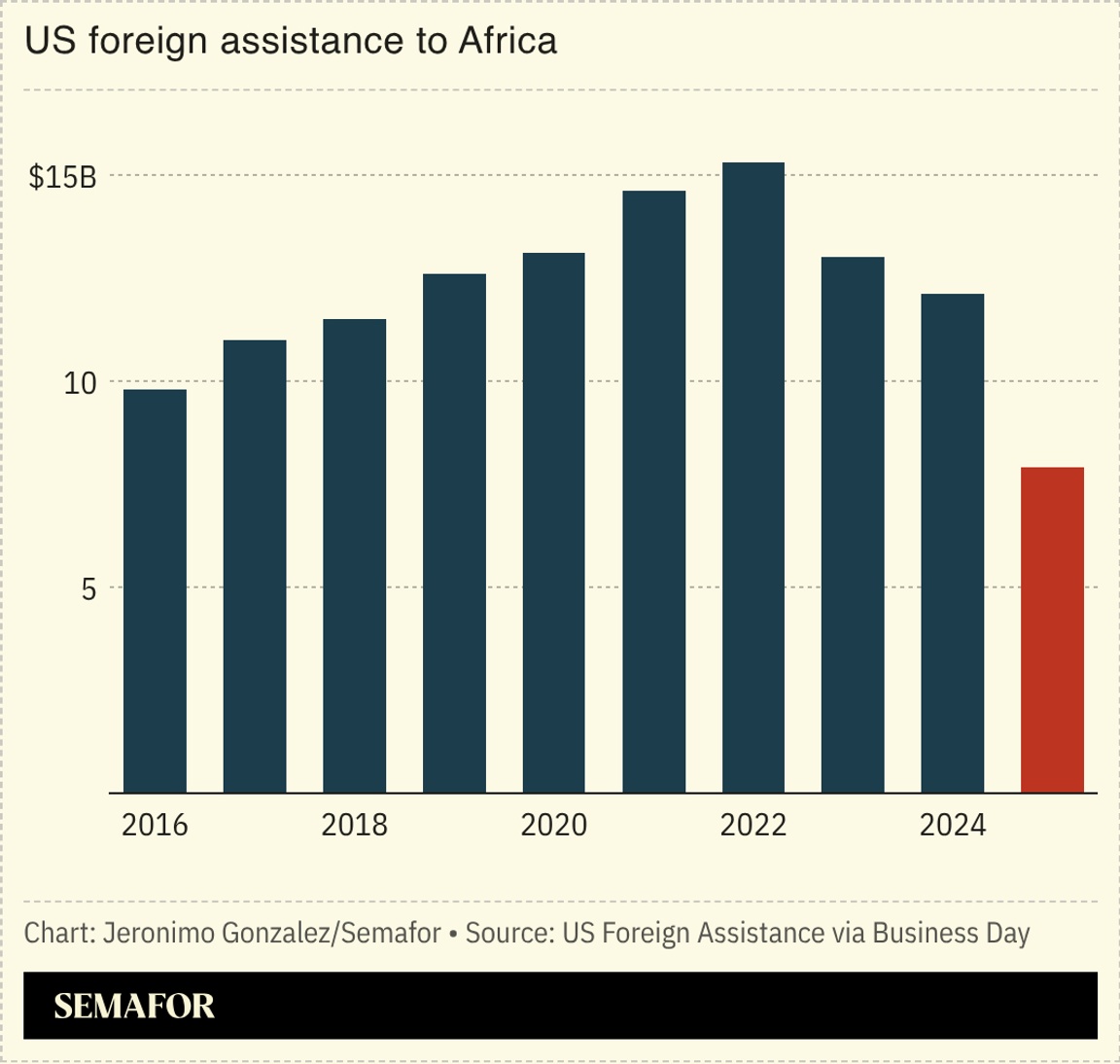 The head of Africa’s Centres for Disease Control and Prevention said the continent’s ongoing Ebola outbreak could be the worst ever, warning that tens of thousands of people who had contact with the infected have not been traced. Authorities have been playing catch-up since the outbreak was first recorded in the Democratic Republic of Congo, with healthcare workers grappling with widespread misinformation and a lack of medical equipment stemming from recent Western aid cuts. Experts fear restrictions to curb the outbreak could also have a devastating economic impact on some of the world’s poorest regions. “We were waiting for the high season, for holiday travellers,” a Congolese travel agent told The Guardian. “Now nothing.” |
|
EU, China spar over steel |
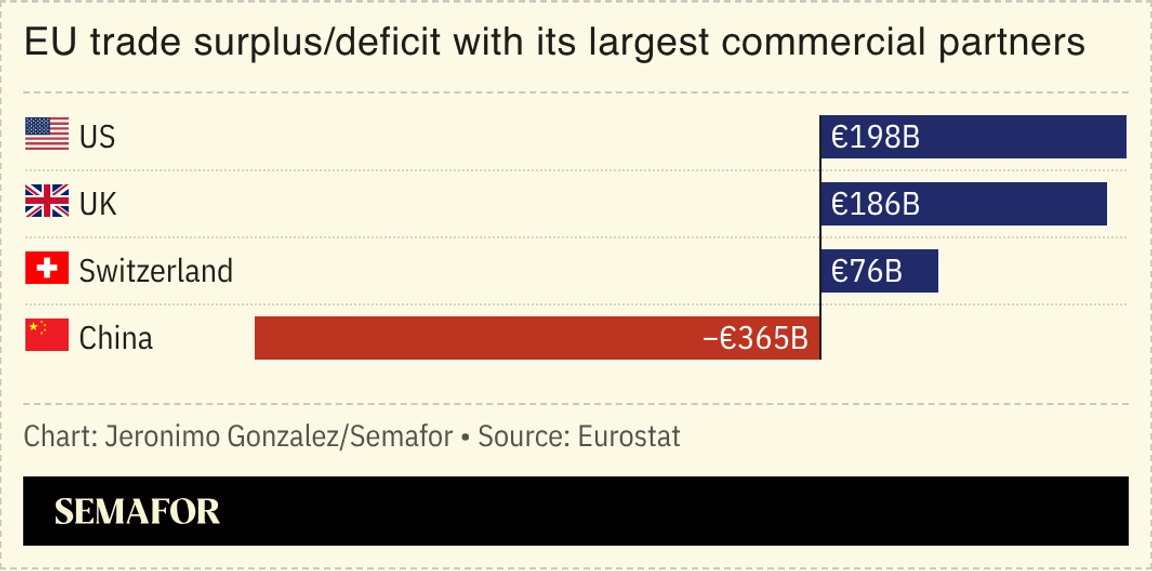 Chinese companies voiced growing frustration with an EU steel-import regime, threatening to open a new front in a widening trade dispute between Brussels and Beijing. The EU’s Carbon Border Adjustment Mechanism imposes levies on various imports that do not meet the same green standards faced by the bloc’s producers, but China’s dominant steel manufacturers complain that it has piled on hefty costs, the South China Morning Post reported. Ultimately, the CBAM may serve to deepen their trade ties by aligning Chinese firms with European regulations, but the row has ramped up tensions between the two powers: Brussels fears Beijing will hollow out European industry and China argues the EU is holding back its growing firms. |
|
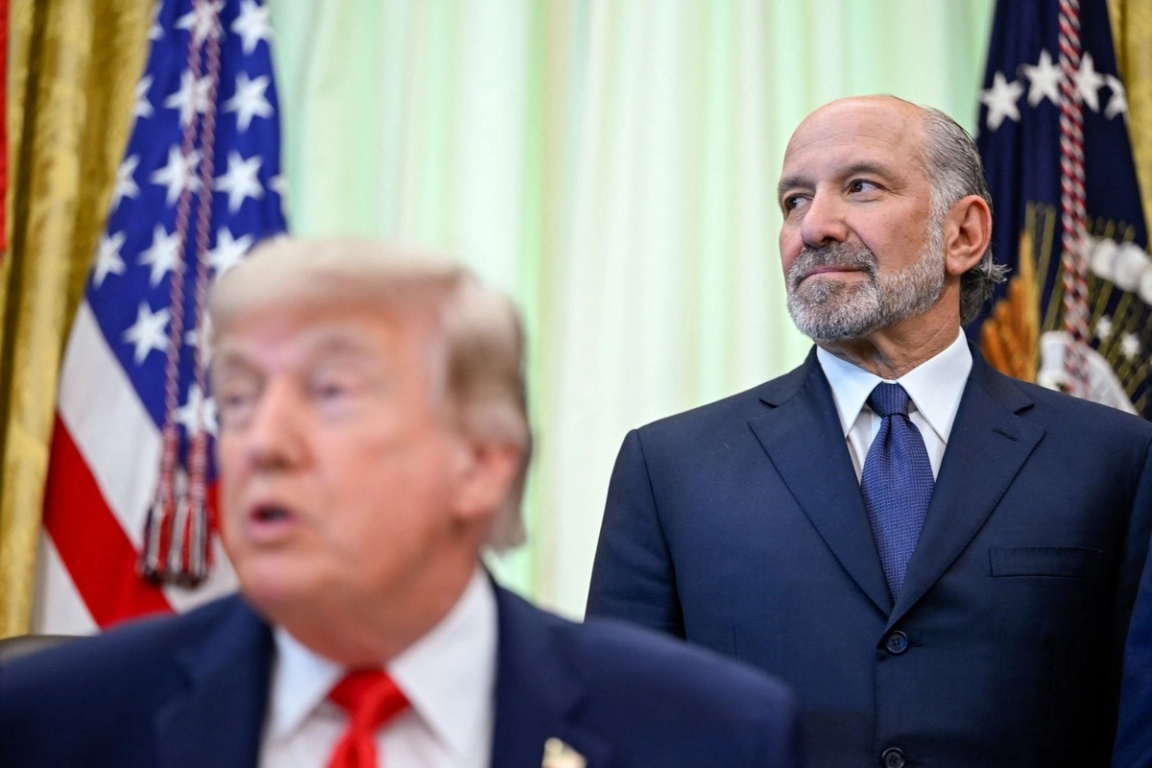 Trump and Howard Lutnick. Daniel Heuer/Reuters Trump and Howard Lutnick. Daniel Heuer/ReutersThe US government — until recently in favor of unleashing Silicon Valley’s AI ambitions — moved to play a greater role in regulation, diplomacy, and investment surrounding the technology. Trump administration officials weighed how to structure potential government stakes in AI companies before Washington imposed export curbs on Anthropic this month, Semafor reported, while the Financial Times said the US commerce secretary discussed creating a “trusted partner” program with European nations to ensure allies could have access to cutting-edge US models. The Anthropic decision, meanwhile, has left executives at AI firms, including OpenAI, worried about the precedent that has been set, according to The Information — in particular limiting the ability of top talent from overseas to work in the sector. |
|
 Live from the Côte d’Azur — starting next Monday, Semafor will be on the ground at Cannes bringing you the sharpest insights from packed panels, late-night parties, and exclusive tête-à-têtes on luxury yachts. Semafor is bringing back its popular Semafor Cannes newsletter, a free pop-up briefing covering the key moments shaping media and marketing’s biggest gathering. Whether you’re there in person or following from afar, consider it your insider guide to everything that matters. Subscribe to Semafor Cannes. |
|
Fears grow over health AI |
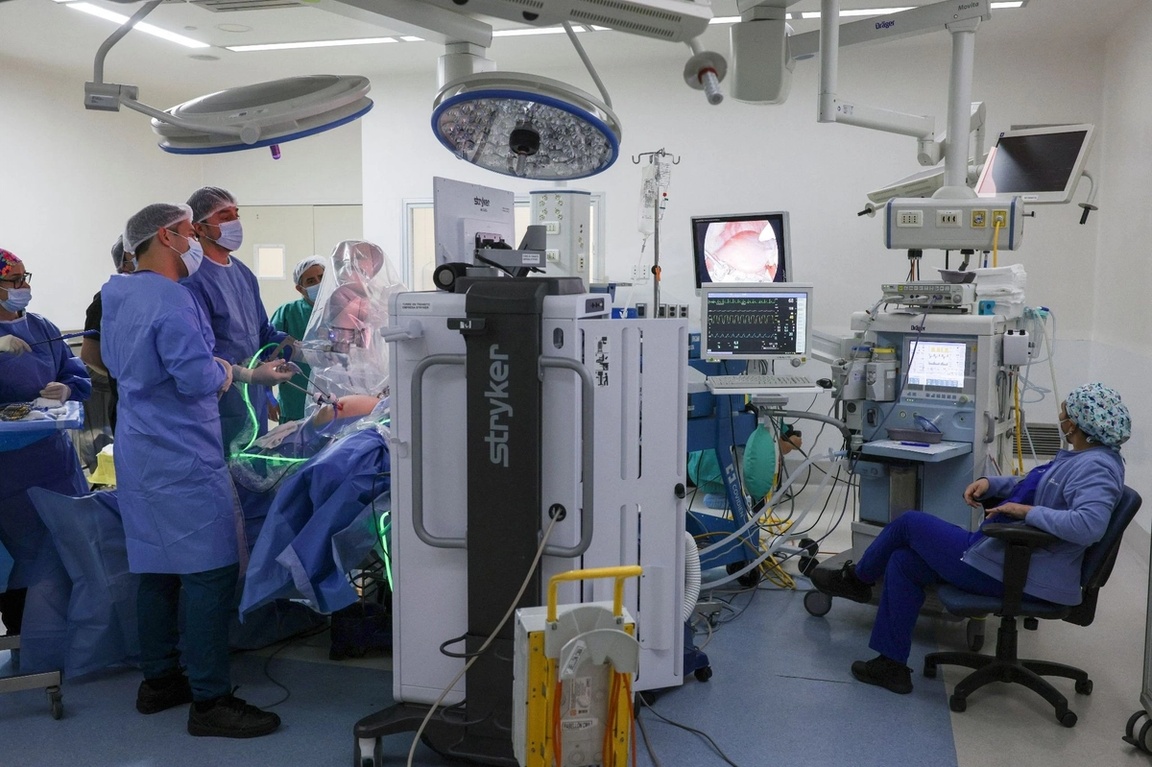 Pablo Sanhueza/Reuters Pablo Sanhueza/ReutersA Brazilian woman’s family blamed her death on an AI medical triage system, hinting at a structural obstacle with the technology’s introduction of AI into critical infrastructure. Her family alleges the state-run system wrongly downgraded the severity of the 32-year-old’s symptoms. The case exposes concerns about the potential for AI to make lethal mistakes in healthcare systems. In response, analysts and activists have called for a global agreement on how the technology is controlled, fearing that unrestrained development could lead governments to surrender critical decisions. “The time to prepare for this is now,” the Financial Times’ chief economics commentator warned. “If we do not act, it will be far too late.” |
|
Messi mania grips World Cup |
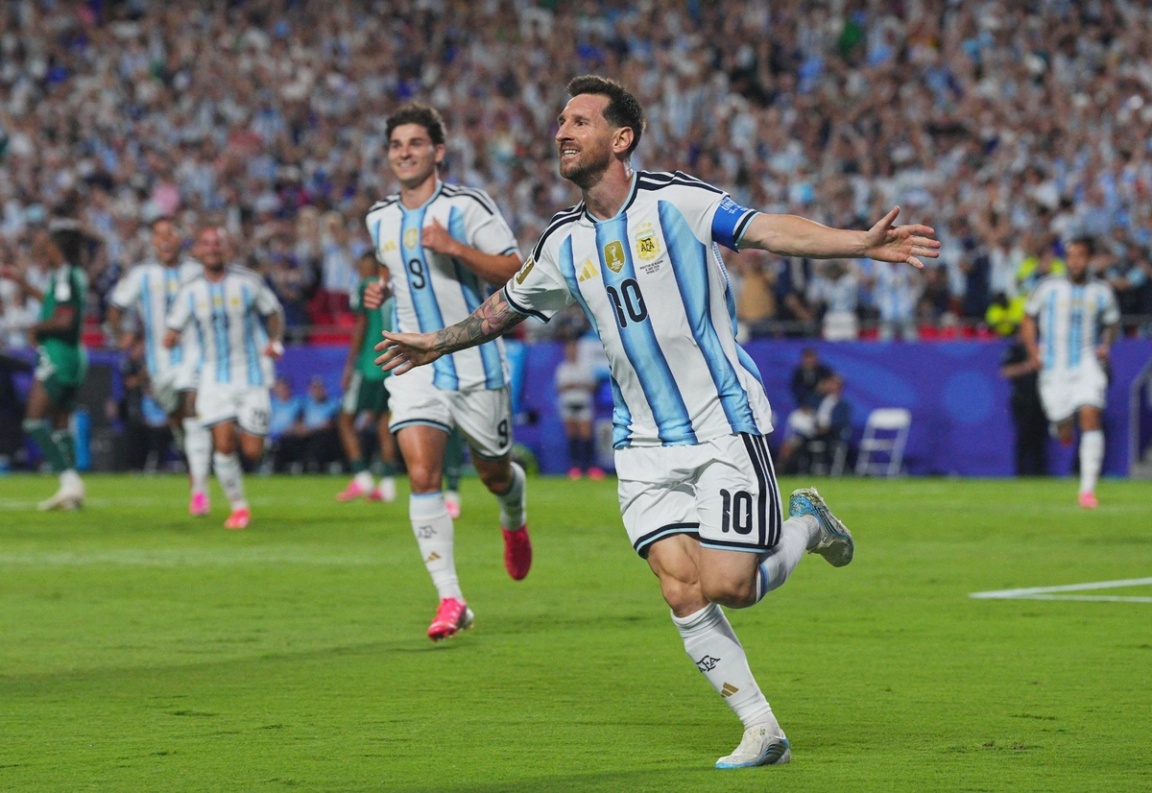 Jay Biggerstaff/IMAGN IMAGES via Reuters Jay Biggerstaff/IMAGN IMAGES via ReutersArgentina’s Lionel Messi became the joint-top scorer in the history of the men’s World Cup, after netting a hat-trick against Algeria, feeding the legend of the player many consider soccer’s greatest ever. Messi-mania has gripped World Cup fans since the diminutive forward won the 2022 edition held in Qatar: Thousands of supporters as far afield as Bangladesh celebrated his latest prowess. Many in his home country are desperately trying to get hold of an elusive golden Messi sticker made by album-maker Panini, leading to a burgeoning black market for the rare find. “Just think about it,” a 14-year-old Argentinian fan said. “It’s Messi’s last World Cup. It’s gold. I mean, it’s the most valuable thing there is.” |
|
 - The US president visits the Palace of Versailles with his French counterpart.
- Germany and Poland are due to sign a defense treaty.
- The Raindance Film Festival, an annual celebration of independent cinema, kicks off in London.
|
|
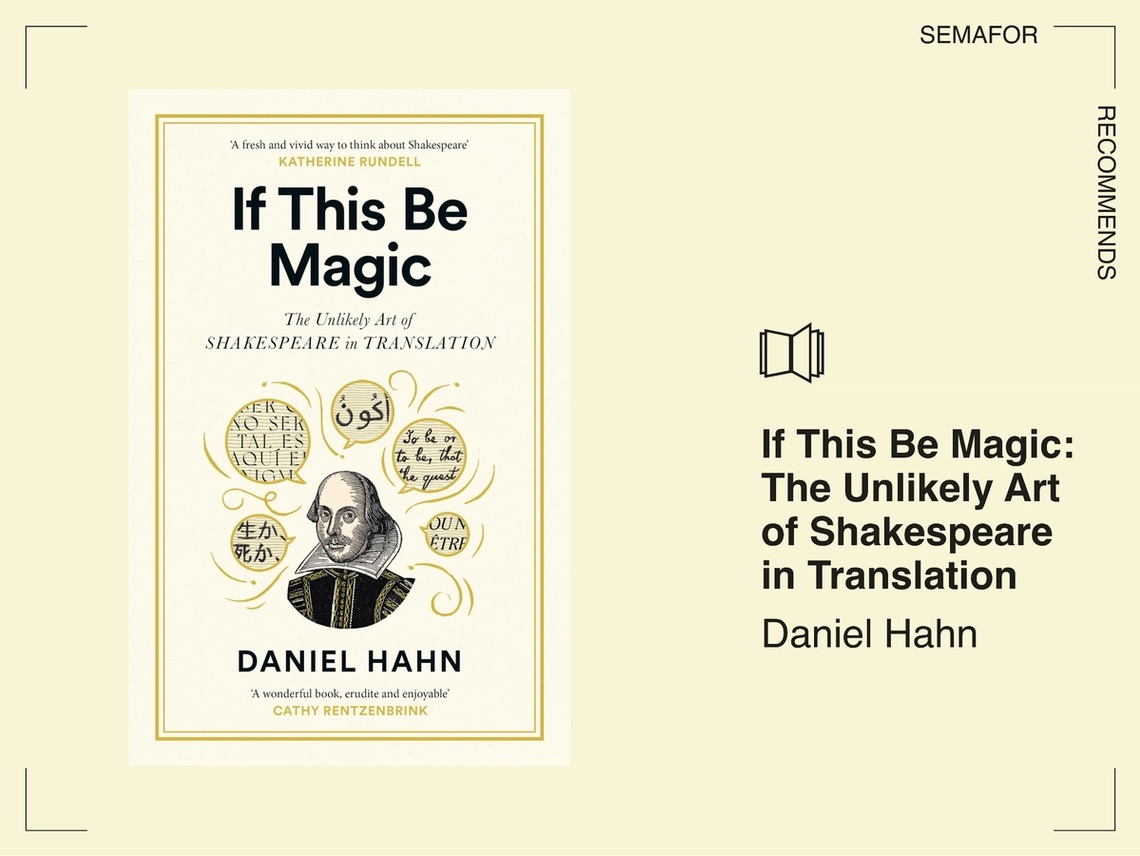 If This Be Magic: The Unlikely Art of Shakespeare in Translation by Daniel Hahn. Jorge Luis Borges said that Shakespeare could not be translated, but Hahn argues otherwise in what the Guardian describes as a “superbly diverting” book. Hahn argues that “Shakespeare with every word changed can still be great, and can remain Shakespeare.” Each chapter addresses the challenges translators face, whether being faithful to verse or how to make puns work between languages. Buy If This Be Magic from your local bookstore. |
|
| |