| | The US and Iran agree to halt hostilities, bankers remain upbeat on the global economy, China target͏ ͏ ͏ ͏ ͏ ͏ |
| |  Beirut Beirut | Kampala | San Francisco |
 | Flagship |  |
| |
|
The World Today | 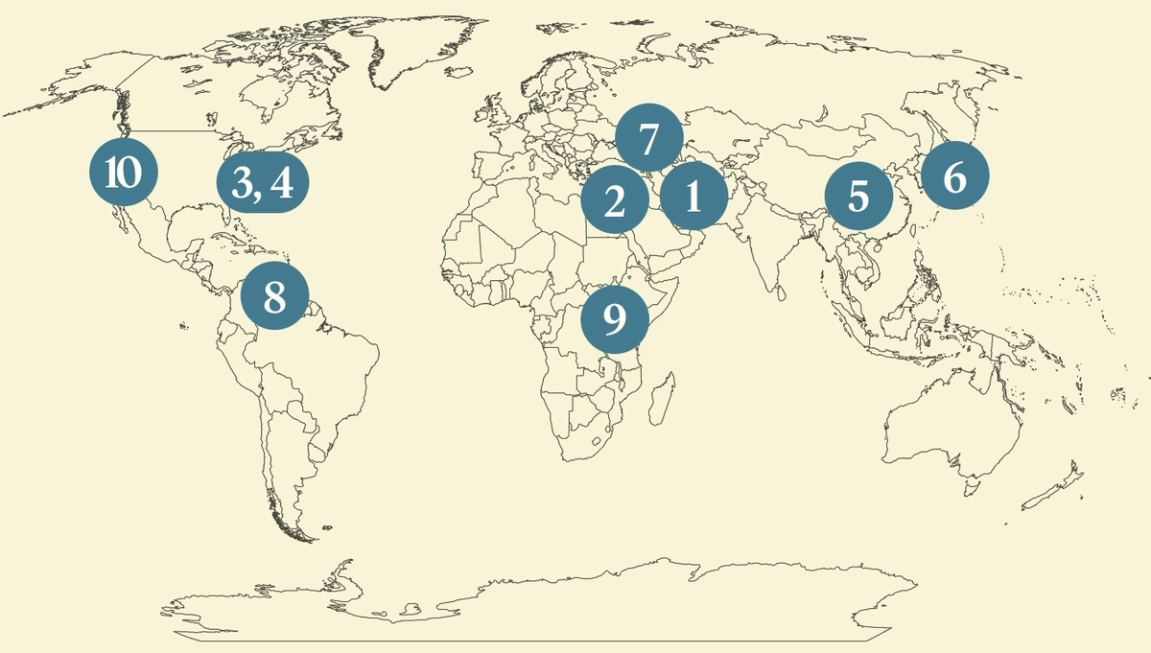 - US says Iran truce back on
- Lebanon deal criticized
- Growth forecasts upbeat
- Investors’ AI debt risks
- China nearing US in AI race
- China targets Japan firms
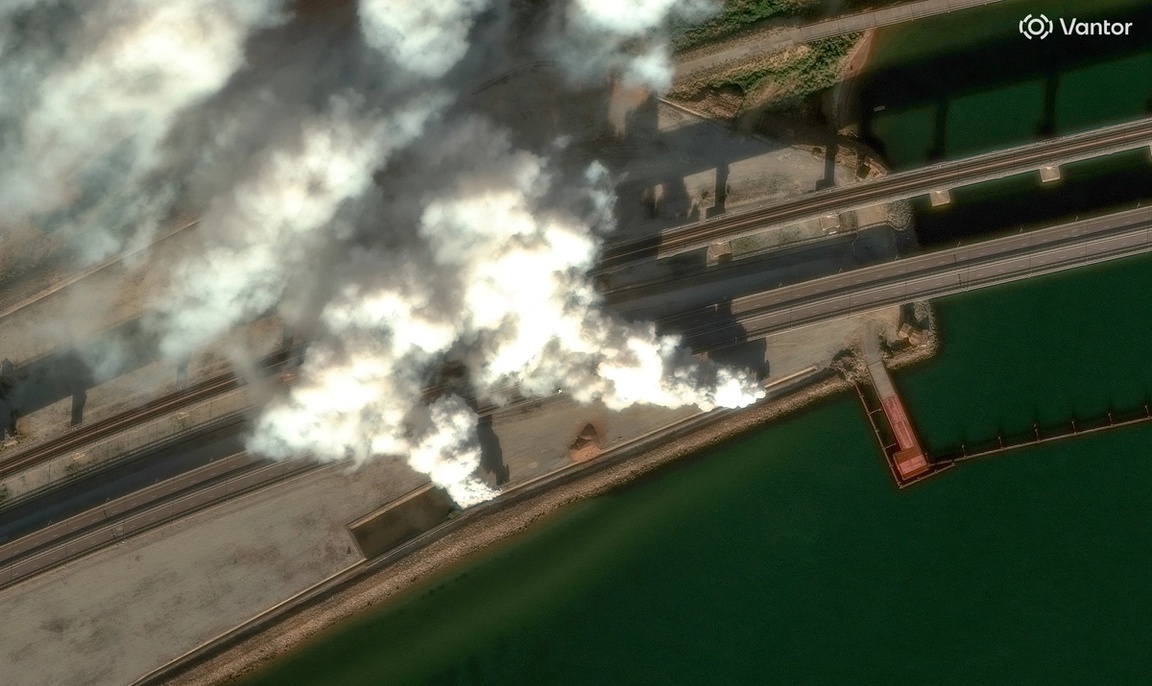
- Crimea threat to Putin
- Caracas quake response
- Uganda media crackdown
- FIFA’s sponsor misfire
 The London Review of Substacks, and a classic Mel Brooks movie for his 100th birthday.
|
|
US seeks to quell Iran truce jitters |
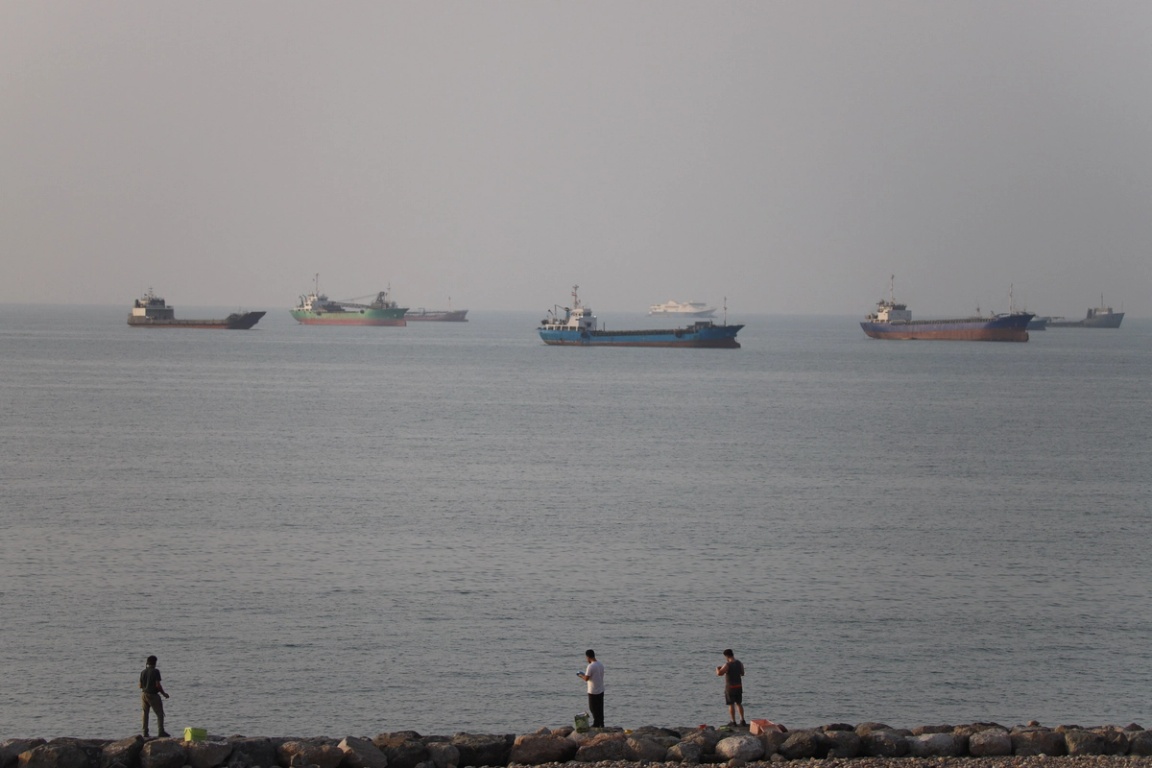 Amirhosein Khorgooi/ISNA/via WANA/Reuters Amirhosein Khorgooi/ISNA/via WANA/ReutersThe US said it and Iran agreed to halt hostilities, although Tehran had yet to confirm. The almost two-week-old truce has been under persistent strain, with the latest bout of attacks beginning after an Iranian projectile hit a cargo ship on Thursday, prompting strikes by the US, and then Tehran hitting Washington’s Gulf allies. Iran’s negotiation strategy was threatened by the announcement last week of a route through the Strait of Hormuz that would only pass through Omani waters, The New York Times reported, though Muscat may ultimately try to charge vessels to use the waterway too. Tehran wants the war to end, but wants leverage over the strait more, and is willing to risk the ceasefire to maintain it. |
|
Fury over Lebanon ceasefire deal |
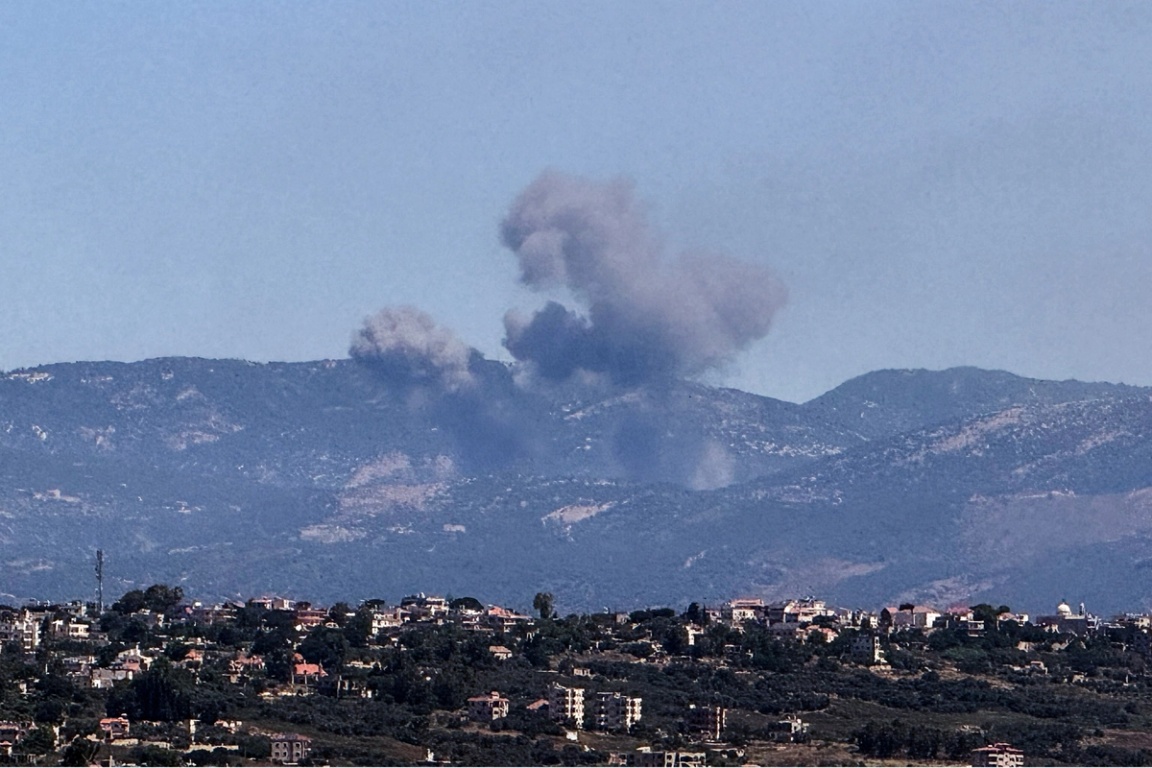 Avi Ohayon/Reuters Avi Ohayon/ReutersNo one seems happy with the Israel-Lebanon ceasefire signed on Friday, which is already facing challenges. Under the agreement, the Lebanese army would gradually assume control over the country’s territory and non-state armed groups such as Hezbollah would be dismantled. The Lebanese parliament speaker, a Hezbollah ally, said it would not pass, calling it an “agreement of diktats,” while a hard-right Israeli minister called it a “big mistake.” Lebanese citizens protested in the capital, waving Hezbollah flags and denouncing the government. Israel-Lebanon fighting also threatens to undermine the wider US-Iran truce, although it needs little undermining: Iran’s hard-line preachers, usually loyal to the government, have been leading protests against the deal, Radio Free Europe reported. |
|
Global growth forecasts upbeat |
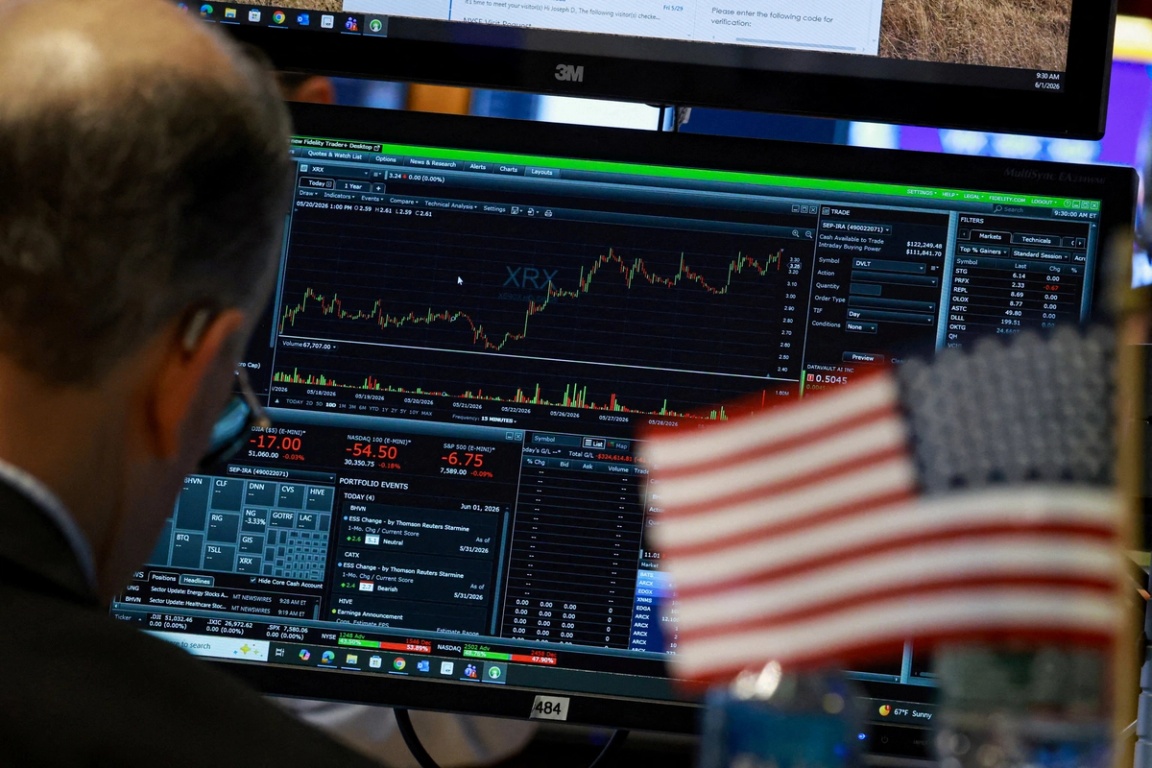 Brendan McDermid/File Photo/Reuters Brendan McDermid/File Photo/ReutersInvestment banks are growing increasingly upbeat about the prospects for the global economy following the US-Iran truce. Though beset by challenges, the interim deal — alongside a dampening of trade-war rhetoric and a surge in tech capex — is laying “the foundation for a period of strong and balanced global growth,” JPMorgan’s chief economist wrote in a note to clients. Goldman Sachs, meanwhile, lowered its risk of a US recession in the next 12 months and noted that Asia’s “growth prospects are brightening again.” Still, Barclays analysts warned that while falling oil prices would curb inflation, booming chip prices are pulling in the opposite direction. |
|
Debt binge heightens stock volatility |
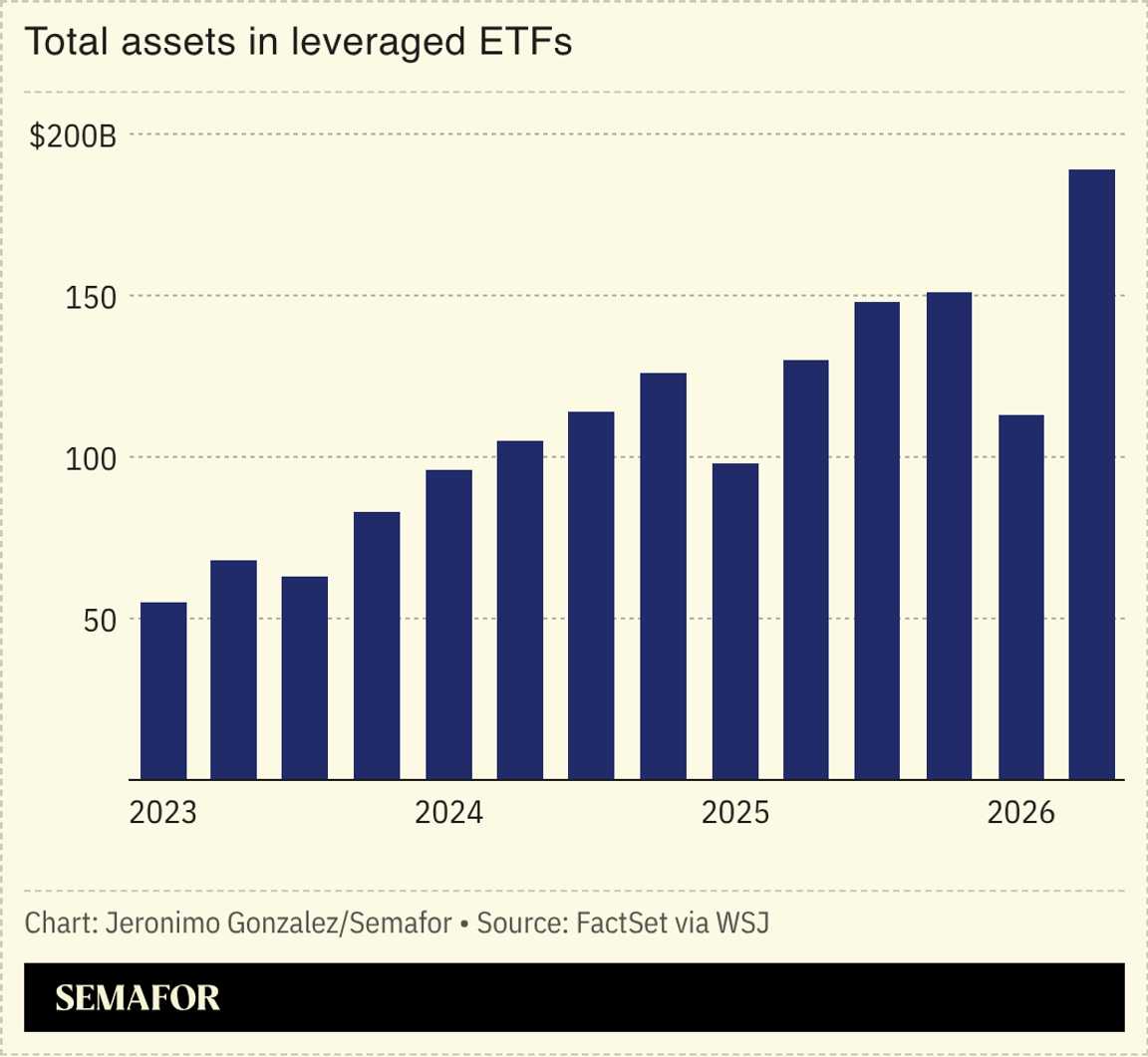 US investors are borrowing record amounts of money to make ever-bigger bets on the AI buildout, increasing their exposure and boosting the volatility of the market. The $1.4 trillion in margin debt, along with growth in high-risk exchange-traded funds that amplify the moves of underlying stocks, exacerbated swings in South Korea’s market that spilled into US trading last week. The situation is risky, analysts told The Wall Street Journal: Leveraged ETFs supercharge gains in a bull market, but “what goes up fast can crash down even faster.” Last week’s tech selloff suggests investors are worried, but the announcement of a $1 trillion AI investment fund by South Korea’s government shows Seoul, like many other countries and Big Tech firms, believes the AI chip boom will continue. |
|
US AI crackdown ‘self-destructive’ |
 Dado Ruvic/Illustration/File Photo/Reuters Dado Ruvic/Illustration/File Photo/ReutersThe US crackdown on Anthropic is mimicking China’s playbook, analysts argued. The Chinese ecommerce giant Alibaba’s 2020 IPO, and cofounder Jack Ma’s subsequent comments about Beijing’s regulators, led to a backlash that shattered trust between the tech industry and the government, two experts wrote in The New York Times. Washington’s ongoing row with Anthropic could have similar repercussions for the US AI industry: “Self-destructive American actions, not Chinese competition, may be the most significant threat.” While the White House has lifted its block on Anthropic’s most powerful models, Chinese AI firms are catching up in cybersecurity, and increasingly do not see themselves as racing for frontier capabilities, but rather for public adoption of AI, The Washington Post reported. |
|
China targets Japanese companies |
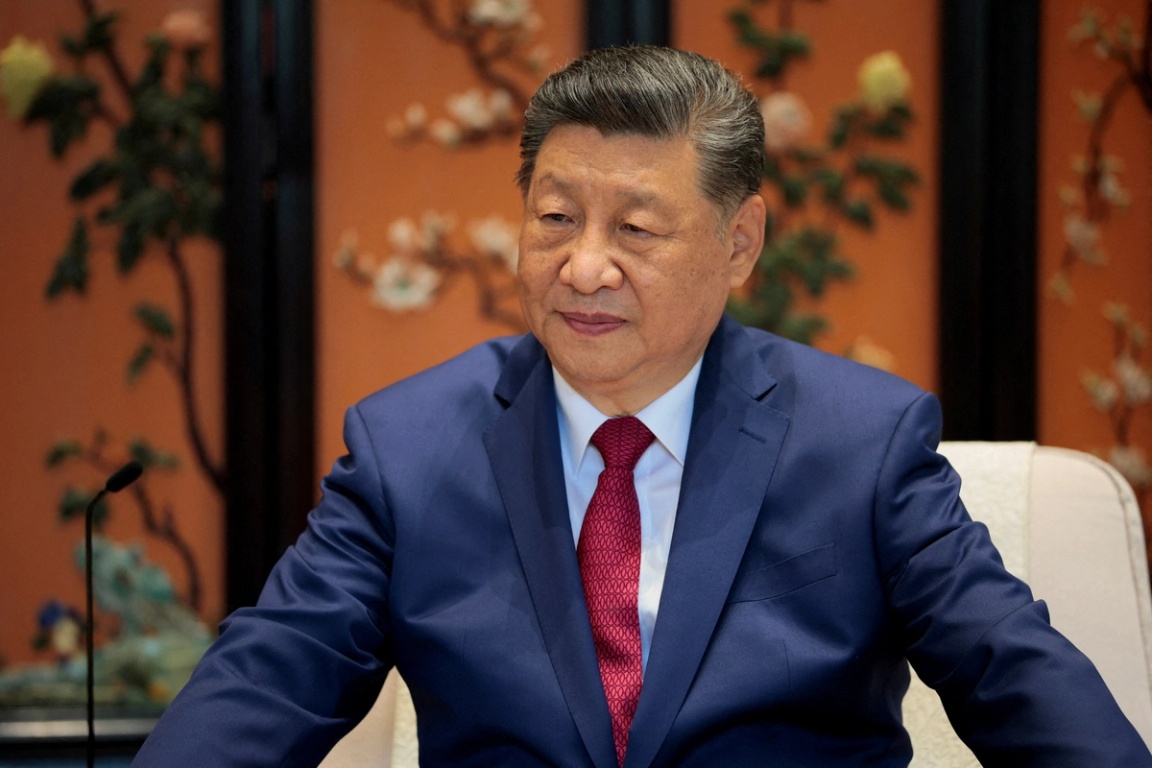 Evan Vucci/Pool/File Photo/Reuters Evan Vucci/Pool/File Photo/ReutersChina added 20 Japanese companies to its export-control list, citing fears over Japan’s “new-style militarism,” marking the latest sign of worsening ties between Beijing and other regional powers. The news came as Australia and Vanuatu signed a long-awaited security agreement that bans any country — read, China — from building military bases on the South Pacific island nation, a deal that drew condemnation in Beijing. However, Chinese officials believe they are on track to reform international governance in their favor, with a new white paper pointing to China’s belief that it can outmuscle the US by boosting ties with Global South nations. “Beijing’s dismissals of warnings that it seeks to build a new world order are a red herring,” the Jamestown think tank wrote. |
|
Crimea loss would test Putin |
|
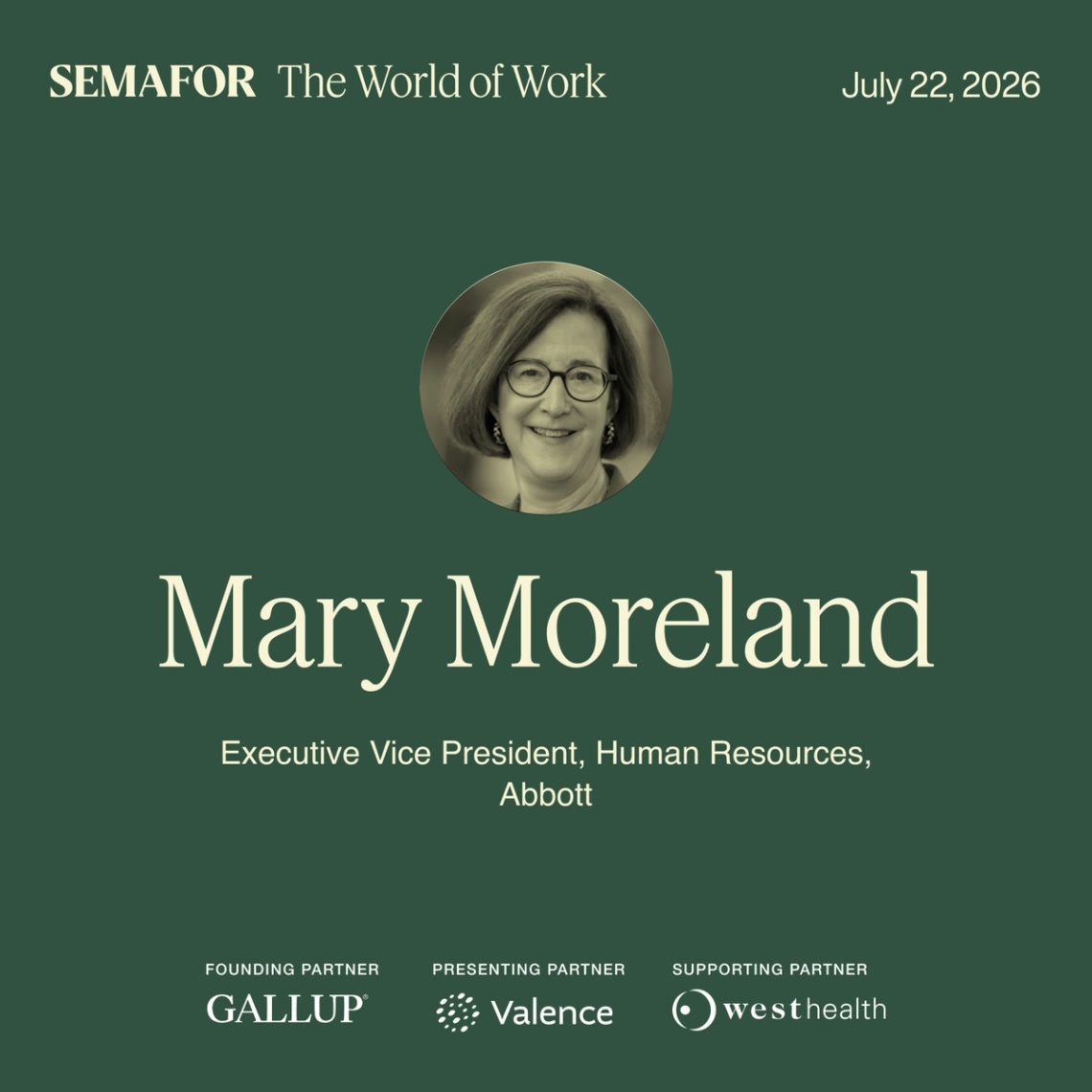 On Wednesday, July 22, Mary Moreland, Executive Vice President of Human Resources at Abbott, will join Semafor’s The World of Work in Washington, DC to unpack how institutions are adapting and thriving in an increasingly fragmented economy. As companies face rapid technological change, economic uncertainty, and shifting workforce expectations, leaders are rethinking performance, trust, and long-term success. To explore how AI adoption, workforce transformation, and evolving leadership demands are reshaping the future of work, Semafor editors will sit down with business executives and workplace innovators including Katy George, Corporate Vice President, Workforce Transformation, Microsoft; Claire MacIntyre, Chief People Officer, Sam’s Club; Allison Peek Bebo, Chief Human Resources Officer, Pearson; and more. July 22 | Washington, DC | Request Invite |
|
Earthquakes expose Venezuela’s failures |
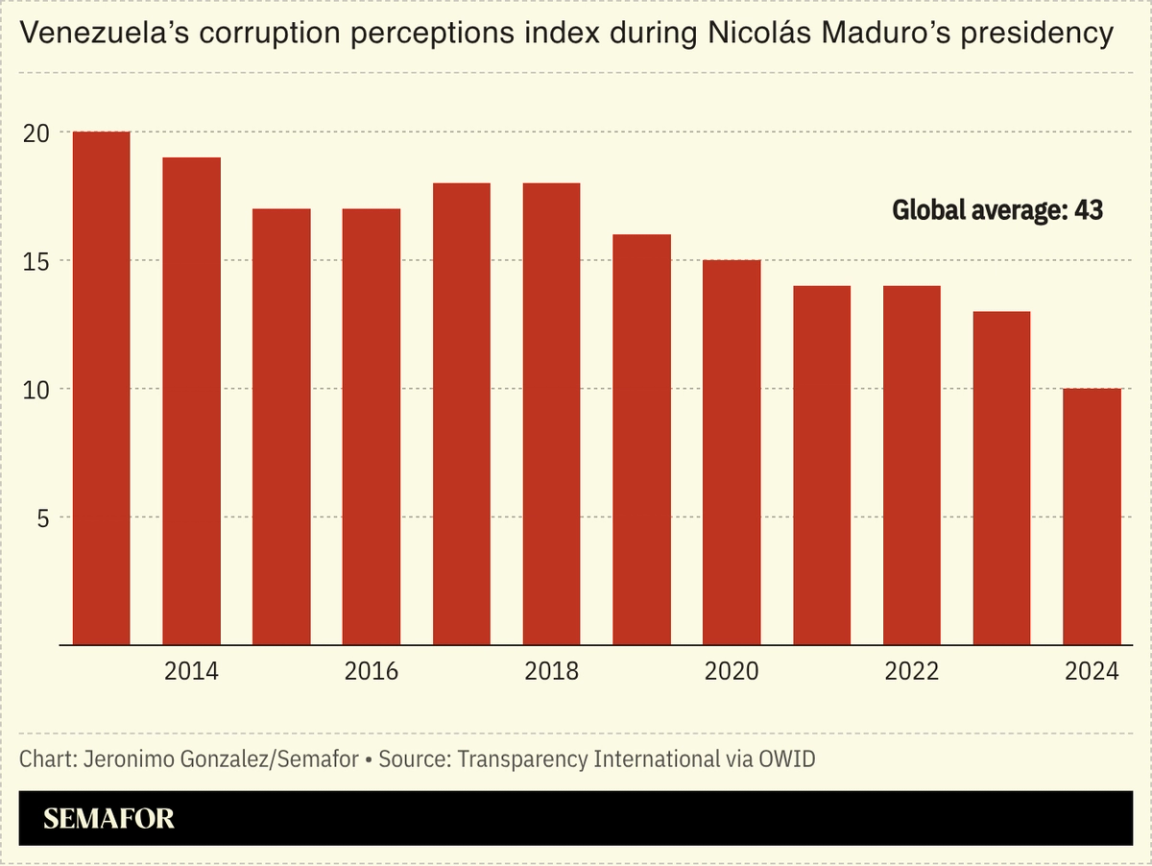 Tens of thousands of people are still missing in Venezuela after devastating earthquakes last week, highlighting the government’s feeble response. Years of corruption and plummeting economic growth have hollowed out the Venezuelan state, leaving rescue services overwhelmed by the scale of the crisis. Though foreign countries have pledged help, much more is needed; around eight million people required humanitarian assistance even before the disaster. Analysts suggest the earthquakes could wipe out almost 6% of Venezuela’s GDP, which is already down around 70% from its 2010 peak. “The disaster has revealed the consequences of more than two decades of institutional degradation,” an expert on Venezuela said. |
|
Uganda clamps down on media |
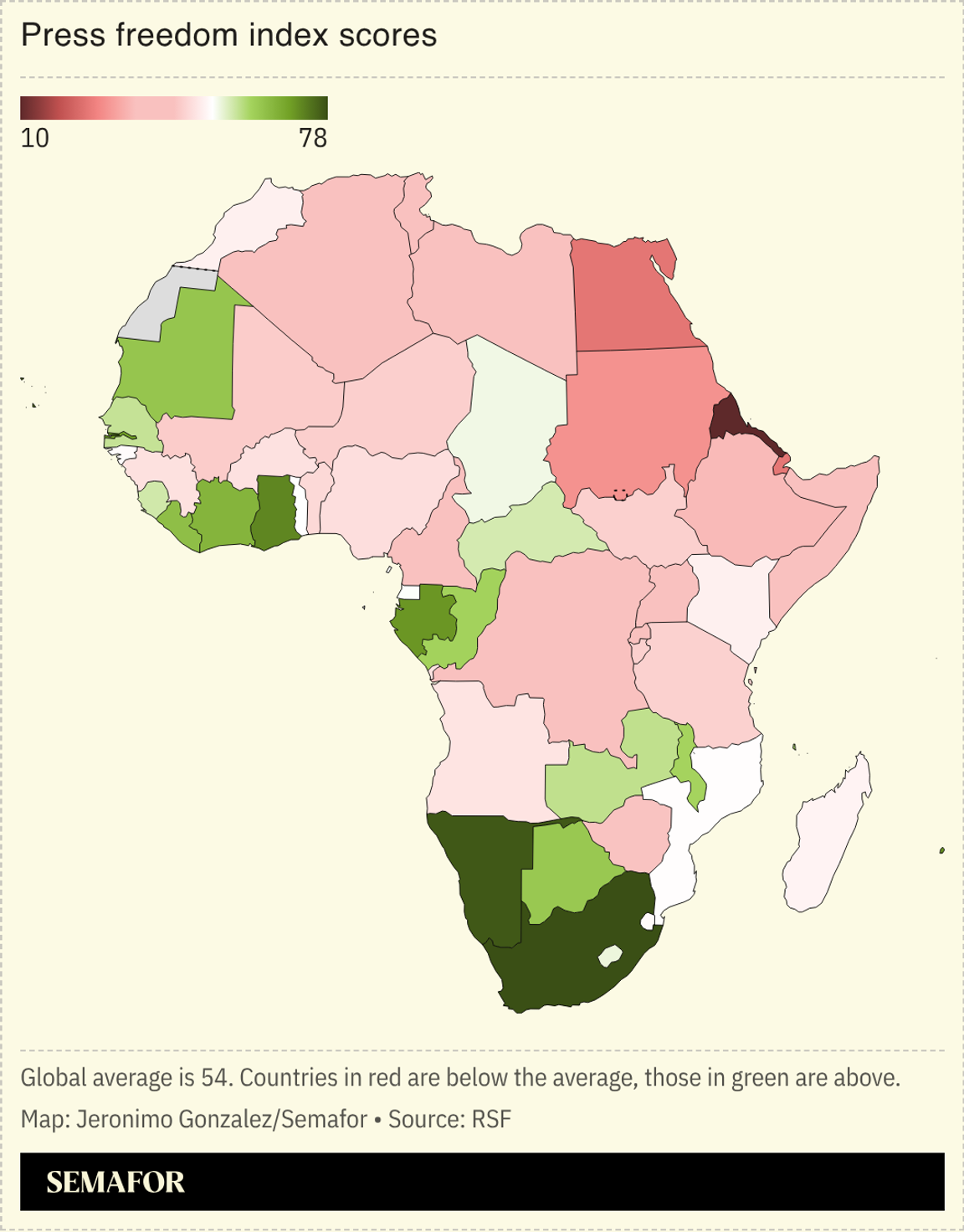 The leader of Uganda’s military — who is also the son of the country’s long-ruling dictator — ordered the closure of two of its biggest media outlets, the latest sign of democratic erosion in Africa. Muhoozi Kainerugaba, who has been touted as a possible successor to his octogenarian father, said he did not “believe in a free press,” adding that the newspaper and broadcaster he shut down would only be allowed to reopen with his permission. Press freedoms in the continent are already weak, with most nations ranking in the lower half of an influential press freedoms index, while numerous recent coups have contributed to a weakening of norms in Africa, where only six countries are considered a democracy. |
|
FIFA’s branding ban backfires |
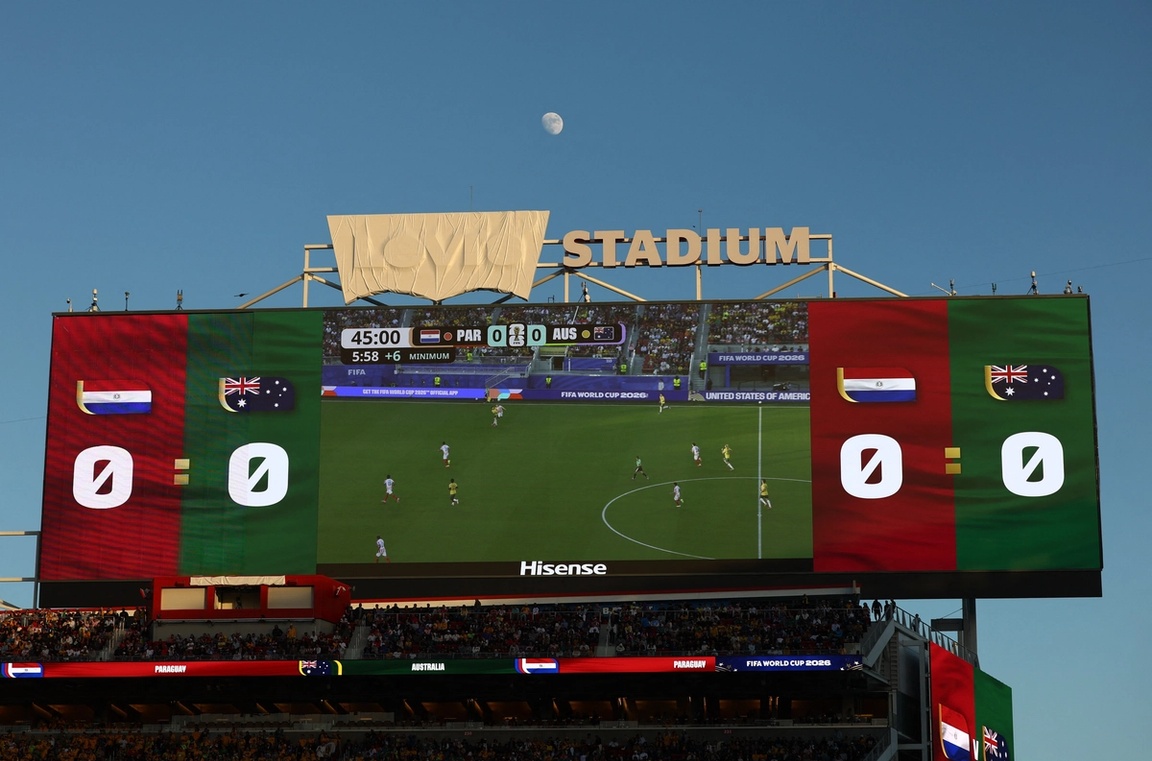 Eloisa Lopez/Reuters Eloisa Lopez/ReutersFIFA’s ban on stadium branding — except for its corporate partners — may have backfired. Soccer’s governing body insisted that Levi’s Stadium California be temporarily renamed for the World Cup, and that signs showing the jeansmaker’s name be covered. Levi’s capitalized by calling the facility the “[redacted] stadium” and covering its logo at stores worldwide, going viral in the process, The Wall Street Journal reported. Other brands, such as Gillette and Heinz, have done the same — the latter now proudly sells “the Unofficial Stadium Ketchup.” Sports sponsors have missed the target in the past: Nike-sponsored Michael Jordan was ordered to wear a Reebok jacket to accept the 1992 Olympic gold medal, but draped himself in the US flag to hide Reebok’s logo. |
|
 - Andy Burnham, Britain’s likely next Prime Minister, is due to make a speech outlining his economic vision for the country.
- China’s commerce minister visits Brussels for talks with the European Commission.
- The Great American State Fair opens on the National Mall in Washington, DC, as part of celebrations marking the 250th anniversary of the US.
|
|
 Meet the new boss, same as the old boss Britain is churning through prime ministers at a remarkable rate: One wag suggested that, soon, there will be more ex-PMs at the annual Remembrance Day service than there are surviving World War II veterans. Some people think it is because Britain is becoming ungovernable, that its voters want contradictory things:; both lower taxes and more spending, more growth and less building. “I do not find this convincing,” says the politics writer Ian Leslie. The real answer, he says, is that the last five or so premiers have been bad at the job. Not “bad” in the sense that they make decisions Leslie disagrees with. “I’m talking about something narrower,” he says. “The day-to-day, month-to-month ability to do the job.” Things like appointing good ministers, setting directions for those ministers, making tough decisions; they lacked a sense of mission, so simply reacted to events rather than steering them. The (likely) next one, Andy Burnham, has charm, says Leslie. But he has no defined policy agenda beyond generalities and sounds “startlingly vacuous” when pressed on details. “If he becomes prime minister he will be very unpopular within a year,” says Leslie. “And on a Remembrance Sunday in the not-very-distant future, the line of former prime ministers will lengthen once again.” Warp speed In 2020, when the pandemic was raging, there was “a sense of hopelessness that any effective drug or vaccine would become available anytime soon,” the science writer Saloni Dattani recalls. Most previous vaccines had taken eight to 12 years to produce, and people assumed similar timelines. Even the most optimistic expected it to be at least 18 months. Dattani herself was more bullish: She wrote at the time that “vaccines would most likely arrive within a year of the beginning of the pandemic.” In the event, even her forecast “was, if anything, slightly too pessimistic.” The first vaccines arrived in December, just nine months after the pandemic was declared. What caused the order-of-magnitude increase in speed? Partly prior research, says Dattani: There had been lots of work on coronaviruses. Partly good luck, because coronaviruses are relatively visible to the immune system. Partly the emergency situation — scientists worked very hard, it was easy to recruit for trials, and lots of regulatory hurdles were dropped. Governments committed in advance to buying billions of doses of any vaccine that succeeded. It saved millions of lives, but “it also reveals how slow the current system is,” says Dattani. “If clinical trials can be sped up so much without compromising on safety, we should find ways to reform them outside of pandemics.” Indian summer and I hate the heat India and China’s experiences after World War II were very different, says the history-focused writer David Oks. China was racked by civil war after a brutal Japanese invasion, and then entered the Great Leap Forward, which caused the largest famine in history. India left British rule largely peacefully, apart from a bout of extreme violence during Partition, and colonial institutions were carried over into the new state. “I suspect that if I’d been around in the year 1950,” says Oks, “it would have been obvious to me that India would succeed and China would not.” As late as 1985, prominent economists were making the same case. Obviously, that is not what happened. China became a manufacturing superpower; its GDP per capita, level with India’s in 1976, is now 2.5 times higher. Why? China liberalized its economy earlier, but that can’t be the whole story — India is still growing more slowly. The divergence, Oks argues, goes back to 1950. Mao Zedong forced modernization “at the barrel of a gun.” He never saw the country get rich, but he threw out all forms of traditional power, imposed mass literacy campaigns, and improved health care. “By 1980,” says Oks, “China was a socially modern country that just happened to be extraordinarily poor.” When the economy opened up, it had the human capital to industrialize. “India never underwent that transformation,” he says. “Its people were simply not prepared for industrial modernity in the way that China’s were.” — Tom Chivers |
|
| |