How to Stay Safe in the Summertime Heat
Climate change is leading to hotter temperatures. Here's how to protect yourself.
From Sierra magazine by Osha Gray Davidson |
This summer season is already shaping up to be one of the hottest on record. Last month, the World Meteorological Association confirmed the beginning of a new and possibly "super" El Niño period that will last into 2027.
This will mean record-breaking heat and other extreme weather around the world.
Here's advice on how best to prepare for and stay safe during these extreme conditions, as well as warning signs of heat illnesses and how to respond to them.
-
Avoid getting too hot in the first place. If you can, stay out of the sun during the hottest hours. Warnings often say to avoid outdoor activity between 10 a.m. and 2 p.m., when UV rays are most intense. But the hottest part of the day is often between 3 p.m. and 6 p.m. That's when you should avoid being out in the heat.
-
Dress for the heat. If you do go out in the heat, wear clothes that are breathable, loose, and light-colored. You'll want a hat to protect your head, preferably a wide-brimmed one that provides lots of shade. Remember to take frequent breaks from the heat and use sunscreen.
|
-
Age is a factor. Anyone can get overheated. But age plays a role when it comes to vulnerability to heat stress. Children under five are especially prone to overheating. On the other end of the spectrum, our bodies typically have more trouble staying cool at the age of 65 and older.
-
So are medical conditions. One reason heat is dangerous to older people is they are more likely to be on medications that make them prone to heat illness. But anyone taking certain medicines will have the same problems. Consult your doctor about medicine interactions with heat.
-
Use the Heat Index. You know the old saying, "It's not the heat, it's the humidity?" That's binary thinking. It's the heat and the humidity. That's why the Heat Index was created; it combines both humidity and temperature to address how our ability to cool off is affected by a combination of the two.
-
Think local. Don't rely on weather reports that give temperatures for a large area. Temperatures are hyperlocal and can vary widely (by 12°F or more) across neighboring zip codes. This is often a deadly relic of historical and ongoing racism, with predominantly white neighborhoods having more cooling features like shade trees and lawns and Black and brown neighborhoods lacking greenery.
-
Cool off at night. It's vital to cool off completely at night, especially during heat waves. That's because the negative effects of heat are cumulative. If you don't fully recover at night from daytime overheating, your tolerance to heat the next day is severely reduced.
-
Take it slowly. When traveling to a hotter location, your body needs to acclimate to the new conditions. Don't spend too much time out in the sun for the first day, and then gradually increase the amount of time you spend outside.
|
This article is from Sierra, the award-winning magazine of the Sierra Club. Sierra is dedicated to stories about exploring, protecting, and living in harmony with the natural world, covering everything from climate change to book reviews and profiles of local changemakers.
Get the latest environmental news from Sierra magazine twice a week! Sign up for News & Views to get breaking news, in-depth investigations, sustainable lifestyle tips, and more delivered straight to your inbox. Click to instantly subscribe.
|
How to spot, and respond to, the progression of heat illnesses.
Despite trying to do all the right things, you may fall prey to heat illness. It's important to recognize the symptoms so that you can act before causing long-term damage to your body.
-
Heat rash: This is the mildest form of heat illness. Sometimes called prickly heat, heat rash is caused by excessive sweating and clogged pores. The irritated skin develops what looks like red pimples. Treatment: Cool the skin using a wet cloth or take a cool shower or bath. Stay out of the heat until the rash goes away.
-
Heat cramps: These painful muscle spasms occur most frequently at night and indicate that sweating has caused you to lose body salts and minerals. Treatment: Drink clear juice or a sports drink with electrolytes. Rest for several hours after the cramps resolve before beginning any strenuous activity.
-
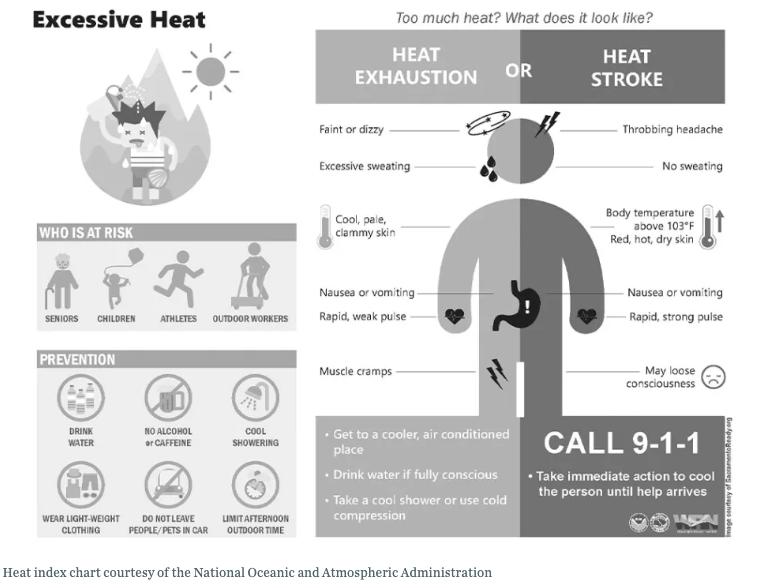
Heat exhaustion: This is a more serious sign of dehydration and loss of body salts. Symptoms vary but include extreme weakness, headache, nausea, vomiting, and, sometimes, fainting. Treatment: Begin by following the same treatments for cramps and rash: hydrating, resting, and cooling the skin. If you don't feel better within an hour, get medical attention immediately.
-
Heatstroke: The most serious form of heat illness, heatstroke is usually fatal if not treated immediately. There are no home treatments. Possible symptoms include the absence of sweating, mental confusion or delirium, hot and dry skin, a rapid and weak pulse, intense headache, uncontrollable muscle twitching, unconsciousness, and coma. Treatment: Seek medical attention, including by calling 911. Until medical help arrives, try to reduce body temperature.
We hope these tips help you and your loved ones stay cool!
Sierra Club |
This is an abbreviated version of the full article from Sierra magazine. You can read the full article here.
|
|
|
|
| Please consider making a donation to support all of the Sierra Club's vital work. Your gift right now will give us the resources we need to fight for the Arctic and our national monuments, protect the Endangered Species Act, and ensure clean air and water for everyone. |
|
|
|
|
|
|
|
|
|