
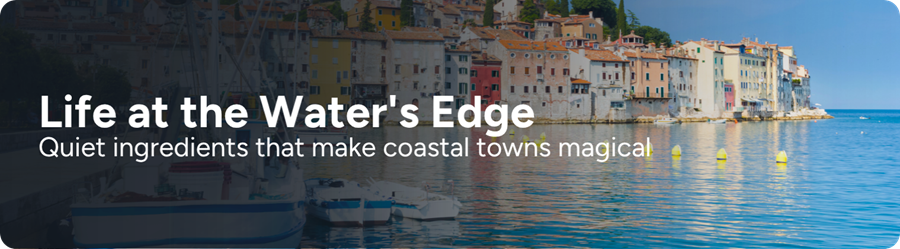
Not every town on the coast is a coastal town. Some merely happen to be near the sea. Others are shaped by it, built around it, sustained by it, smelling of it. The difference is usually felt within the first hour of arriving. Here's what tends to separate the ones worth going back to from the ones that may as well be anywhere.
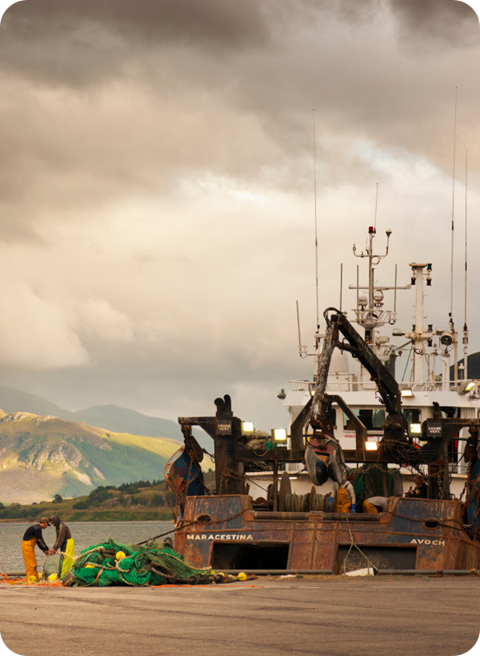
A working harbour
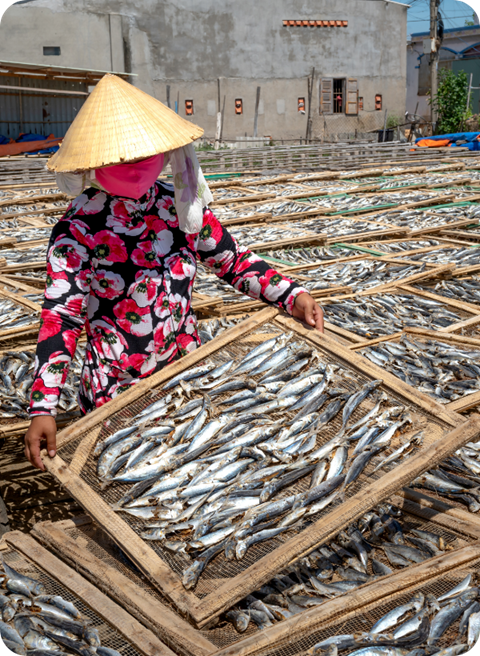
The most reliable sign of a great coastal town is a harbour that still does something. Not a marina full of superyachts – a working port where fishing boats come in at dawn, where the catch of the day is genuinely the catch of that day, where the waterfront smells like salt and diesel rather than sunscreen. Whitby in Yorkshire, Nazaré in Portugal, Essaouira in Morocco, the ones that kept their working waterfronts kept their soul with them.
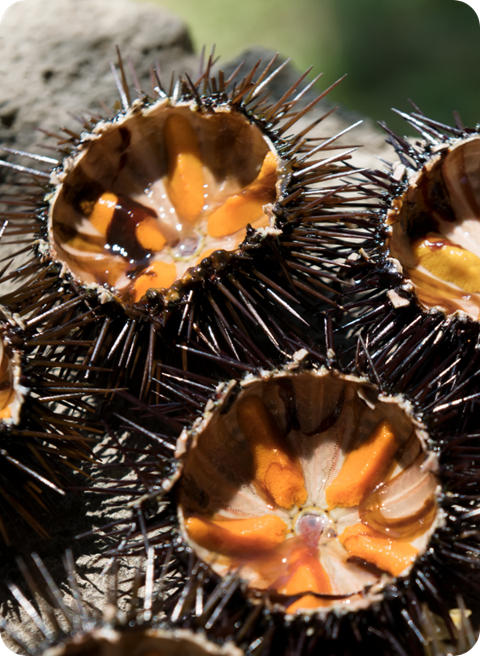
Food that couldn't exist anywhere else
The best coastal food is hyperlocal by necessity. Sea urchin eaten on a harbour wall in Sicily. Grilled fish at a plastic table in a Greek village. A bowl of bouillabaisse in Marseille, made from whatever came up in the nets that morning. Coastal food cultures develop over centuries of proximity to the water, and you can taste the difference between a town that still lives that way and one that serves the same menu as everywhere else.
A relationship with the tides
Great coastal towns are organised around the sea's schedule, not the other way around. The fishermen leave before dawn. The market opens when they return. The restaurants serve what arrived. There's a rhythm to it: one that visitors feel without necessarily being able to name it. Towns that have lost that rhythm, where the sea is backdrop rather than engine, feel different. Still beautiful, maybe, but slightly hollow when you look a little closer.

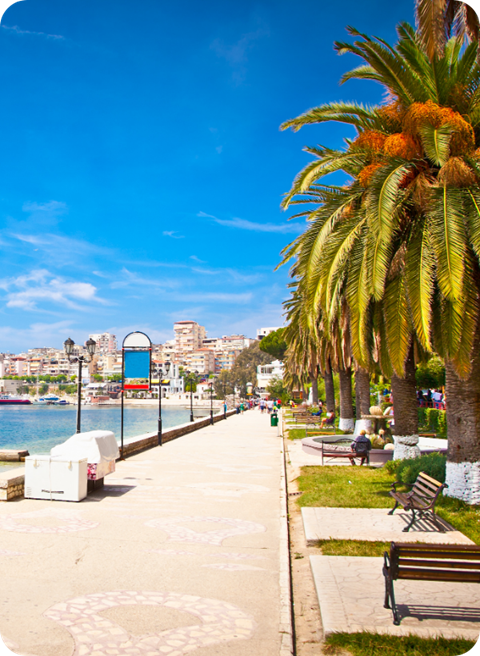
Streets that lead to water
In the best coastal towns, every street seems to point somewhere useful. A lane that ends at the harbour. Steps that descend to the beach. A promenade that connects one end of the town to the other without ever losing sight of the sea. The layout isn't accidental – these towns were built to move between land and water easily, because that movement was an economic necessity. The resulting walkability is one of the most pleasurable things about them.
A season, and an off-season
The coastal towns worth visiting know what they are when the tourists leave. Markets that carry on, restaurants that stay open, locals who reclaim their tables by the water. The off-season test is a good one – a town that empties entirely in October was probably only performing for visitors in August. The ones with genuine local life are different in shoulder season, but not absent.

Something older than tourism
The best ones have a reason to exist that predates the discovery of leisure. A natural harbour that sheltered trading ships for centuries. A fishery that sustained generations. A fortress built to protect something worth protecting. That history leaves traces: in the architecture, in the street names, in the things the locals are proud of, and it gives a coastal town a depth that purpose-built resorts can never quite replicate.
A little more reading on some of the world's finest stretches of coastline and the towns that line them.
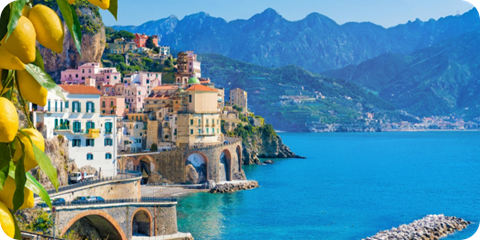
The Best Italian Coastal Towns and Cities |
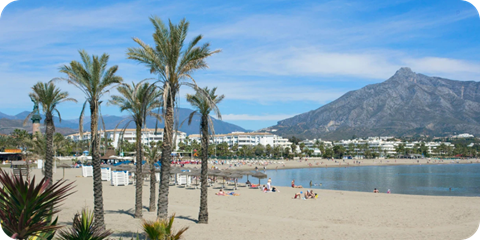
Coastal Towns in Costa del Sol |
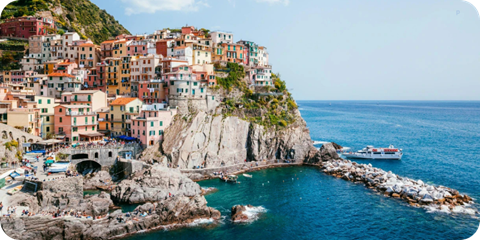
12 Astonishing Coastlines around the World |

Meanwhile, back on the Mother Road: our Route 66 journey rolls through a state you could cross in under 20 minutes flat.
Just 13 miles cut through the southeastern corner of Kansas, squeezed between Missouri and Oklahoma, the shortest stretch of the whole journey. But blink and you'll miss the charm: sleepy small towns, retro diners and a stretch of prairie sky that feels like it goes on forever. Worth slowing down for, not speeding through.


