|
Two weeks ago I was in Bangalore. It was my first time in the city, and when I wasn’t stuck in the traffic I enjoyed seeing a part of India I hadn’t visited before. But it wasn’t just the milder weather that I found a pleasing change from Delhi. The people I spoke to—venture capitalists, tech tycoons, startup founders—had a very different view of what was going on in India from those I tend to meet in the capital. They seemed far more sanguine about the recent failure of trade talks between America and India, and the 50% tariff Donald Trump has slapped on the country. One founder told me that Mr Trump and Narendra Modi, India’s prime minister, “just need to patch things up”.
But this was before Mr Trump announced a levy of $100,000 on new applications for H-1B visas, which are used by American firms to hire foreign graduates (the current cost of an application is around $2,500). Speaking to contacts since then, it is clear that the scramble to figure out exactly how this will be implemented, and what the impacts might be, has ruffled feathers in the Silicon Valley of India.
It’s not hard to see why. As my colleague Shailesh Chitnis
writes
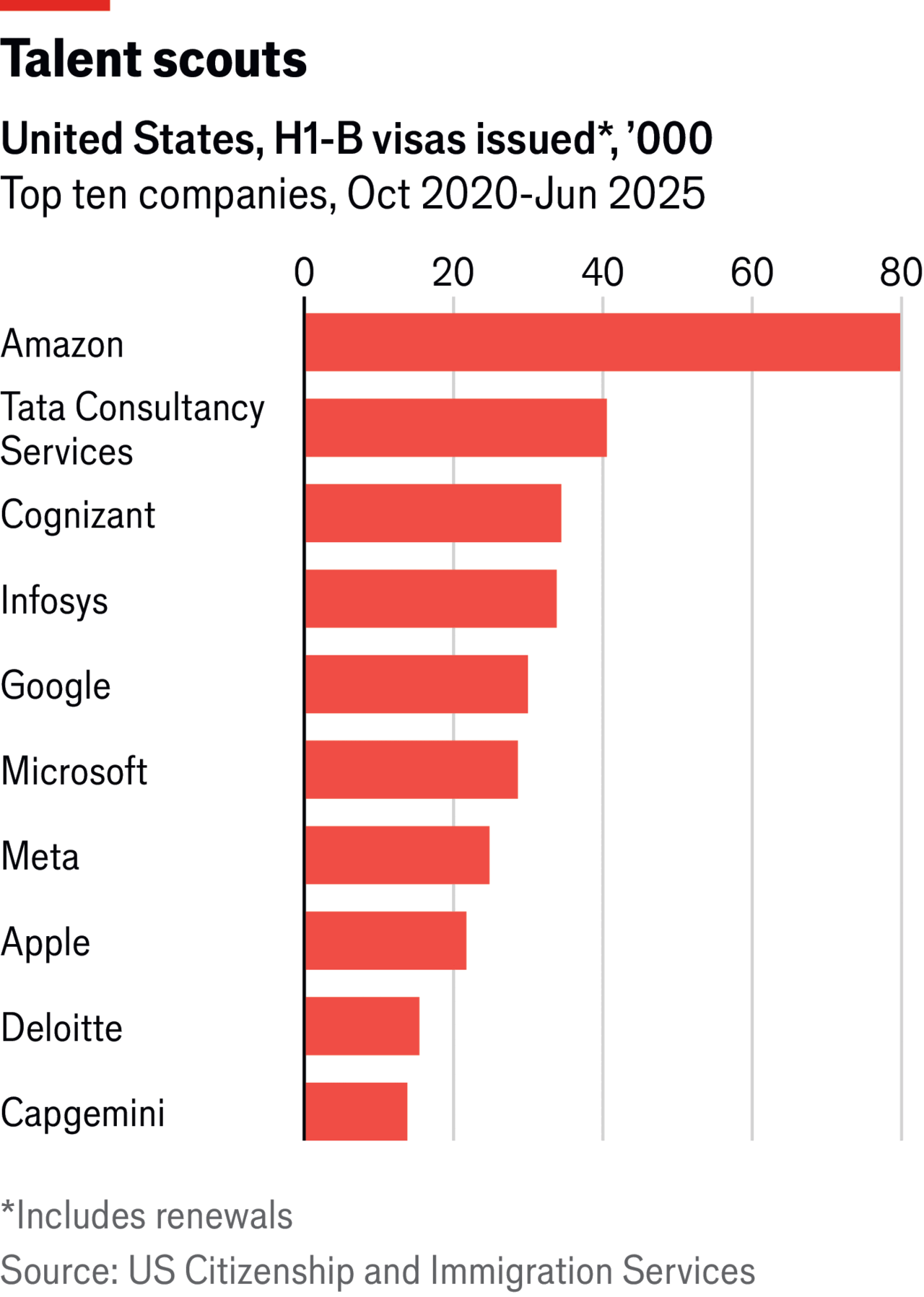
this week, around three-quarters of people who get the coveted H-1B visas are from India. Indian IT-services giants such as Infosys, Wipro and Tata Consultancy Services are among the top sponsors of the visas. Such companies send fewer workers to America than they once did—not least because of a squeeze on H-1B visas during Mr Trump’s first term—but the massive new fee will still hurt them. And it comes at a time when they are already grappling with the effects of AI on their businesses.
|