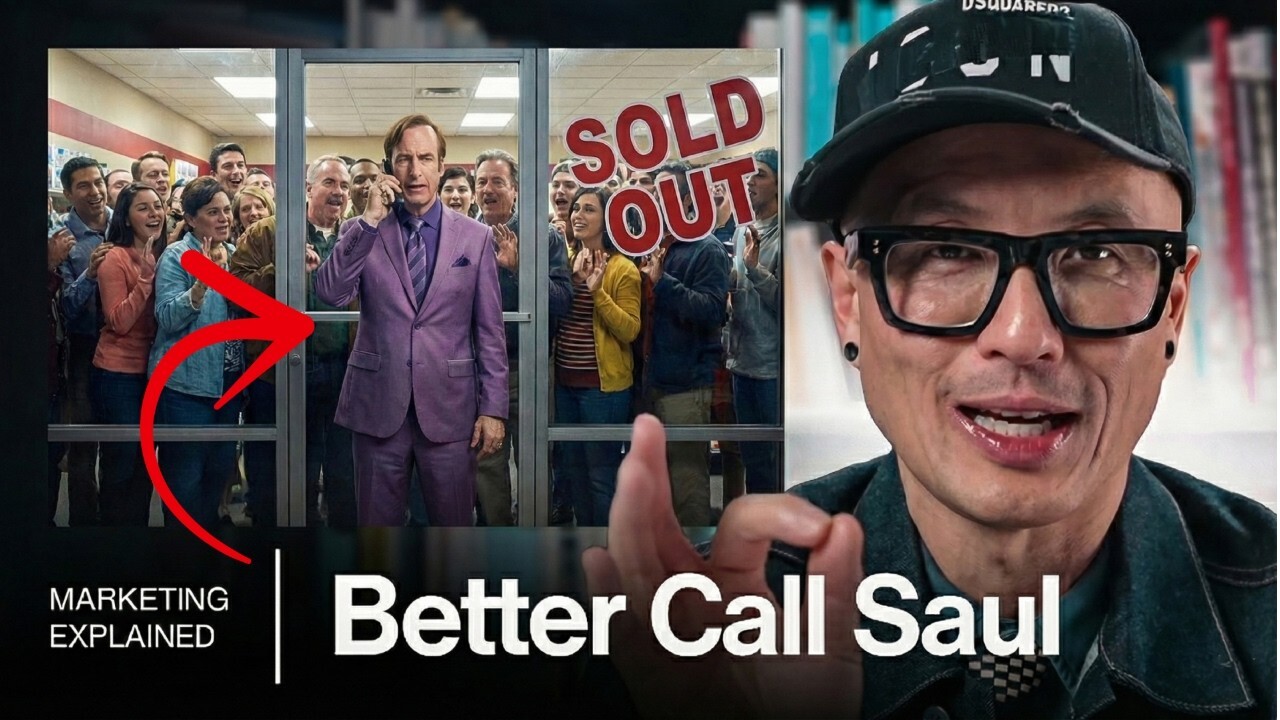
There's a scene in the show Better Call Saul where Jimmy McGill gets stuck working at a dead cell phone store. The place is empty. He's vacuuming. His boss tells him to "bring a book" because that's just how it is at that location.
Most people would accept this reality and wait for inventory week when customers supposedly line up out the door.
Jimmy did something different. And what happens next is one of the most brilliant demonstrations of positioning and marketing strategy you'll see on television.
Here are five lessons that could transform how you think about your business:
1. You Don't Need a New Product. You Need a New Customer.
Peter Drucker famously said the purpose of a business is to create a customer. Not find one. Create one.
Jimmy didn't change the product. He changed who he was selling it to. Instead of selling cell phones as communication devices to people who wanted to make calls, he repositioned them as privacy tools for people who needed untraceable conversations.
Same phones. Different customer. Different business.
→ What if your product isn't the problem? What if you're just selling it to the wrong person?
2. Make People Problem-Aware Before You Sell the Solution
Jimmy's storefront sign didn't say "Cell Phones For Sale" or "Best Prices in Town."
It said: "Is the man listening? Privacy sold here."
That's problem awareness marketing. You're teaching people they have a problem before you ever mention your solution. When people realize they have a problem, they start looking for solutions. And there you are.
→ What problem are you solving that your customers don't even know they have yet?
3. Theater Beats Logic
A customer walks in curious about the privacy sign. Jimmy's on the phone saying "Everyone wants these things" while pretending to turn away business. Then he hangs up, grabs a brand new cell phone, and destroys it right in front of the confused customer.
Who destroys a new phone?
Someone proving a point. The phone is single-use. Use it once.
Destroy it. Stay untraceable.
Logic makes people think. Theater makes people buy. The demonstration did more than any feature list ever could.
→ When was the last time you showed instead of told?
4. Let Customers Self-Identify Their Problem
When the customer asks "Privacy from who?" Jimmy doesn't assume.
He says vaguely, "You know... the government, could be."
The customer fills in the blank: "Like the IRS?"
Jimmy: "Bingo."
This is the opposite of how most people sell. They tell prospects what they need. Jimmy stayed vague and let the customer articulate their own pain. Once someone says it out loud, they've already sold themselves.
→ Stop telling. Start asking better questions.
5. Coin Your Own Terms
Jimmy doesn't just sell privacy. He sells "information hygiene."
When you create your own terminology, you position yourself as the expert and you make it easy for customers to remember and repeat your message. Think "inbound marketing," "growth hacking," or "blue ocean strategy."
These aren't just concepts. They're categories. And whoever names the category owns the conversation.
→ What could you name that would make your approach feel proprietary?