American Idols: Tennessee Williams
Selected by James Gray
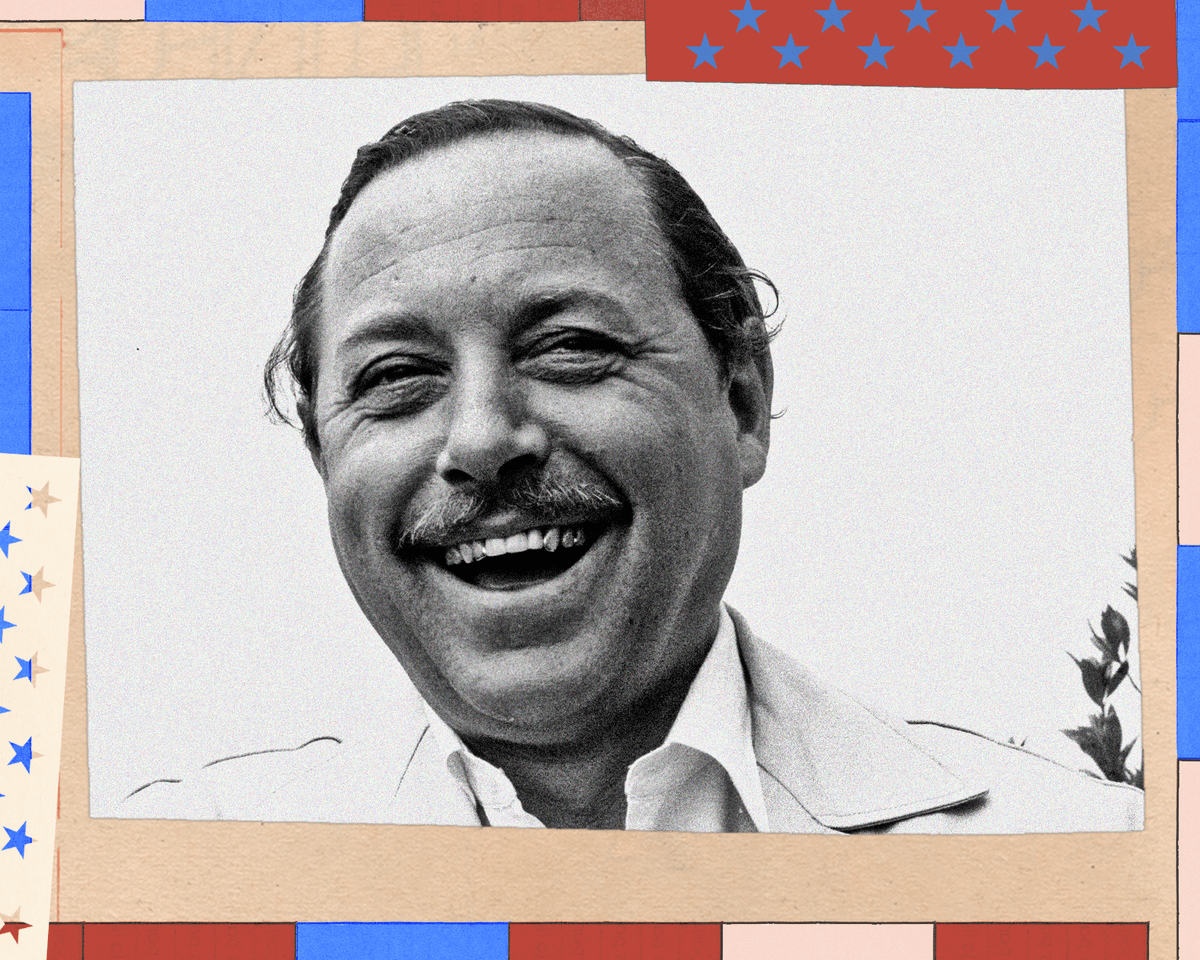
Source photograph by Evening Standard / Hulton Archive / Getty
Ten-year-old me got lucky: no school. It was “Brooklyn-Queens Day,” and I was able to convince my mother to take me to Polk’s Hobbies, near the Empire State Building. Before going back to Queens, we stopped at a coffee shop famous for its turkey sandwiches. As we sat, my mother spotted a man seated alone at the counter. “Oh, my God,” she said, way too loudly. “That’s Tennessee Williams!” I turned to stare. He had heard her, of course, but didn’t look. He just let out the slightest smile and went back to his coffee.
Later, she had me watch the film version of “A Streetcar Named Desire” when it came on television. That guy from the coffee shop wrote it a long time ago, she told me. I had no idea what the movie meant, but it stayed in my head for days. Why was everyone so vicious to poor, noble Blanche? She suffered, suffered terribly, at the hands of those who knew from their own experience what heartbreak meant. And, even if I couldn’t truly understand the film, I knew what it felt like to be on both ends of such cruelty.
As I got older, Tennessee Williams began to mean more and more. For him, love was the one essential in a world perpetually on fire. A “burning building,” he had called this life, and compassion was his remedy for its violent and mercurial ways. He believed in love fully. It was our salvation. He died four years after our brief encounter at that coffee shop, about nine miles away from my back yard. When teen-age me heard, the news barely registered, but now I look back and tears well in my eyes.
For our American Idols project, we asked writers, historians, and others to share their favorite American. Their answers included scientists, playwrights, pop stars, bureaucrats—and one cartoon character. Do you have one? Tell us.
|