Plus: what the press corps looks like in Trump 2.0; one refugee’s journey through ICE detention; and should we do more to fight looks-based discrimination?
View in browser | Update your preferences

The New Yorker Daily

Friday, July 24, 2026

The New Yorker’s award-winning journalism is made possible by our subscribers. Become one today »

Is Graham Platner’s combat experience relevant to the allegations against him? Plus:

• What the press corps looks like in Trump 2.0
• One refugee’s journey through ICE detention
• Should we do more to fight looks-based discrimination?

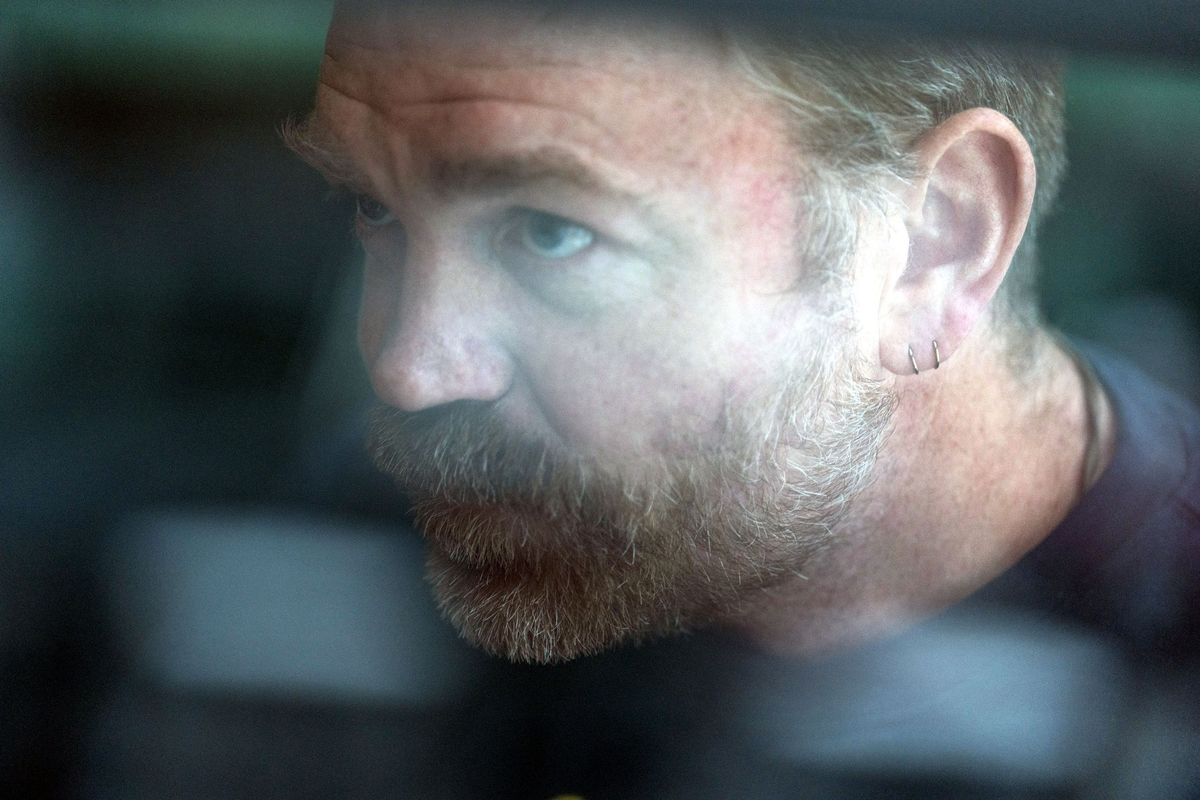
Graham Platner with glass reflection

Photograph by Sofia Aldinio / Bloomberg / Getty

Ian Crouch

Ian Crouch
Newsletter editor

Jasper Craven interviewed Graham Platner twice for his piece, published today. The first was in June, after the Times spoke to some of Platner’s former partners, one of whom alleged that he had been physically rough with her. (He denies this.) The second time was a little more than a week ago, after another former partner, Jenny Racicot, had accused him of rape in an interview with Politico (an allegation he also denies), and supported the claim with Facebook messages she sent years before Platner was a public figure. By Craven’s second interview with Platner, he had dropped out of the Maine Senate race, leaving a string of questions behind about the political decisions that fuelled his rise, and about the extent to which his controversies were connected to his military service and his struggles with P.T.S.D. and depression. “In a country stubbornly attached to myths about the military’s positive transformative power, Platner presented a stark counterfactual,” Craven writes. “Still, how much of his behavior should be read through the lens of what combat did to him, and how much of it is simply who he is, independent of war?”

Last week, speaking with Craven, Platner—whose popularity was based, in part, on his willingness to be vulnerable about his past mistakes—continued to deny the allegations made by Racicot: “I don’t know how one is supposed to be vulnerable about things that aren’t real.” He said that he had initially been reluctant to suspend his campaign, after the publication of the Politico story, in part because he believed he had successfully convinced voters of his personal transformation. “I mean, Jesus Christ,” he said, “we had polling where I was still competitive.” For the story, Craven also talked to Platner’s wife, his mother, and men who served in the military with the former candidate. Other veterans whom Craven spoke with argued that Platner’s alleged behavior is plainly disqualifying, regardless of his experience during war. Paula Coughlin, a Navy veteran who acted as a whistle-blower during the 1991 Tailhook scandal, in which officers sexually assaulted or harassed eighty-three women and seven men, said, “There is absolutely no way I would tolerate that bullshit out of anybody.”

Read or listen to the story

Editor’s Pick

The White House Press Corps in the Second Trump Era

A woman holding a microphone is seen outdoors near camera equipment.

Photograph by Kent Nishimura

In Donald Trump’s second term, the White House press corps has been reshaped, Katy Waldman writes, “its composition altered to better reflect the President’s preferences.” Photographs by Kent Nishimura capture the backstage labor that allows coverage of the Trump show to go on. See the images »

More from The New Yorker
Illustration of a crowd in red. One person, in the middle, is blue.

Illustration by Jackson Gibbs

Discrimination against the unattractive, known as “lookism,” is widespread—and too widely tolerated. But should we be doing more to fight it?

The man who green-lighted Trump’s ballroom is just back from Russia, where he hung out with Putin and Steven Seagal.

The most-clicked item in yesterday’s newsletter was about the cyclospora outbreak, and how it reveals the cracks in our public-health system.

A microphone
Today’s Podcast

When ICE began detaining people at immigration hearings last year, it was an unprecedented policy escalation. On The New Yorker Radio Hour, the staff writer Jonathan Blitzer shares the story of one detainee whose life was turned upside down. Listen and follow »

A figure carries a giant play button
Our Culture Picks
  • A book: “Glyph,” by Ali Smith, follows two estranged sisters who are haunted by stories from their childhood. It’s one of the best books of the year so far.

  • A movie: In “I Want Your Sex,” a B.D.S.M. workplace relationship opens up a cross-generational debate about carnal mores.

  • A show: Little Island, the floating venue on the Hudson River, will feature a performance by the cabaret legend Justin Vivian Bond and another by Julio Torres as a sea wench looking for love.

An illustration of a crossword puzzle wrapped around the arms of a person.
Puzzles & Games
  • Today’s Crossword Puzzle: Number of Supreme Court Justices—four letters.
  • Catalogues: Can you sort the items into the correct order?
  • Shuffalo: Can you make a longer word with each new letter?
  • Laugh Lines: Test your knowledge of classic New Yorker cartoons.
Today’s Cartoon
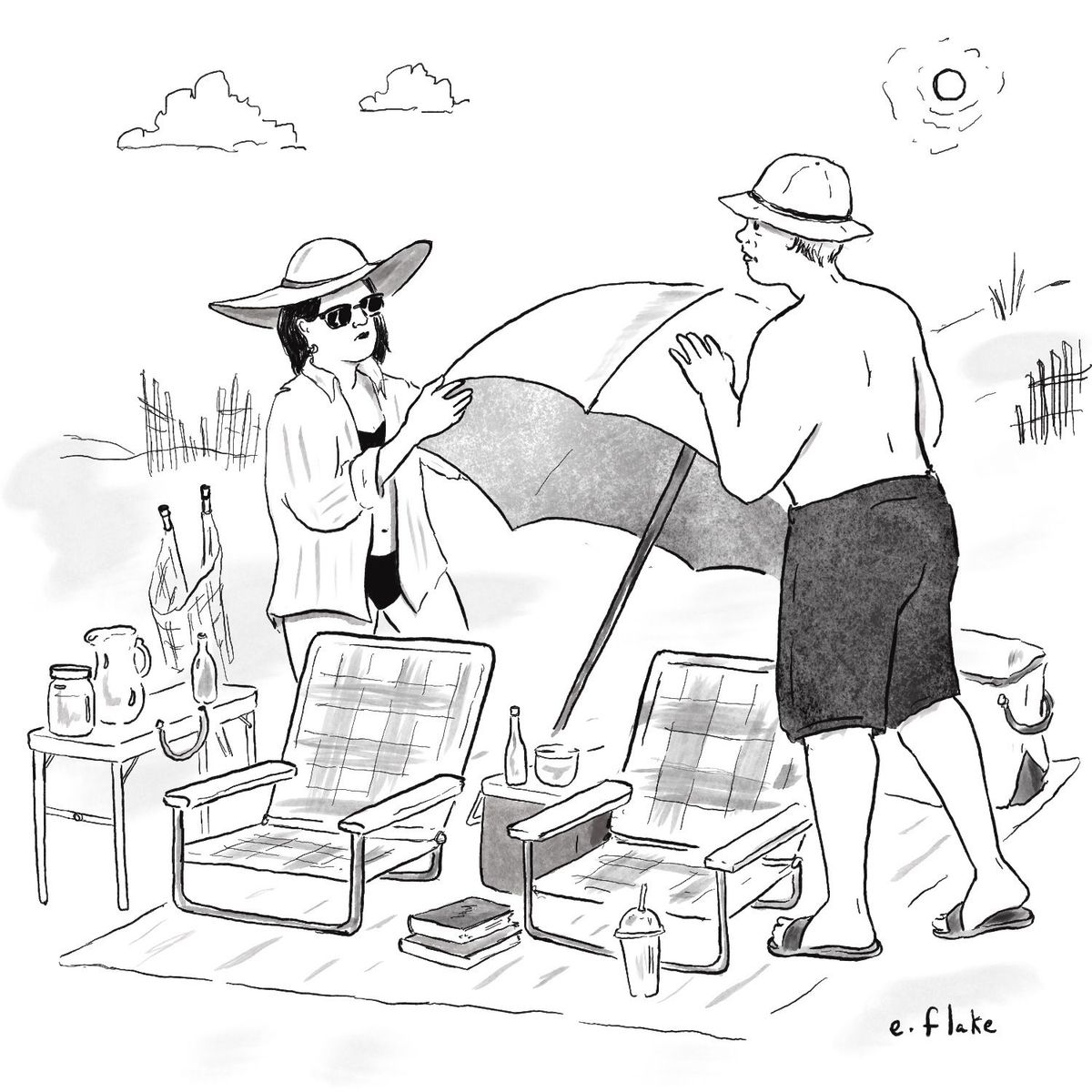
Two people setting up at the beach.

Cartoon by Emily Flake

“Just so you know, this is the most stuff we can bring without applying for a building permit.”

See more cartoons

P.S. Still feeling nervous about eating fresh berries? Maybe try fermenting them. 🫐

Illustration of stacked coffee mugs and a person reading a book.

Get more New Yorker in your inbox.

Was this forwarded to you? Sign up to get the daily. Or explore more newsletters on books, science, food, politics, and more.

You’re receiving this e-mail because you signed up for the daily newsletter from The New Yorker.

Manage your preferences | View our Privacy Policy | Unsubscribe

Copyright © Condé Nast 2026. One World Trade Center, New York, NY 10007. All rights reserved.