Dear Friend,
For a child in a crisis zone, delays in the arrival of vaccines or malnutrition treatments can mean the difference between life and death.
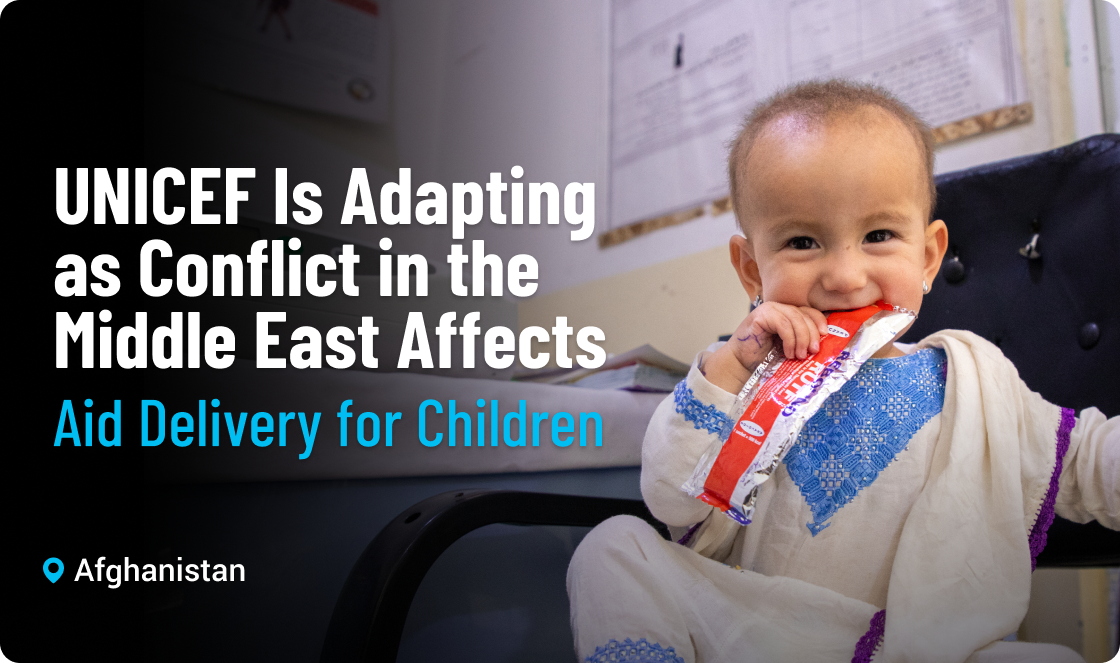
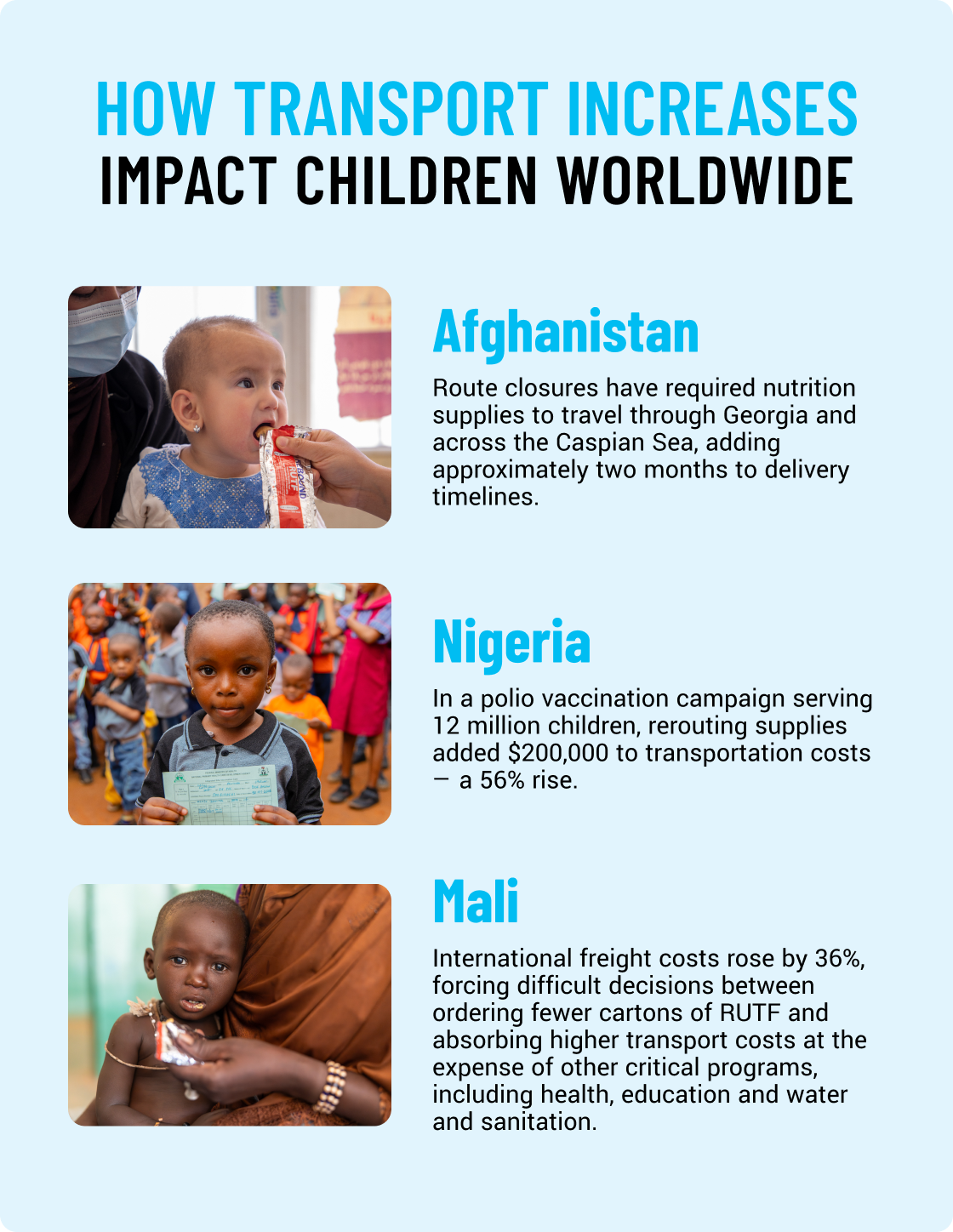
As conflict in the Middle East continues to disrupt global transportation networks, UNICEF reports that critical supplies, including vaccines, education materials and ready-to-use therapeutic food (RUTF), could face delays of four to six months, placing additional strain on humanitarian operations worldwide.
These rising transportation and logistics costs are creating difficult tradeoffs, stretching resources that support nutrition, health, education and other essential services for children. UNICEF has nearly exhausted its annual transport contributions from logistics partners — an unprecedented situation. |
Despite these challenges, UNICEF continues to deliver for children and adapts quickly whenever crises threaten the flow of aid.
UNICEF is maintaining the movement of critical supplies by activating alternative air, land and sea routes, front-loading procurement and diversifying its supplier base. UNICEF's global network, which includes hubs in Copenhagen and Dubai and more than 300 warehouses worldwide, helps ensure supplies can continue reaching children when traditional routes are disrupted.
UNICEF is also strengthening supply chains for the future. UNICEF works with more than 20 manufacturers of RUTF around the world, including in Ethiopia, Kenya, Haiti and Egypt. By expanding local and regional production, UNICEF can reduce dependence on long international shipping routes while helping protect children from future disruptions.
In an increasingly interconnected world, challenges in one region can affect children thousands of miles away. Your support helps UNICEF stay ready, adapt when emergencies arise and continue delivering lifesaving supplies to children wherever they are needed most.
Will you help UNICEF stay ready to reach children when every moment counts? >> |
Thank you for being there for children,
UNICEF USA |
|
| |
|